Springs · The Golden Mile
Torsion Spring Replacement in The Golden Mile
You heard a sharp bang from the garage, and now the opener hums for a second and gives up.
In plain words
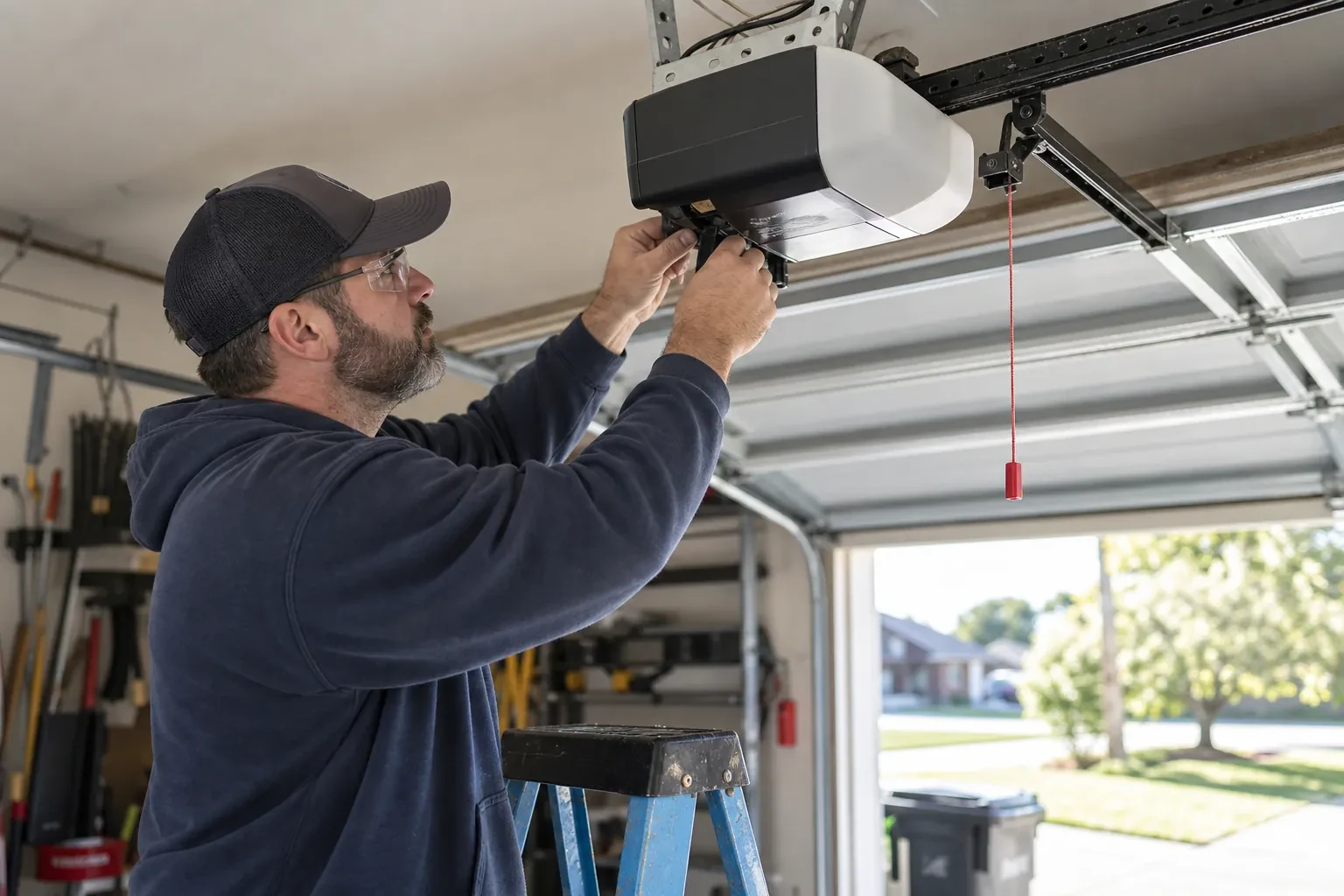
Think of the opener as a helper, not a lifter. It is built to push and pull a door that already weighs almost nothing thanks to the springs; asking it to hoist a full-weight door strains the trolley, bends the top section and wears the gear drive. Spring replacement puts the load back where it belongs. After fitting and winding the new spring, the technician balances the door, then reconnects the opener and resets its force and travel settings so it runs within its design limits. Owners usually notice the opener sounds calmer and the door moves more evenly afterwards.
How the visit goesThe door drops the last stretch to the floor rather than settling, and when you stop it halfway by hand it slides down instead of staying put. Balance has drifted, and the spring is no longer holding its share of the weight.
Torsion Spring Replacement
How the visit goes
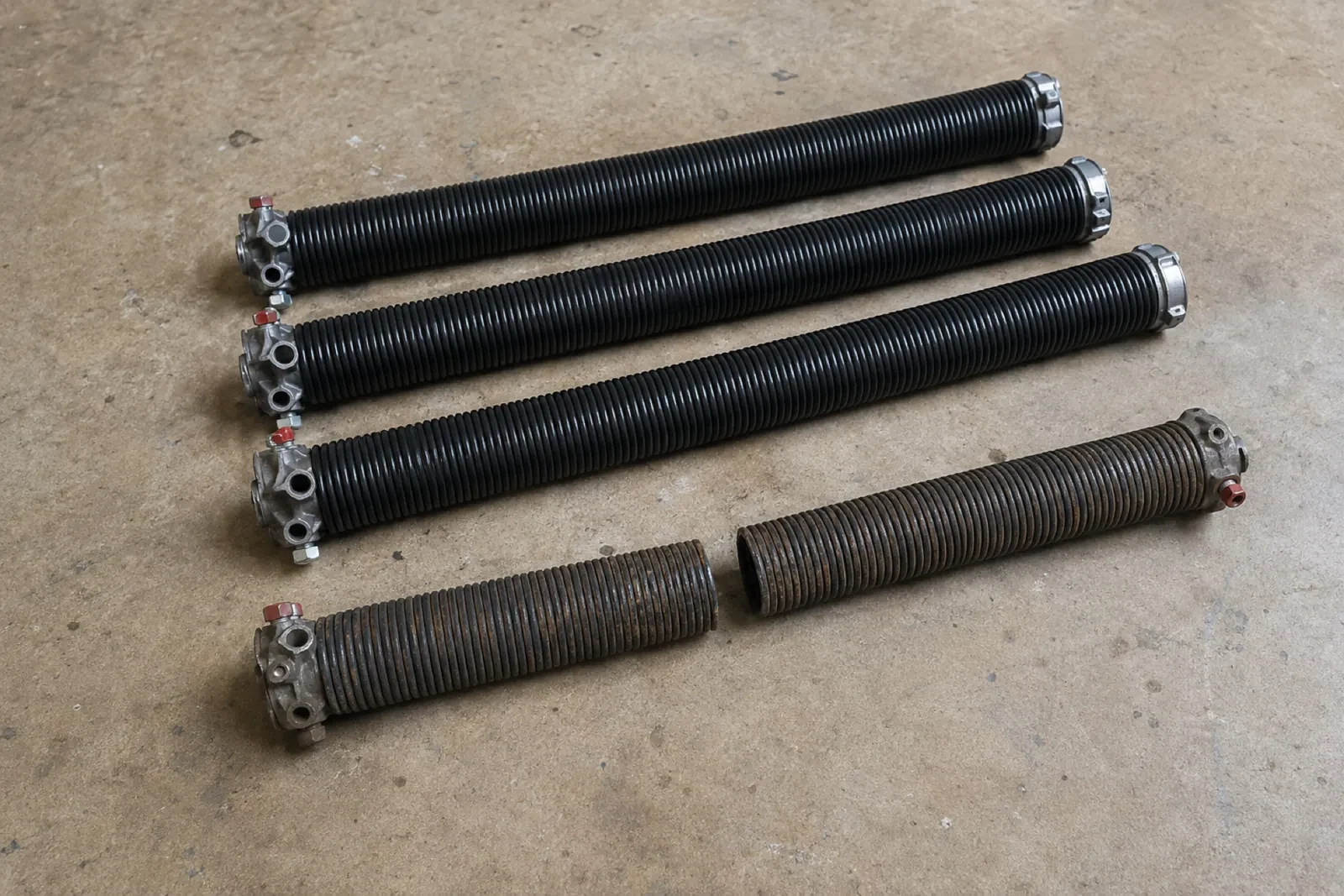
Following the hardware the spring drives
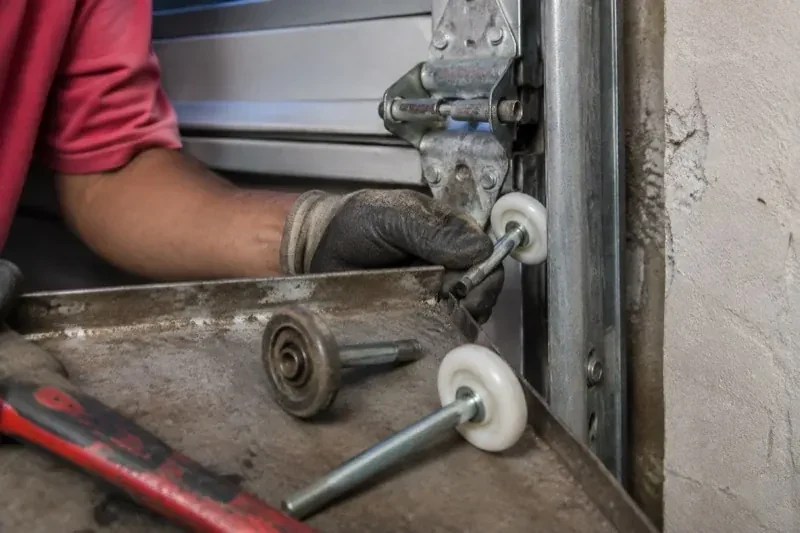
The spring is one part of a chain, so the check follows that chain from the shaft outward. The centre bearing and the end bearings are turned by hand to feel for roughness or wobble. Cable drums are inspected for cracked flanges and worn grooves, and lift cables are examined along their length and at the bottom brackets, where fraying and rust usually start. Bottom brackets and their fasteners are looked at for corrosion, and the shaft is checked for straightness. Findings here decide whether the visit is a spring swap alone or a spring plus a few tired companions.
Setting the cables and drums
A balanced door depends on both cables pulling equally, so drum work gets careful attention. Each lift cable is wound into the grooves of its drum with the loop secured on the drum pin, and the drums are slid firmly against the end bearing plates. The technician rotates the shaft to take up slack, then sets tension so both cables are equally taut with the door fully closed; a level across the shaft confirms it is sitting true. Drum set screws are tightened to the shaft in this position. Even cable tension keeps the door square in its tracks through every part of its travel.
What cycle life means for you
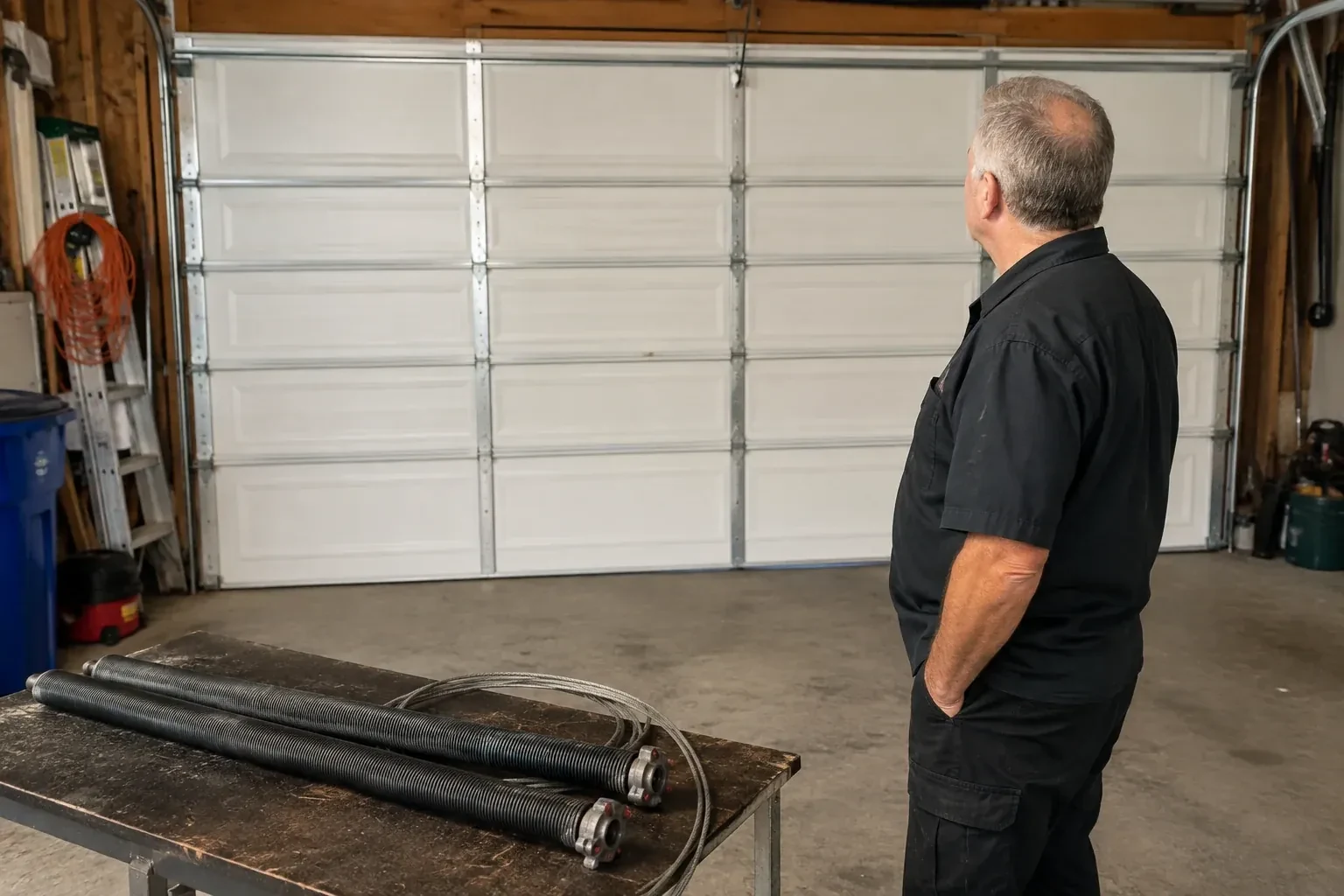
The spring you chose is rated for a number of full open-close cycles, and that number translates into years according to your routine. A standard-cycle spring on a door used four times a day works out to several years of service; a household with teenagers and a home workshop will use cycles sooner, while a high-cycle spring stretches the same routine considerably further. Knowing your rating and your habits gives you a rough sense of when the next replacement falls due, so spring service becomes a planned item like furnace maintenance rather than a surprise on a cold morning.
Torsion Spring Replacement
In the van
End bearing plates
Torsion shaft and coupler
Wire gauge and tape measure
Socket set and wrenches
Winding bars
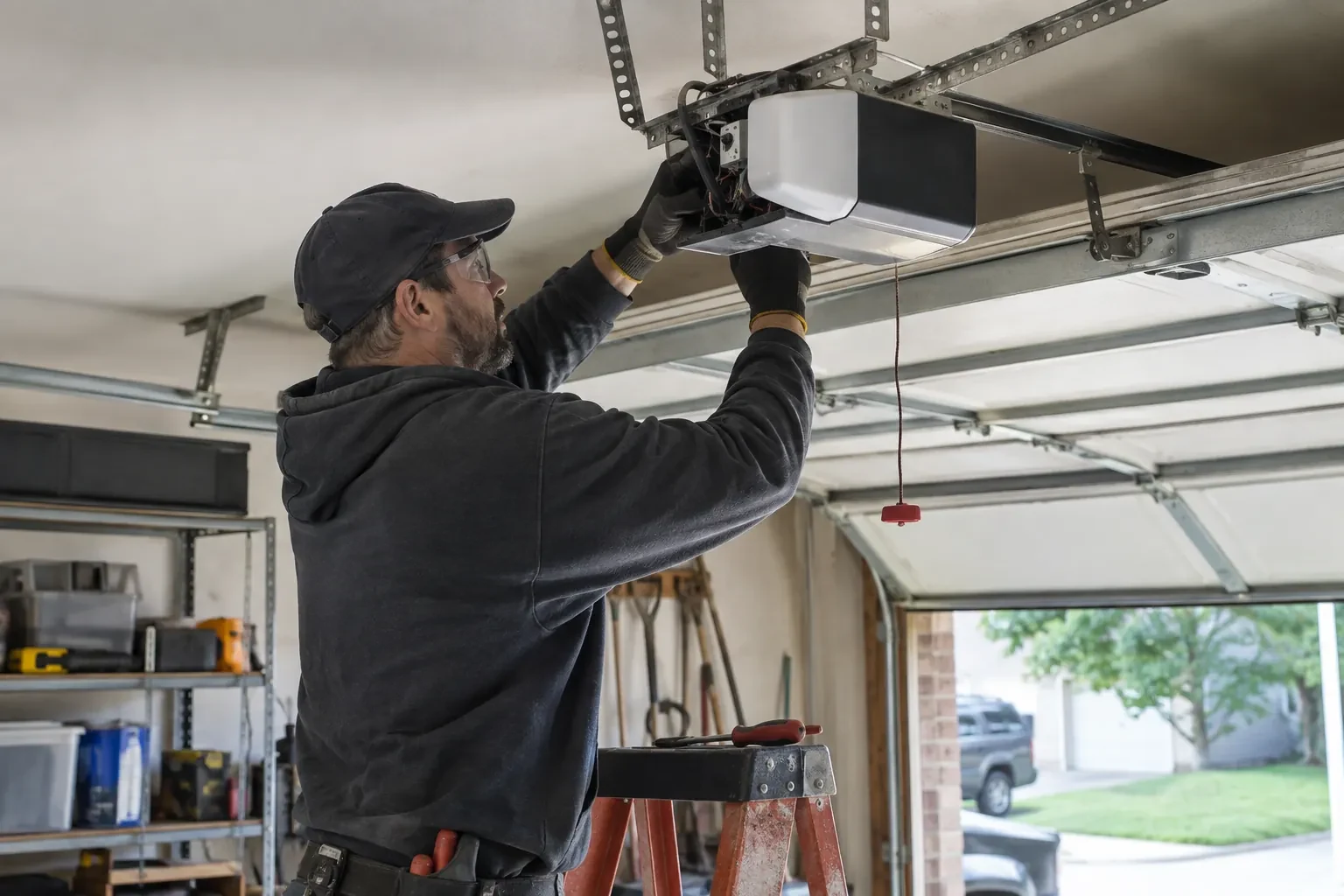
Torsion Spring Replacement
What affects the quote
Door size and weight
A double-width door, a solid wood door or a thick insulated door weighs far more than a single-width steel panel, calling for heavier wire, longer coils or more springs to balance it.
Drum type and lift configuration
Standard-lift drums are the common case. High-lift, vertical-lift or low-headroom arrangements use different drums, cable lengths and turn counts, which changes the parts and the time involved.
Access and working space
A vehicle that stays inside, shelving under the shaft, a very high ceiling or a tight side clearance affects how the technician sets up and how long the visit runs.
What to have ready
- Is the door a single or double width, and roughly how tall?
- Do you know the door's age or when the springs were last replaced?
- Is there a working power outlet near the opener and clear space under the shaft?
Torsion Spring Replacement: questions
QuestionsHow can I tell if my springs are wearing out before they break?
Watch for a door that feels heavier by hand when the opener is released, an opener that strains or slows, a door that drops the last stretch rather than settling, or one that drifts down when stopped halfway. Visually, look for stretched gaps between coils, rust streaks or pitting on the steel, and any sag in the shaft. A balance check when you notice these lets you plan a replacement rather than react to one.
Can a spring be adjusted rather than replaced?
A spring that is intact but has relaxed slightly can be given a little more tension, within limits, to restore balance; this is a normal adjustment on a door that has settled. A spring with a broken coil is replaced as a unit, since the wire has reached the end of its life. The technician checks the condition of the steel and recommends whichever restores a balanced, safe door.
Why do springs seem to break in cold weather?
Cold makes steel slightly less forgiving and thickens the grease on the coils, so a spring that has already used most of its cycle life is more likely to let go on a frosty morning when the door is first opened. The cold is the final straw rather than the cause; the underlying reason is fatigue from years of cycles, sometimes helped along by rust and dry coils.