Springs · Toronto
Torsion Spring Replacement
You heard a sharp bang from the garage, and now the opener hums for a second and gives up.
In plain words
The heart of this service is matching, not just swapping. Two springs can look identical and behave very differently, because the force a torsion spring produces depends on its wire thickness, inside diameter, length and wind direction, and the right combination depends on the door's weight, height, drum type and track lift. The technician measures all of those before choosing a spring, then confirms the choice the only way that counts: lifting the finished door by hand and feeling it stay put at waist height. A properly matched spring lasts longer and keeps the opener working easily.
How the visit goesThe door starts to rise, gets about the height of your knee, then shudders and reverses. The opener sounds strained, and the top section flexes as the trolley pulls on it, because the motor is doing work the spring used to do.
Torsion Spring Replacement
How the visit goes
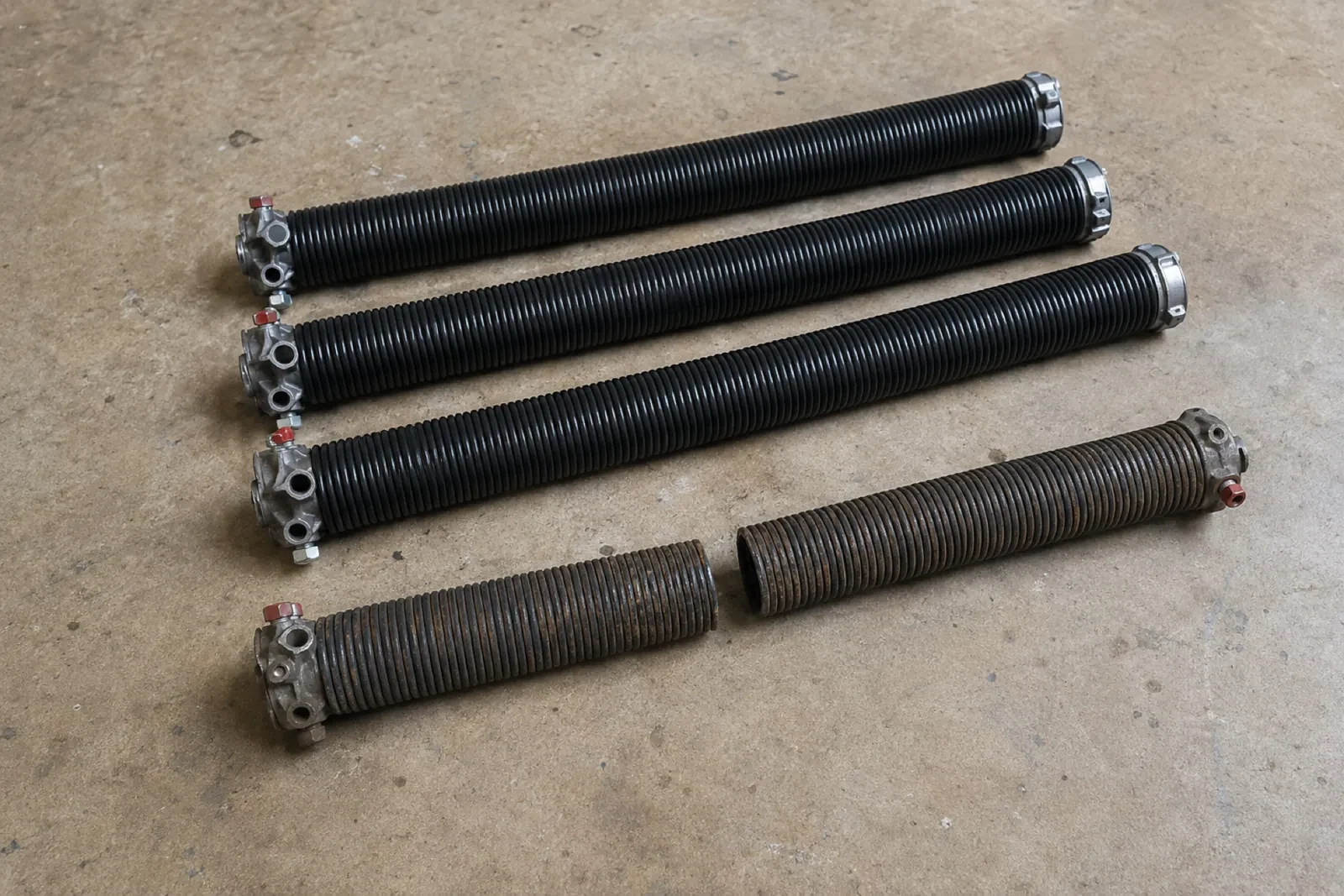
Reading the spring itself
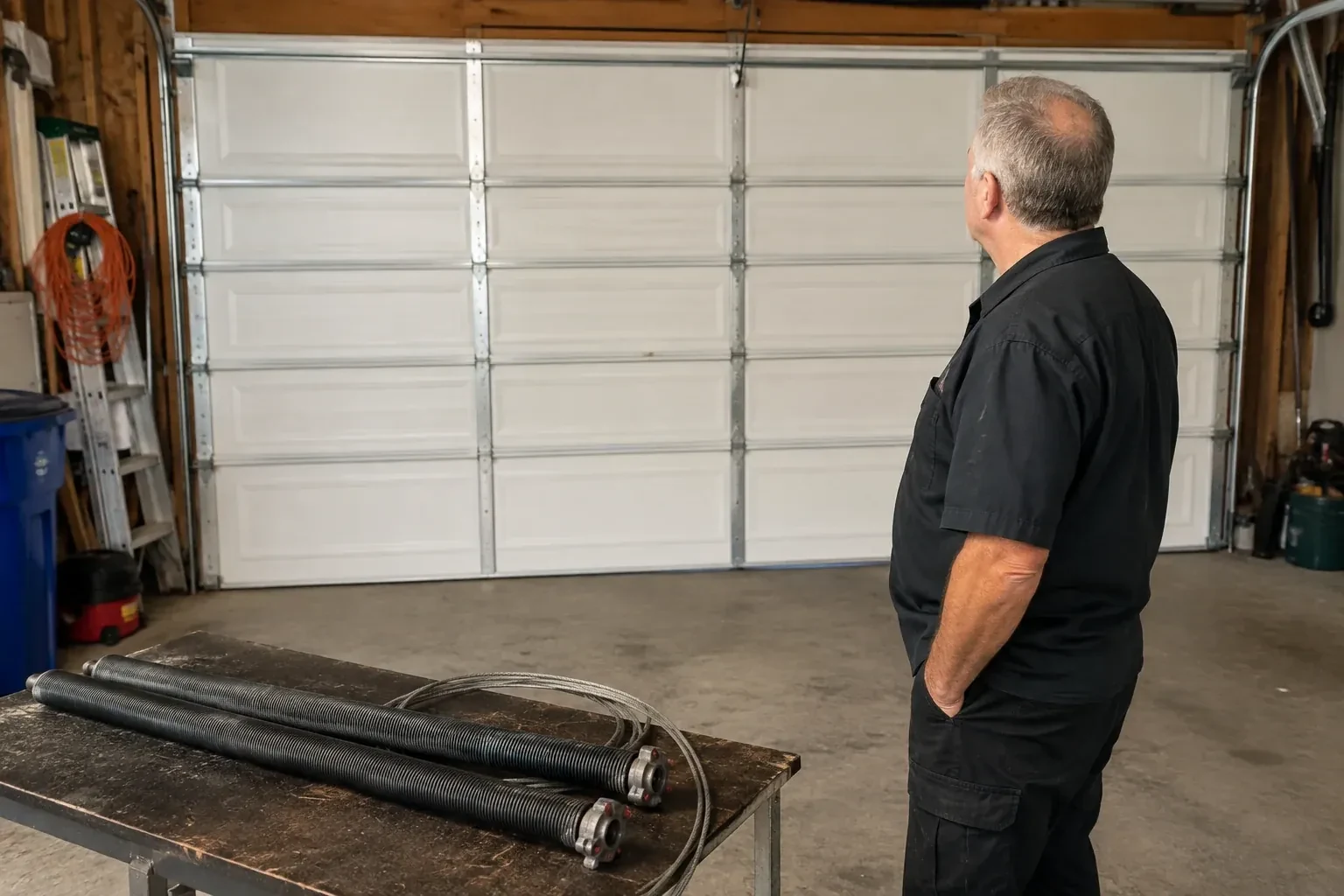
The first measurements come from the spring that is already on the shaft. The technician measures wire thickness across a run of ten or twenty coils, the inside diameter of the coil, the overall length of the spring when relaxed, and the wind direction, which is read from how the coils lean. On a two-spring door each spring is checked separately, because a left-wound and a right-wound spring sit on either side of the centre bracket. Any tag or colour marking is noted too. These numbers narrow down what the door was built with, and together with the door's weight they point to the correct replacement.
Fitting a matched pair
On a two-spring door the springs are installed as a set: one left-wound and one right-wound, mirrored on either side of the centre bracket, with matching wire size, diameter and length so each carries half the load. Both stationary cones bolt to the centre bracket and both winding cones face outward. The technician winds each spring the same number of quarter turns, alternating between them, so the shaft is never loaded unevenly. Once both are set, the door is balanced and tested as one system. Equal springs mean equal wear, so the pair reaches the end of its life together rather than one after the other.
Relief for the opener
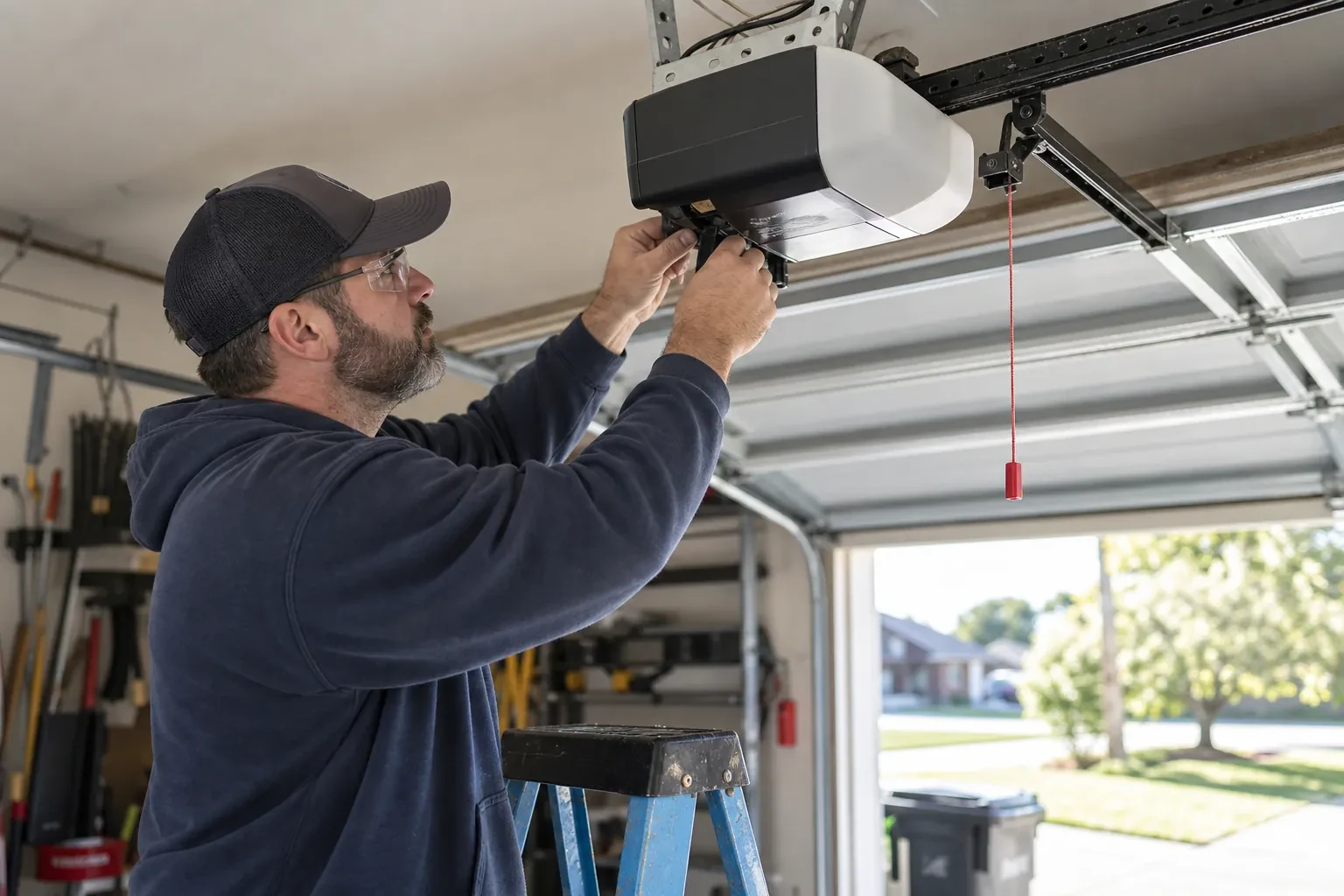
Your opener benefits as much as the door. With the spring carrying the weight again, the motor, gear drive, trolley and rail return to the light duty they were designed for, which tends to mean a longer working life and less noise. Force settings have been reset to suit a balanced door, so the safety reversal reacts to a genuine obstruction rather than to a heavy door. Once a year, repeat the simple reversal test by placing a length of wood flat on the floor in the door's path and confirming the door reverses on contact. The opener's photo-eye sensors deserve a wipe at the same time.
Torsion Spring Replacement
In the van
End bearing plates
Torsion shaft and coupler
Wire gauge and tape measure
Socket set and wrenches
Winding bars
Torsion Spring Replacement
What affects the quote
Shaft condition
A bent, badly rusted or worn shaft is replaced so the drums and bearings turn true. Coupled two-piece shafts and their coupler are checked at the same time.
Condition of the lift cables
Cables that show fraying, rust or a kink at the bottom brackets are replaced so the new spring pulls on sound steel. Two good cables mean this item stays off the list.
One spring or two
A single-spring door needs one spring; a paired system is usually replaced as a matched set of left- and right-wound springs. The number of springs and whether both are replaced is the largest single influence on the scope.
What to have ready
- Is the door currently closed, open, or stuck partway?
- About how many times a day does the door open and close?
- What is the door made of: steel, insulated steel, wood or aluminum?
Torsion Spring Replacement: questions
QuestionsHow can I tell if my springs are wearing out before they break?
Watch for a door that feels heavier by hand when the opener is released, an opener that strains or slows, a door that drops the last stretch rather than settling, or one that drifts down when stopped halfway. Visually, look for stretched gaps between coils, rust streaks or pitting on the steel, and any sag in the shaft. A balance check when you notice these lets you plan a replacement rather than react to one.
Can a spring be adjusted rather than replaced?
A spring that is intact but has relaxed slightly can be given a little more tension, within limits, to restore balance; this is a normal adjustment on a door that has settled. A spring with a broken coil is replaced as a unit, since the wire has reached the end of its life. The technician checks the condition of the steel and recommends whichever restores a balanced, safe door.
Why do springs seem to break in cold weather?
Cold makes steel slightly less forgiving and thickens the grease on the coils, so a spring that has already used most of its cycle life is more likely to let go on a frosty morning when the door is first opened. The cold is the final straw rather than the cause; the underlying reason is fatigue from years of cycles, sometimes helped along by rust and dry coils.