Openers · Toronto
Chain-Drive Opener Repair
Press the button and the opener hums for a second, then quits.
In plain words
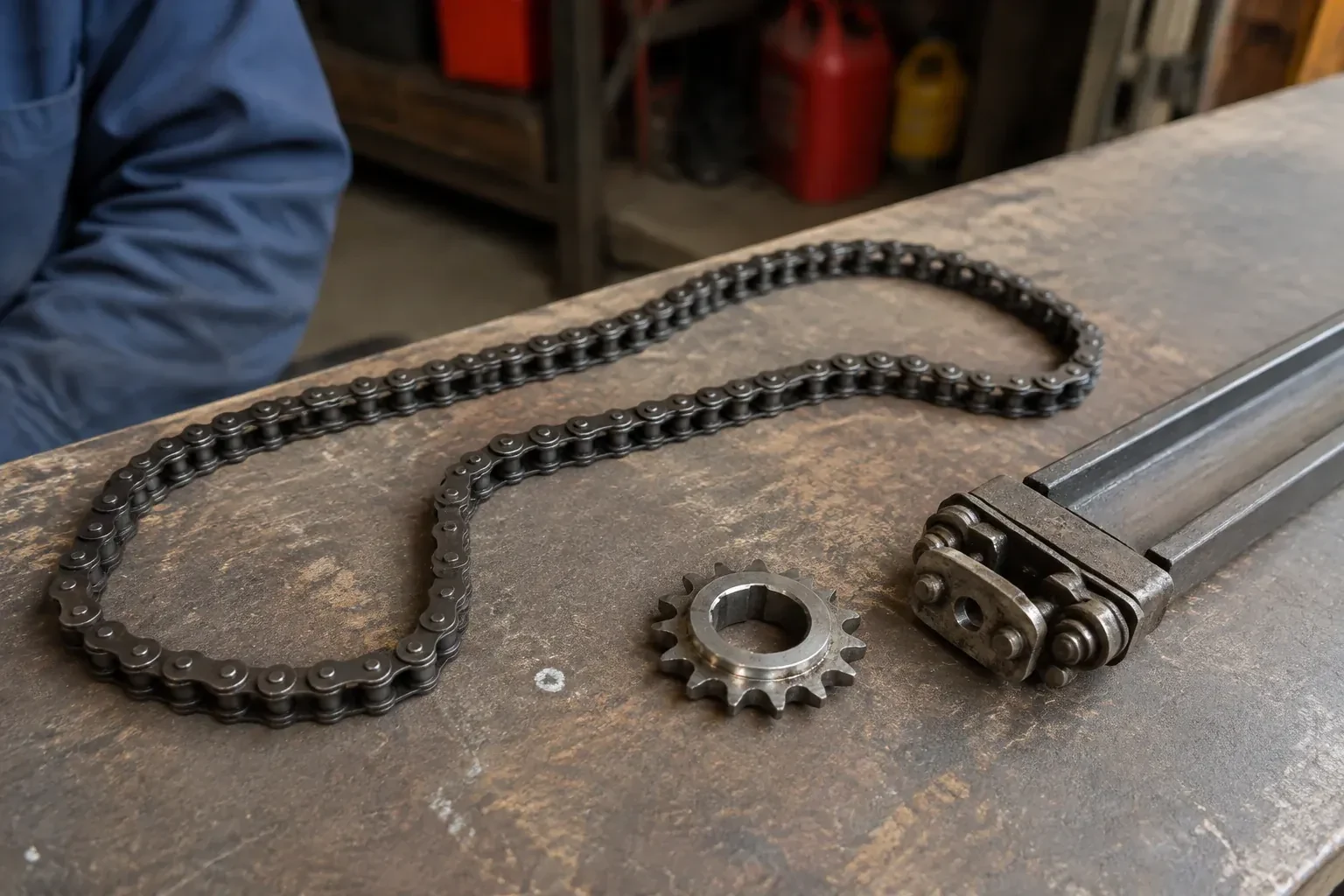
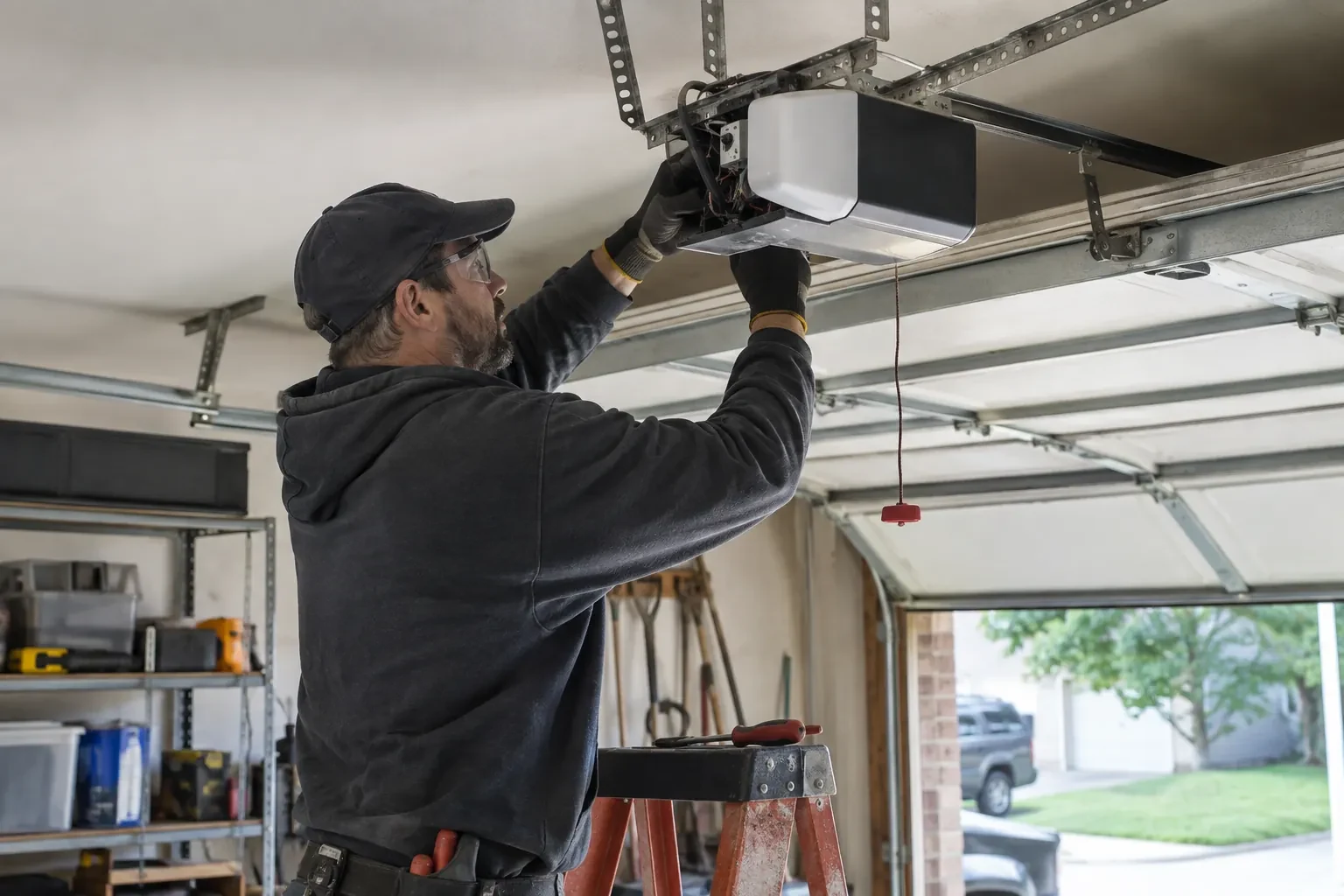
The trolley is the carriage that rides the rail carrying the door arm, and many chain-drive calls end there. If travel limits creep, the trolley runs onto the stop bolt at the end of the rail and the motor hums against it. If the chain was run off the sprocket, the trolley and the motor disagree about where the door is, and the door travels partway no matter how the limits are turned. The technician frees the trolley, puts the chain back in phase with the motor's closed position, resets the limits and confirms the release lever picks the door arm up cleanly.
How the visit goesPress the button and the opener hums for a second, then quits. The trolley is jammed hard against a bolt at the very end of the rail near the motor and will not budge in either direction.
Chain-Drive Opener Repair
How the visit goes
Where the door stops and how hard it pushes
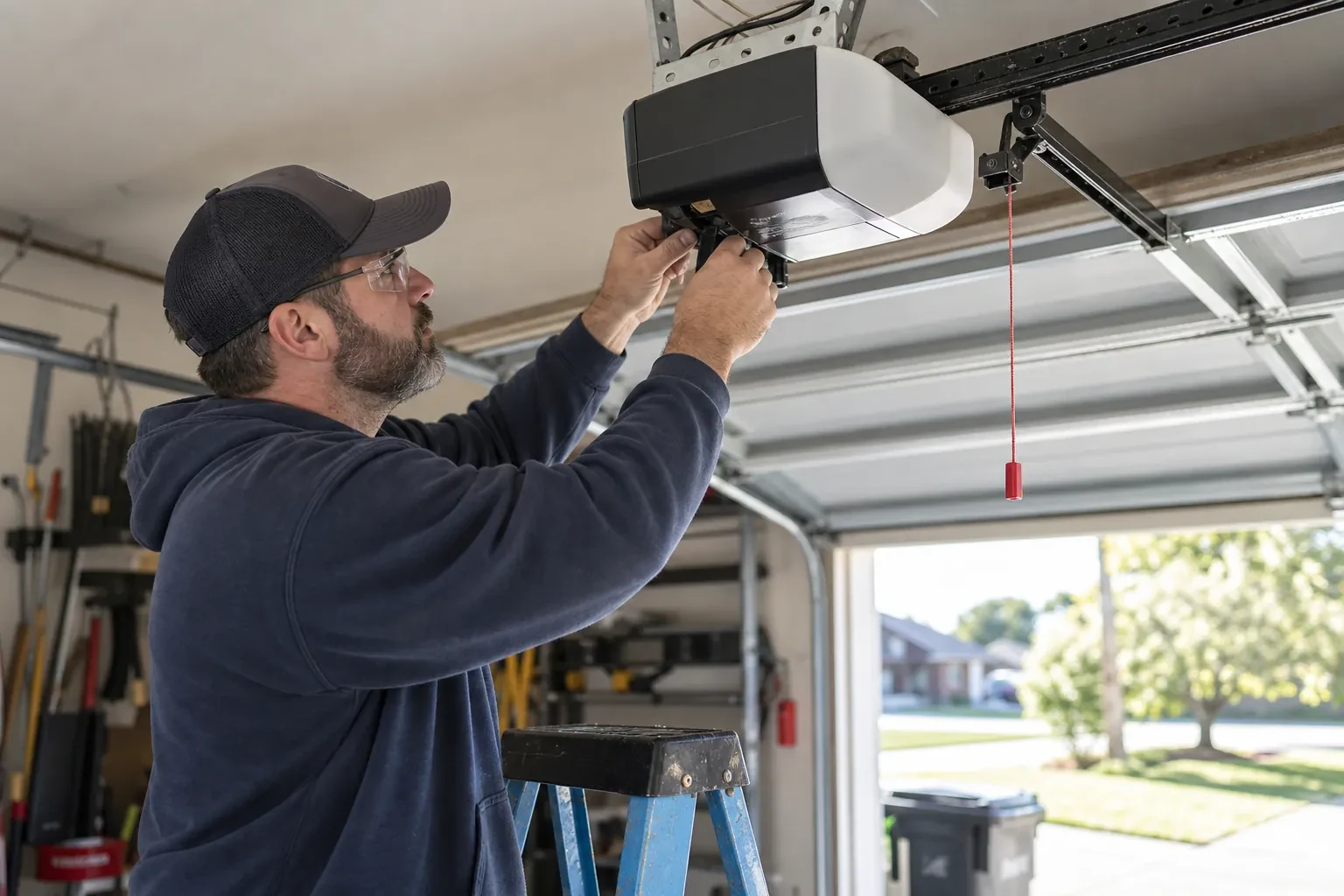
Two settings on the head decide the door's behaviour, and both are checked against what the door is doing. Travel limits set where the door stops in each direction; a door that stops shy of the floor, reverses on touching it or opens partway is out of adjustment. Force sets how much effort the operator treats as normal; too little and the door reverses for no reason, too much and the operator stops noticing an obstruction. The technician notes the current screw positions or the learned values, watches a full cycle and compares what the door does with what the settings say, before deciding whether the fault is in the drive parts or only in the settings.
Truing and securing the rail
A rattling or flexing rail is corrected before any adjustment is trusted. Loose lag screws in the header bracket are tightened or moved to fresh solid wood, and a bracket that has split the framing is re-mounted. The angle-iron hangers at the head are tightened and braced diagonally so the head cannot swing, and the rail is checked with a level along its length and set with a slight fall away from the header so the trolley runs freely. Splice plates at rail joints are snugged and any burr where the trolley has caught is dressed smooth. The rail is then wiped of old grease and given a thin coat of white lithium grease where the trolley runs.
The release handle and the lock on the door
You leave knowing two things about the door. The red handle disconnects the door from the trolley so you can lift it by hand during a power cut or if the drive ever stalls; pull it with the door closed, never while it is open and free to fall. To reconnect, most heads need only be run once and the trolley picks the arm back up. The manual slide lock on the door itself, if it still has one, stays disabled while an operator is connected, because a motor pulling against a locked door is one of the surest ways to strip a drive gear or bend the top section.
Chain-Drive Opener Repair
In the van
Inner and outer trolley
Chain tensioner nuts and shaft
Roller chain with master link
White lithium grease
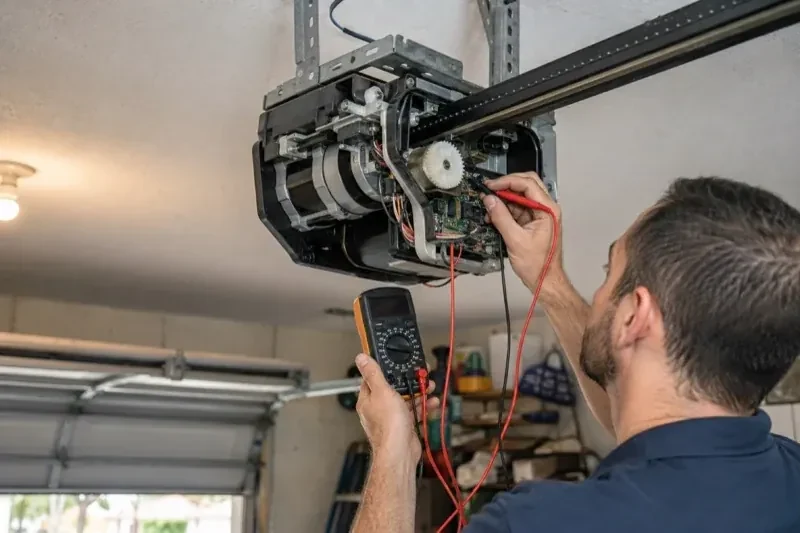
Motor start capacitor
Chain-Drive Opener Repair
What affects the quote
Age of the operator and parts supply
Parts for recent heads are on the van; parts for a unit several decades old may need ordering, and where a maker no longer supplies them the conversation turns to what can be done instead.
A detached or unheated garage
Cold-rated lubricant, a chain replaced rather than freed, and force set for low temperatures are choices made for a garage that sees winter, and they show in the parts and the time.
Sensors and controls that fail the check
Photo eyes that are misaligned, mounted too high or dead, or a wall control that has stopped responding, are put right before the reversal can be proven and are itemised where parts are involved.
What to have ready
- Have you noticed pale plastic shavings on or under the motor housing?
- Is the chain hanging loose under the rail, or is it rusty or stiff?
- With the red cord pulled, does the door lift by hand and stay about a metre up?
Chain-Drive Opener Repair: questions
QuestionsWhat does it mean when the drive is out of phase?
The motor keeps track of the door's position by counting its own turns, and the trolley is meant to be at the closed end of the rail when the motor is at its closed position. If the operator has been run with the chain off the sprocket, or a chain was refitted at random, the two no longer agree and the door travels partway however the limits are set. Re-phasing means finding the motor's closed position and refitting the chain with the trolley closed.
Why does the technician lift the door by hand before repairing the opener?
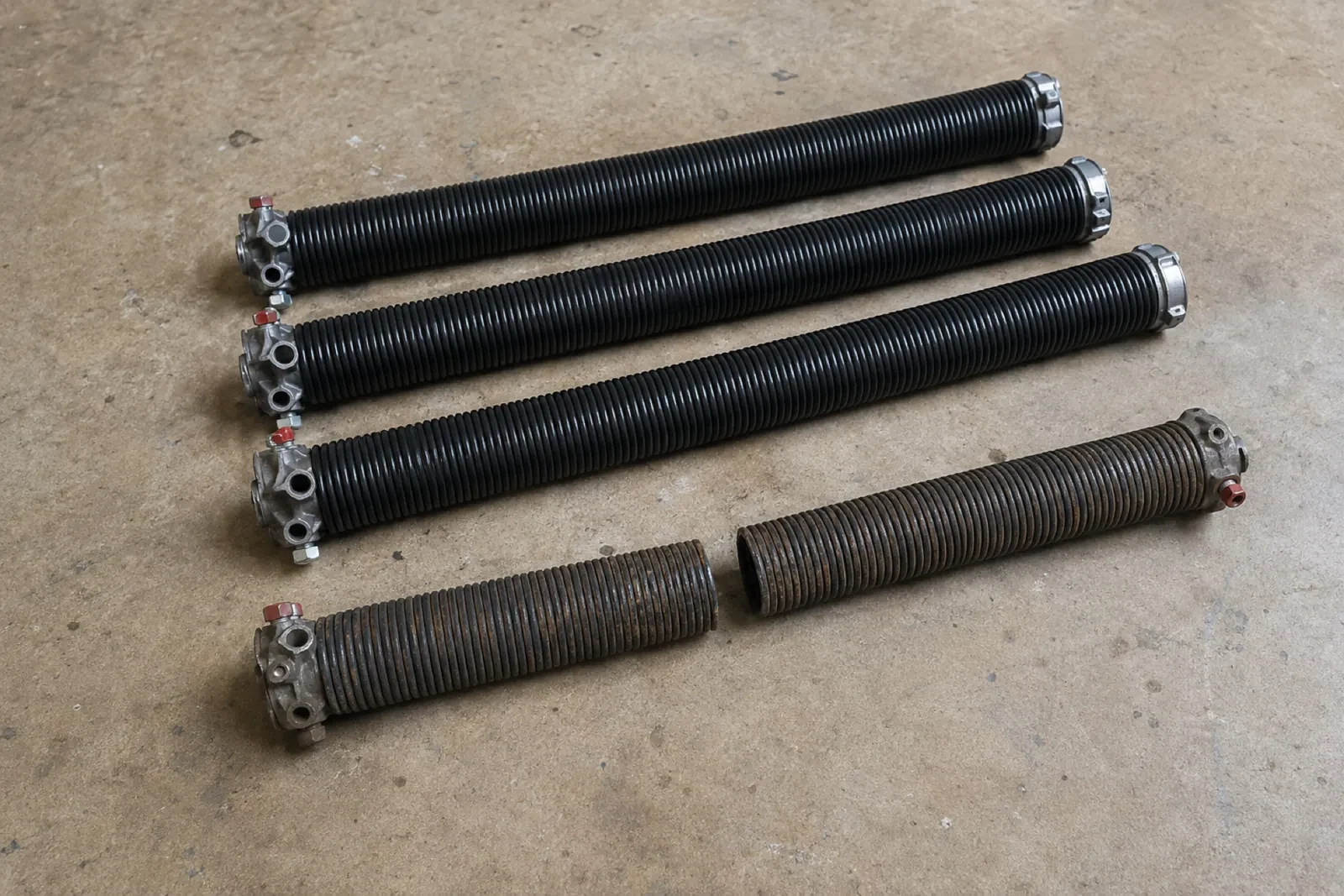
Because the chain only guides a door that the springs already carry. With the operator unplugged and the red handle pulled, a balanced door lifts with moderate effort and holds about a metre off the floor. If it is heavy or sinks, the springs have lost tension and the drive has been hauling weight it was never meant to, which is exactly how gears strip and chains stretch. Correcting the door first means the repaired drive lasts.
The door is stuck. Should I pull the red cord?
Yes, if you need the door open and the door is closed or nearly so. Pulling the handle frees the door from the trolley so it can be lifted by hand. Do not pull it while the door is open, because a door with a weak spring can drop. If the door will not lift by hand, or feels very heavy, leave it and mention that when you call, since it points to a spring rather than the drive.
Related services
- Belt-Drive Opener RepairPress the remote and the motor runs its full cycle, lights on, the usual whir, but the door does not move a centimetre.
- Garage Door Opener ReplacementThe remotes only work from the end of the driveway now, and one of them disappeared with a set of keys last month.
- Photo-Eye Sensor Alignment or ReplacementYou press the remote, the door drops a few centimetres, then climbs straight back to the top while the opener light blinks.