Openers · Toronto
Garage Door Opener Replacement
The remotes only work from the end of the driveway now, and one of them disappeared with a set of keys last month.
In plain words
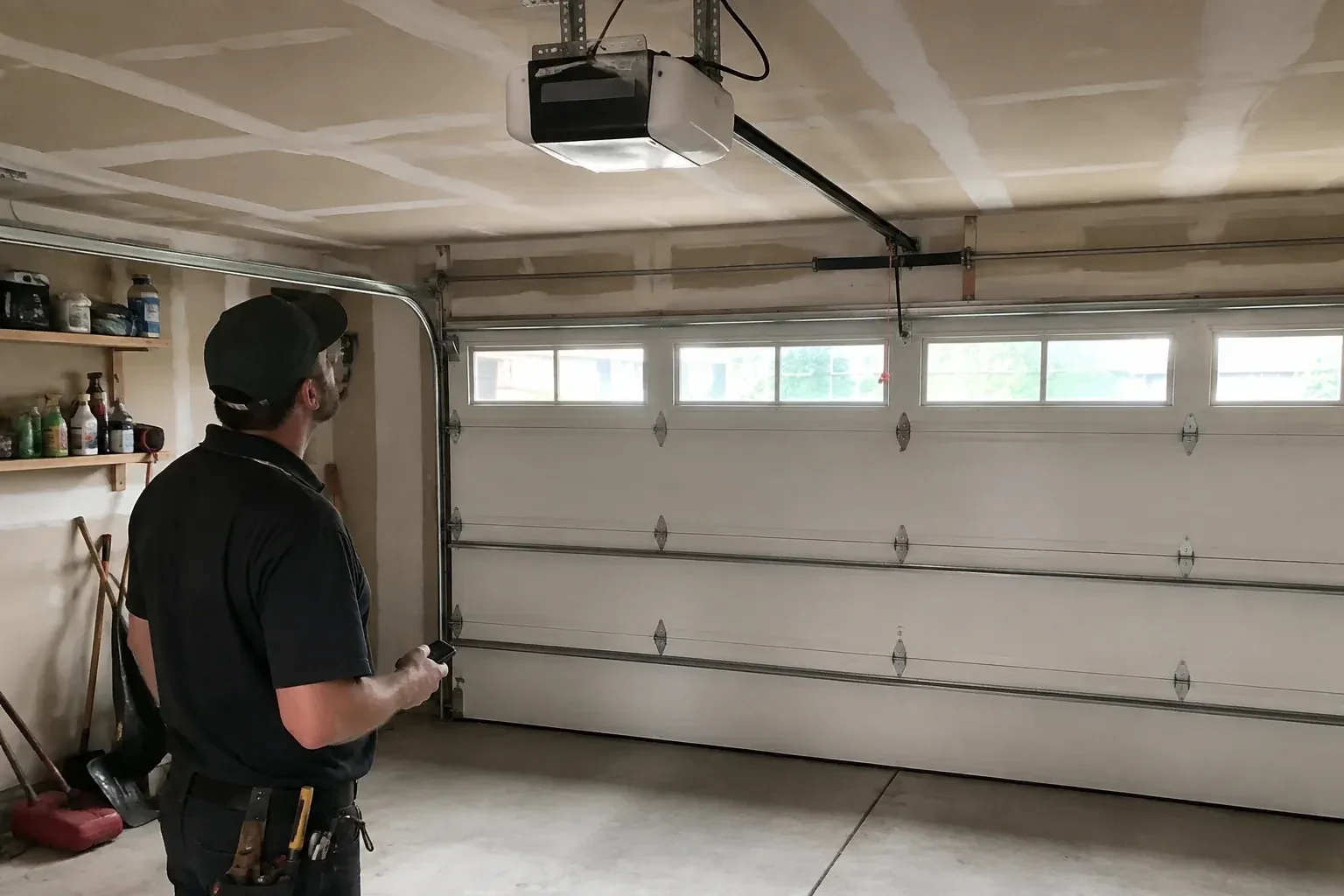
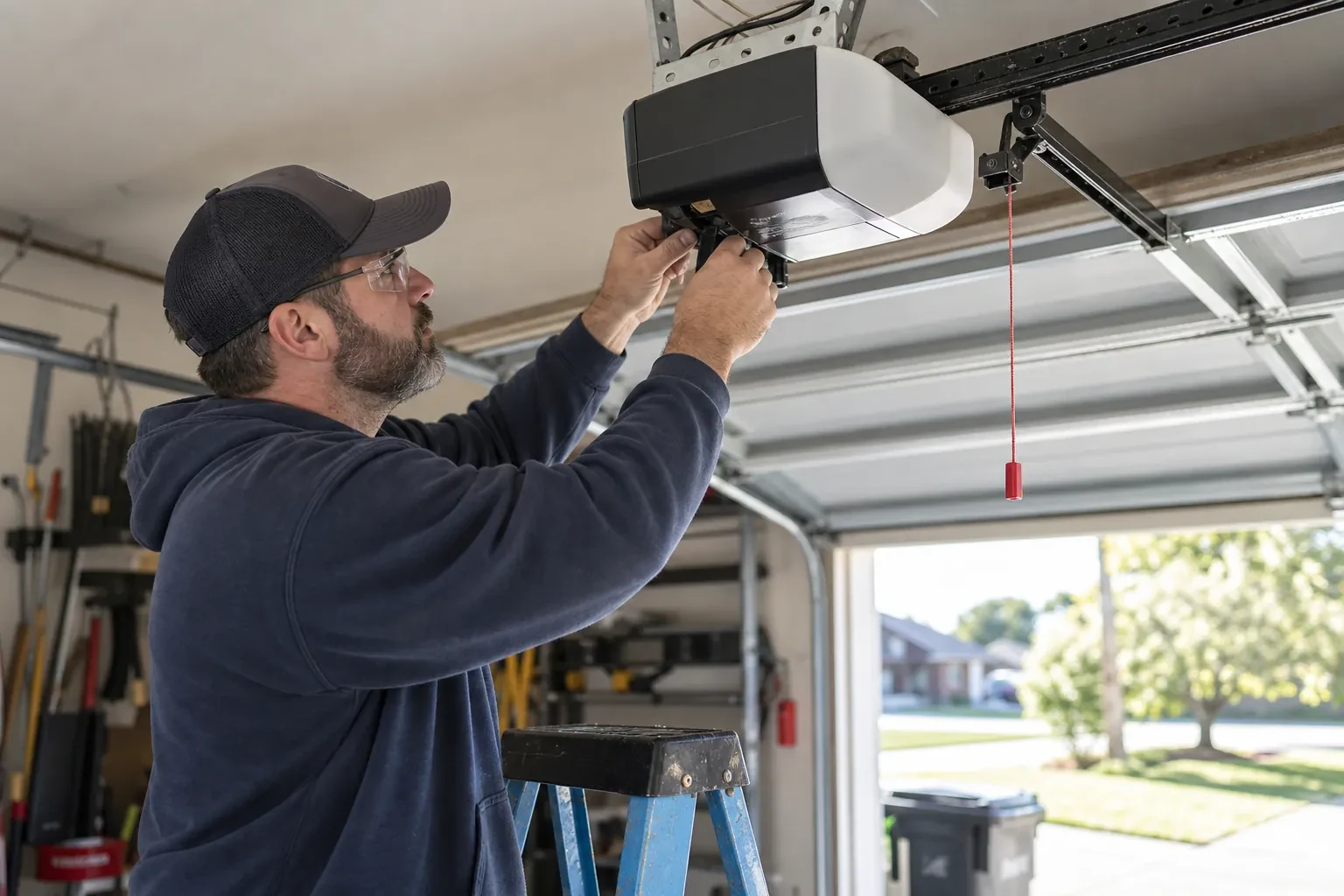
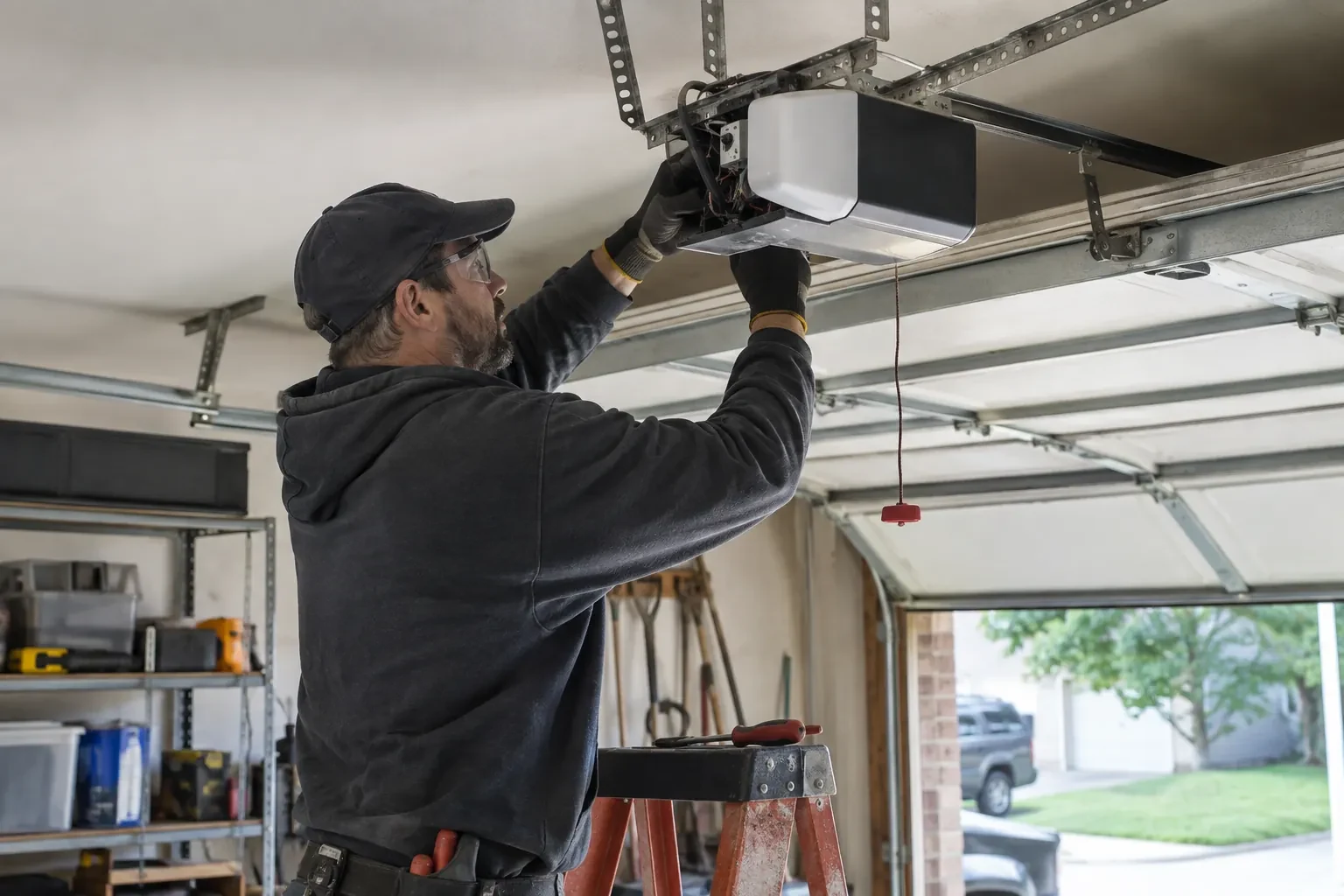
Choosing the drive is the decision that shapes daily life with the new opener. A chain drive is the familiar workhorse, sturdy and simple, with a little more sound. A belt drive runs on a reinforced rubber belt and is the answer for a garage under a bedroom. Direct-drive units move the motor itself along a stationary chain inside the rail and have very few moving parts. A wall-mount operator sits at the end of the torsion shaft and leaves the ceiling completely clear. The technician matches the drive to your door's weight, your ceiling, how close the garage sits to living space and how you use the door.
How the visit goesThe remotes only work from the end of the driveway now, and one of them disappeared with a set of keys last month. Inside the remote are tiny switches instead of a learn button, so excluding the missing one means resetting the switch pattern on every remote and the receiver.
Garage Door Opener Replacement
How the visit goes
The rest of the door hardware
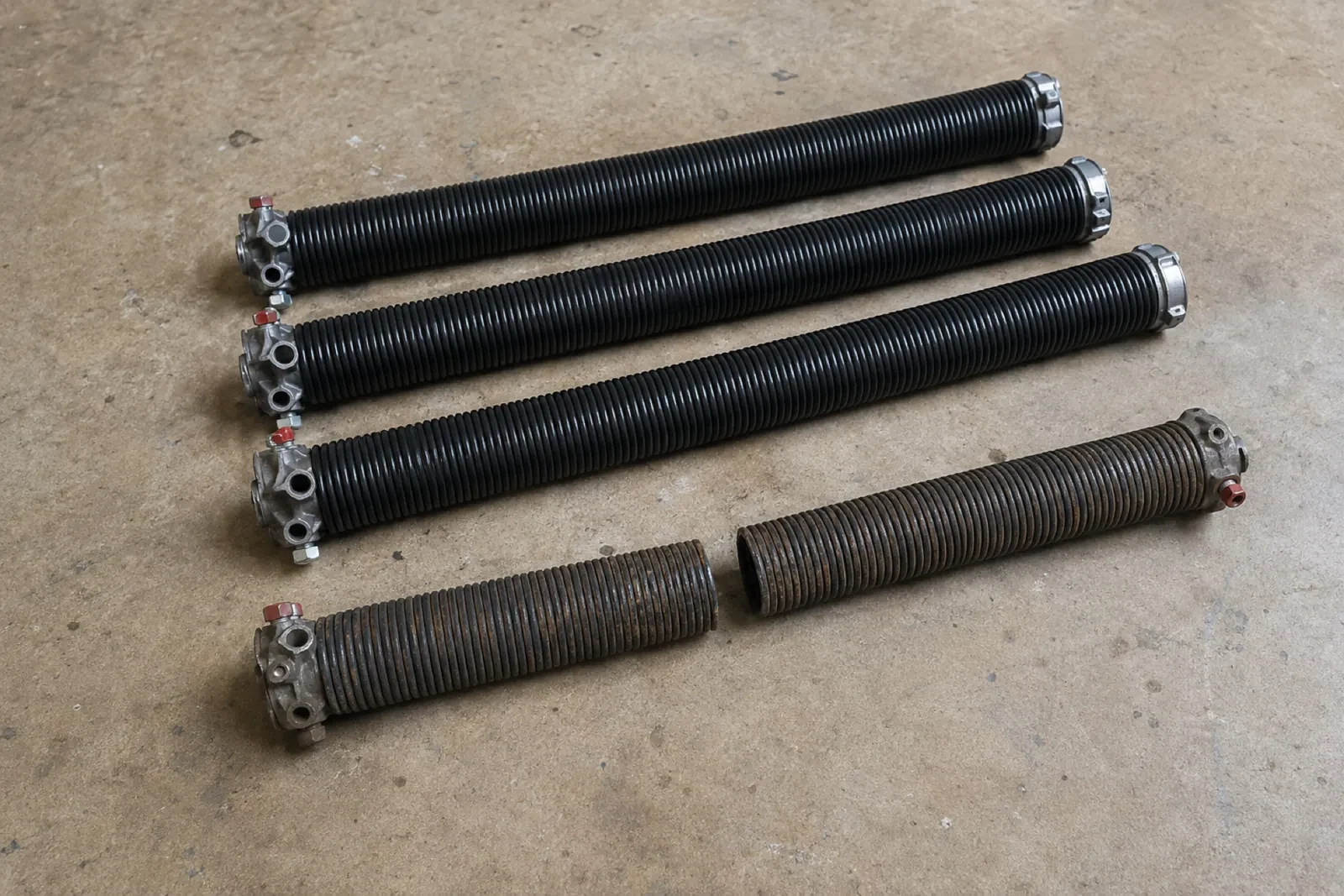
Because a new operator will run this door thousands of times, the technician gives the rest of the system a look while the door is disconnected. Rollers are checked for flat spots and worn bearings, hinges for cracks and loose fasteners, cables for fraying at the drums and bottom brackets, and track for dents, loose brackets or a misaligned curve. A door that rumbles or catches on the way up with the opener disconnected will do the same with a new one. Small hardware fixes agreed at this stage give the new operator a smooth door to work with and keep the finished result quiet.
Sensors, console and wiring
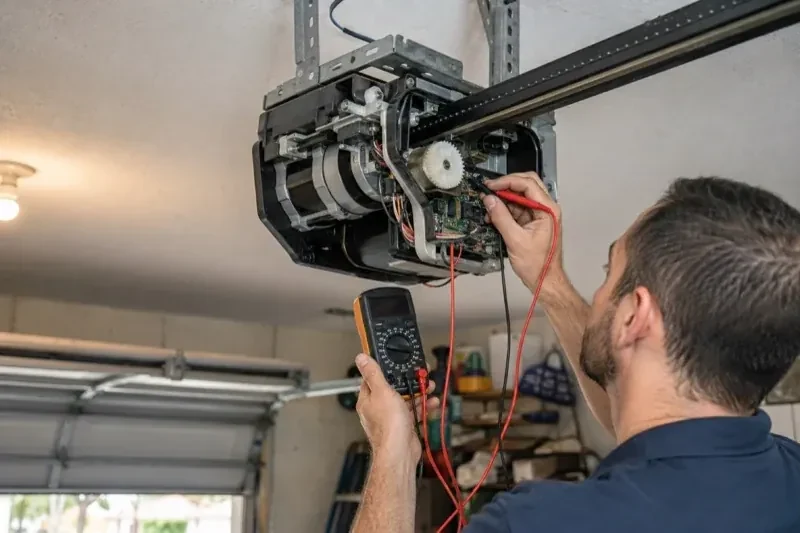
The photo eyes are mounted on both sides of the opening no higher than about 15 cm off the floor, aimed at each other until their indicator lights hold steady, and their wire is stapled neatly along the wall and ceiling to the head. The wall console goes at least 1.5 m above the floor, in clear sight of the door and away from moving parts, so it is out of reach of small children and the door can be watched while it runs. Low-voltage wire is kept clear of the rail and the chain. Finally the head is plugged into its grounded receptacle and powered up for the first time.
Getting the door through winter
A modern operator runs at the smallest force that moves the door, so on a bitter morning when the bottom seal has frozen to the slab it will reverse rather than tear the seal or strain the top section. The right response is to free the seal, by breaking the ice along the threshold or warming it, then press the button again. Keep snow and slush cleared from the threshold, put a silicone wipe on the seal before the cold sets in, and expect the door to sound a little different at minus twenty. An operator chosen for a detached garage is rated for those temperatures, and the seasonal lubricant it was given keeps the hardware moving.
Garage Door Opener Replacement
In the van
Chain or reinforced belt
Rail sections and trolley
Photo-eye sensors
Wall control console
Remotes and wireless keypad
Garage Door Opener Replacement
What affects the quote
A second door on the same visit
Replacing two operators in a double garage, or one at the house and one at a detached workshop, shares the travel and setup and is quoted as one visit with two installations.
Removing and recycling the old unit
Taking down the old head, rail, hangers, sensors and wiring, and carrying them away for metal and electronics recycling, is labour that appears on the quote alongside the installation.
Power at the head unit
If a grounded receptacle is already close to the operator, nothing is added. If one must be installed or moved, that electrical work is quoted separately by an electrical contractor.
What to have ready
- How much room is there between the top of the open door and the ceiling?
- How wide and how tall is the door, and is it a single or a double?
- What make and model is printed on the old opener's label, and roughly how old is it?
Garage Door Opener Replacement: questions
QuestionsWhy does the technician test the door by hand before anything else?
Because the opener depends on the springs. With the old unit disconnected, a balanced door lifts with moderate effort and stays put at roughly waist height. A door that drops or drifts is telling the technician the springs need adjusting, and doing that first means the new operator is never asked to haul a heavy door, which would shorten its life and mask a problem that belongs to the door.
My old photo eyes still work. Can they stay?
Sensors and head unit are made for each other; a board reads its own maker's sensors, often a particular generation of them, so the pair in the box is what goes on the wall and the old ones come down with the old opener. The new pair sits low at each side of the doorway, roughly a hand's width above the concrete, and the technician confirms their indicator lights are steady before the door is tested against the beam.
What is a wall-mount opener and who is it for?
It is the operator that lives on the wall rather than the ceiling. Fixed where the torsion shaft ends, it rotates the shaft to raise and lower the door, and nothing hangs overhead. It suits cathedral and low ceilings, garages with lofts or lifts, and anyone who wants a very quiet door. Because there is no trolley holding the door shut, it comes with a powered deadbolt on the track and a monitor that stops the door if a lift cable slackens.
Related services
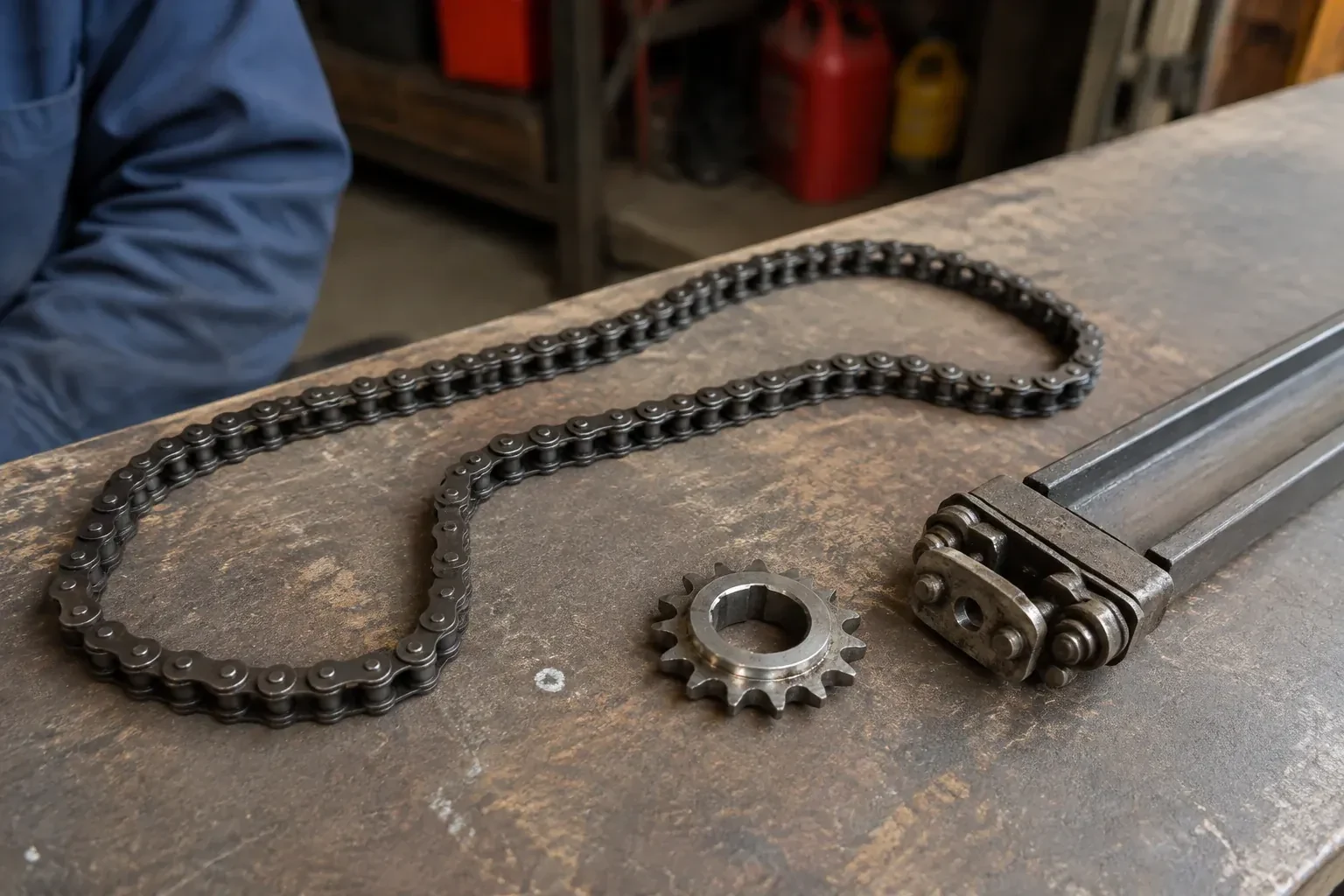
- Chain-Drive Opener RepairPress the button and the opener hums for a second, then quits.
- Belt-Drive Opener RepairPress the remote and the motor runs its full cycle, lights on, the usual whir, but the door does not move a centimetre.
- Photo-Eye Sensor Alignment or ReplacementYou press the remote, the door drops a few centimetres, then climbs straight back to the top while the opener light blinks.