Garage Doors in Cliffside, OntarioWorkshop doorsthat earn their keep.
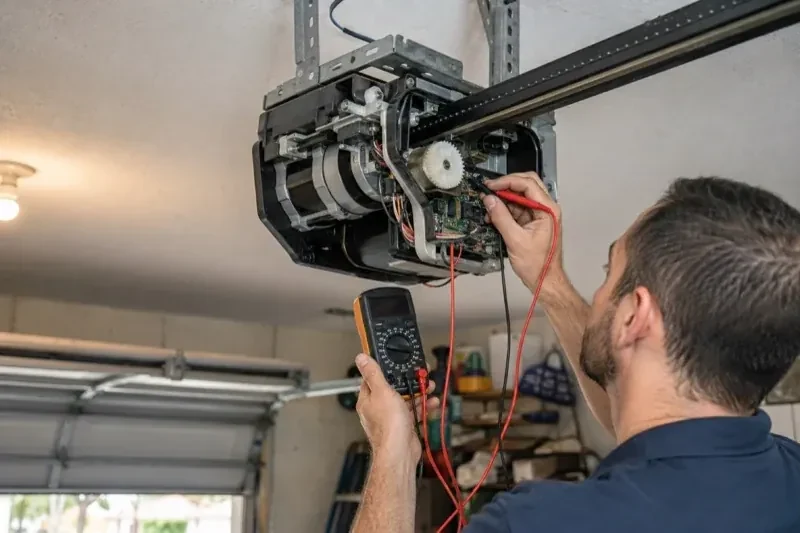
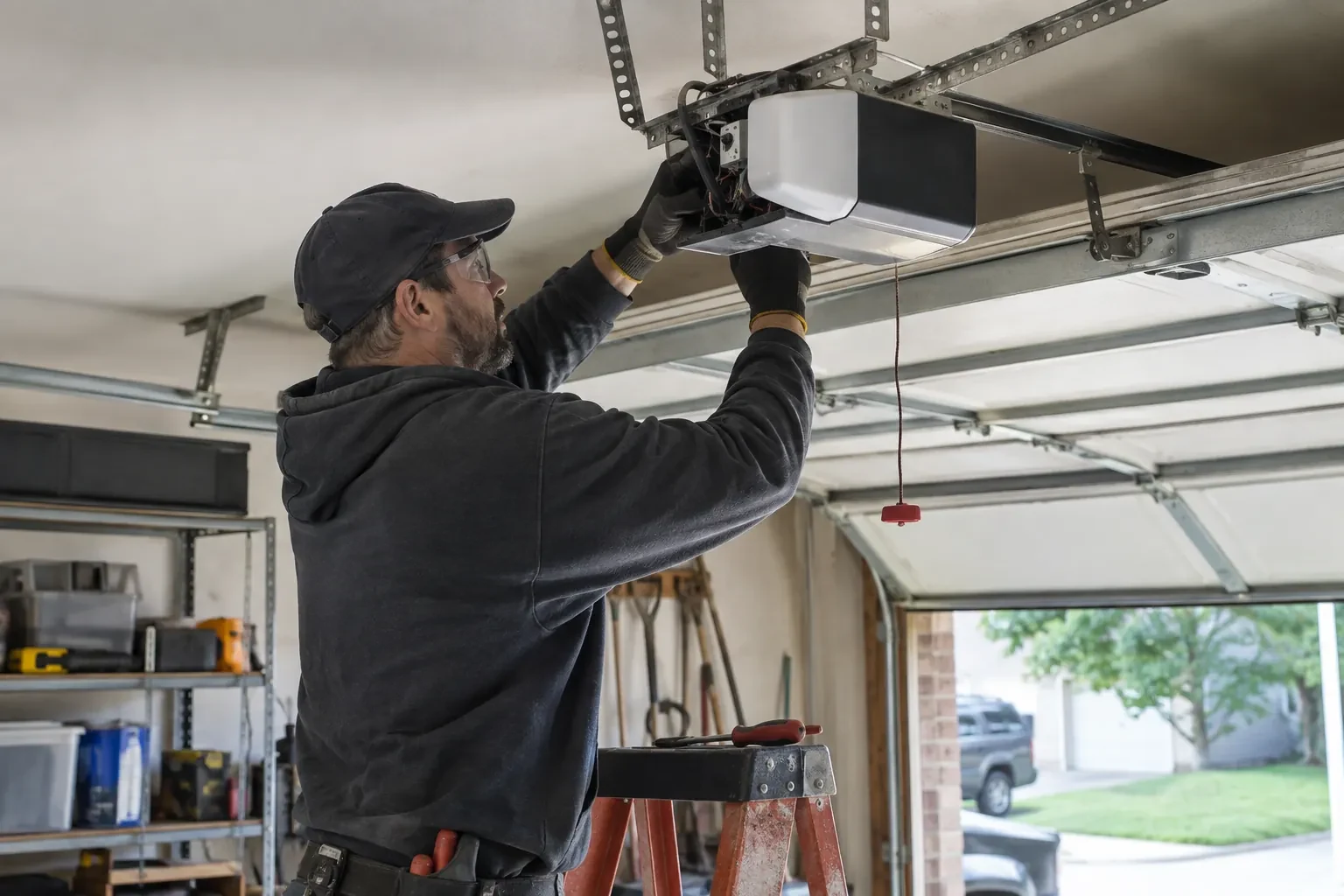
Plenty of garages in Cliffside are workshops first and parking second. Dust, sawdust and frequent openings are hard on rollers and photo-eyes, so we fit sealed bearings, protect the sensors, and set the opener for the extra cycles, so the door keeps pace with whatever you are building inside.
Plenty of garages in Cliffside are workshops first and parking second. Dust, sawdust and frequent openings are hard on rollers and photo-eyes, so we fit sealed bearings, protect the sensors, and set the opener for the extra cycles, so the door keeps pace with whatever you are building inside.
Small adjustments, long-lasting results.
The garage door on a house in Cliffside is usually the entrance the family uses most, so we treat a repair as something that has to hold. That means finding the cause rather than the symptom, replacing the worn neighbour as well as the broken part, and setting the door up so the opener is not straining.
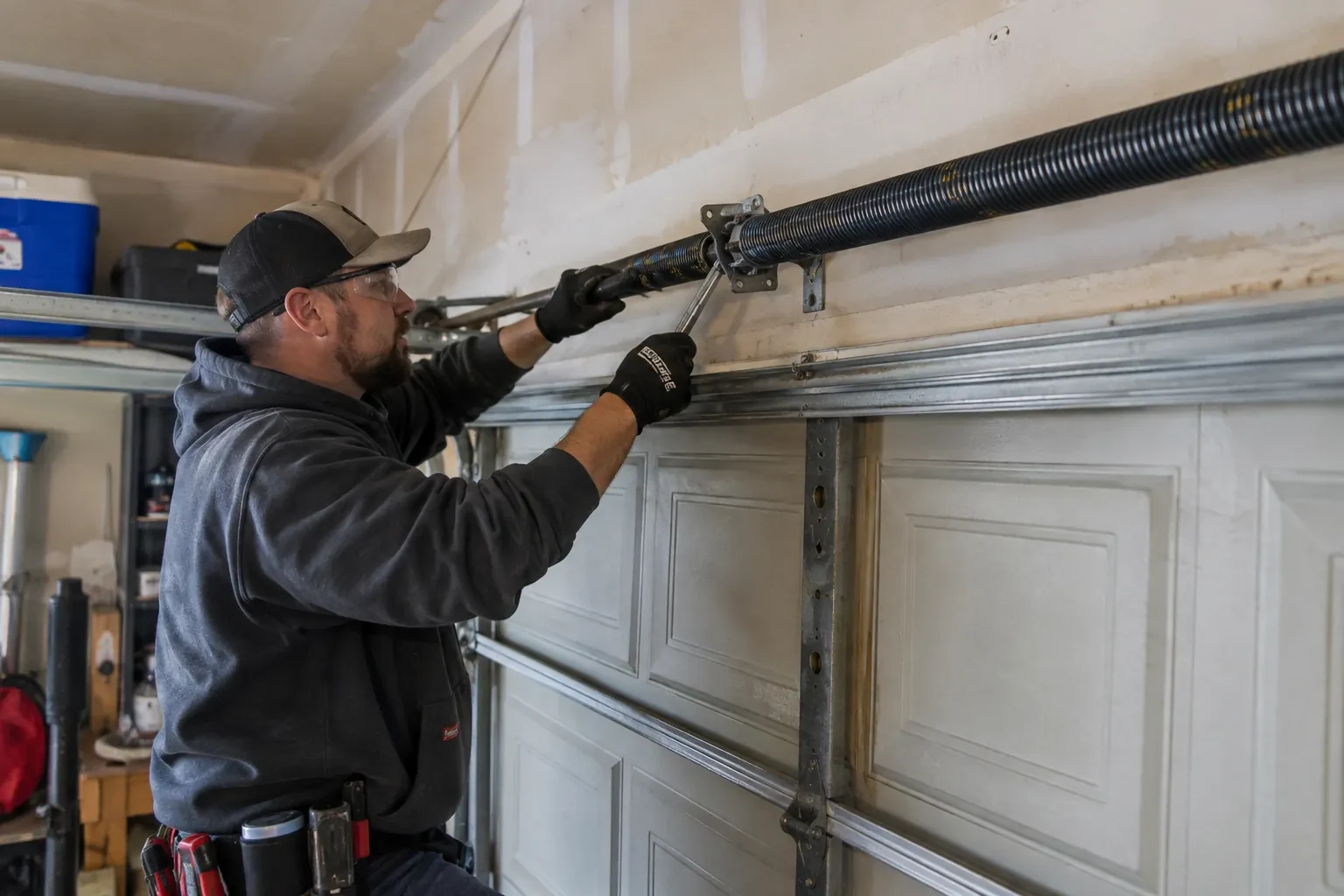
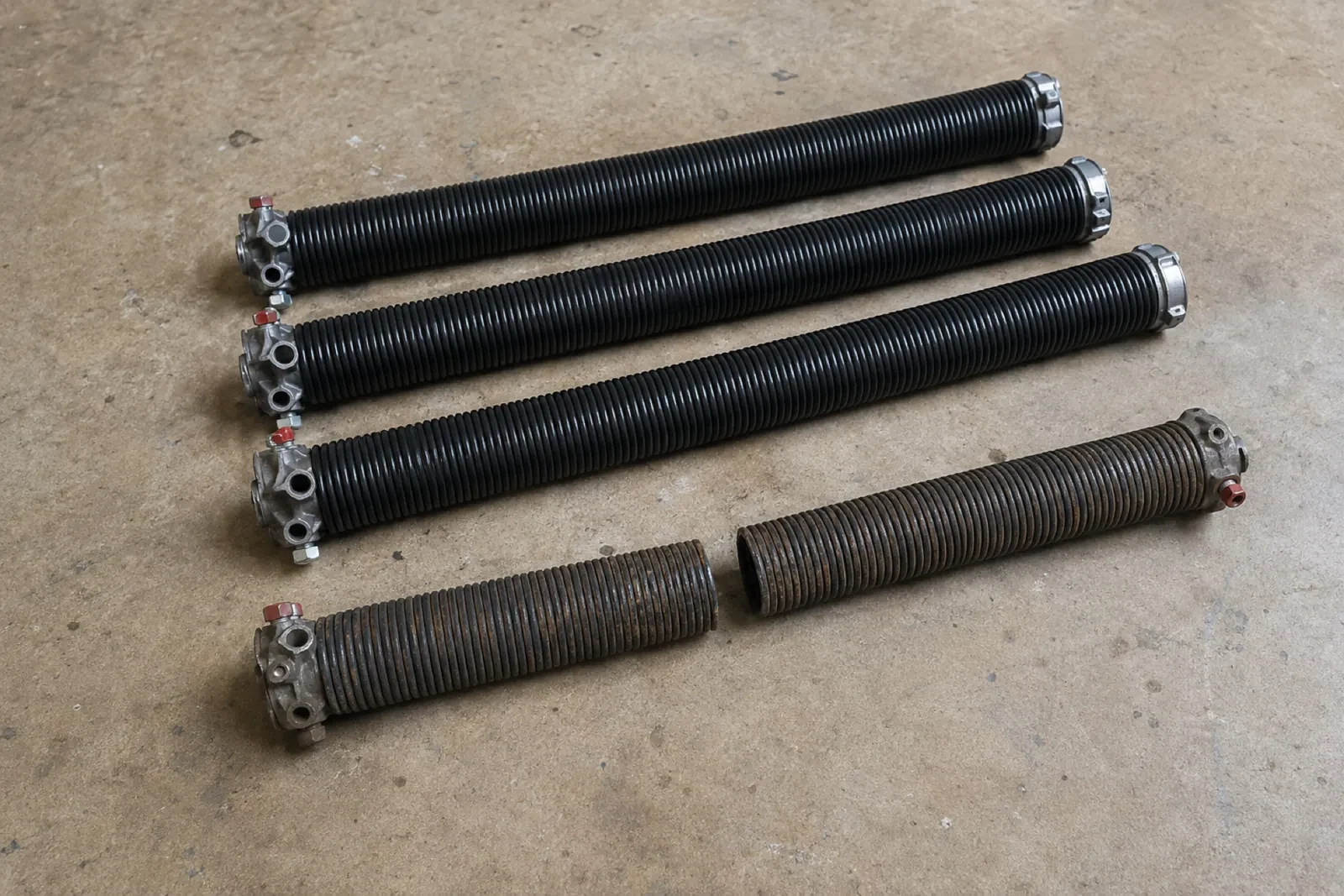
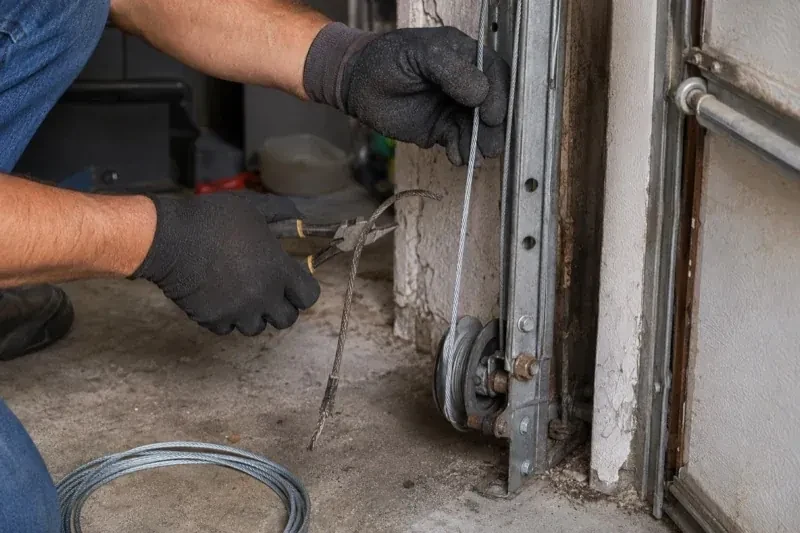
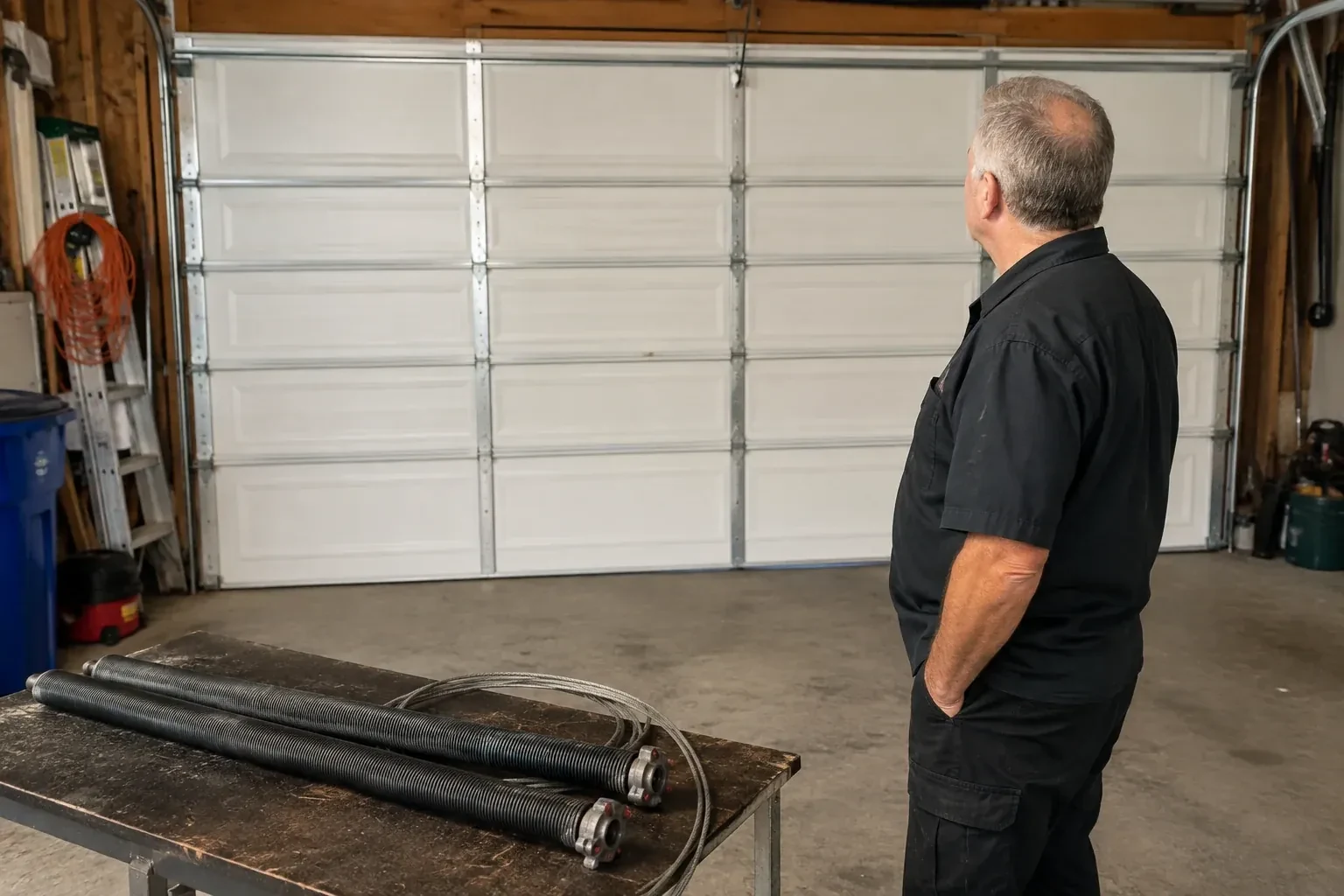
Households in Cliffside know the sound of a spring letting go: a bang from the garage, then a door that will not lift. Our technicians handle torsion and extension springs with winding bars, clamps and the patience the job deserves, always matching the spring to the door's weight. The door is balanced afterwards so the opener is lifting a door, not fighting one.
17years in business
24/7open every day
The diagnosis first. No work begins until you have heard what we found and agreed on the plan. That is how we avoid surprises on both sides.
A clean finish. Grease wiped from the tracks, hardware tightened, tools packed, the space swept. Tidy work is part of doing the job well.
Options explained side by side. A modest repair, a lasting one, a full replacement: you see how they compare so the choice is yours to make.
Garage doors in Cliffside go through the same cycle: hardware wears, springs tire, openers age, and eventually the door itself is due. We offer a service for each stage, so you can maintain what you have, repair what has failed, or replace the door when that is the sensible choice.
About 58% of homes in Toronto were built in 1980 or earlier, according to the 2021 Census.
Older homes
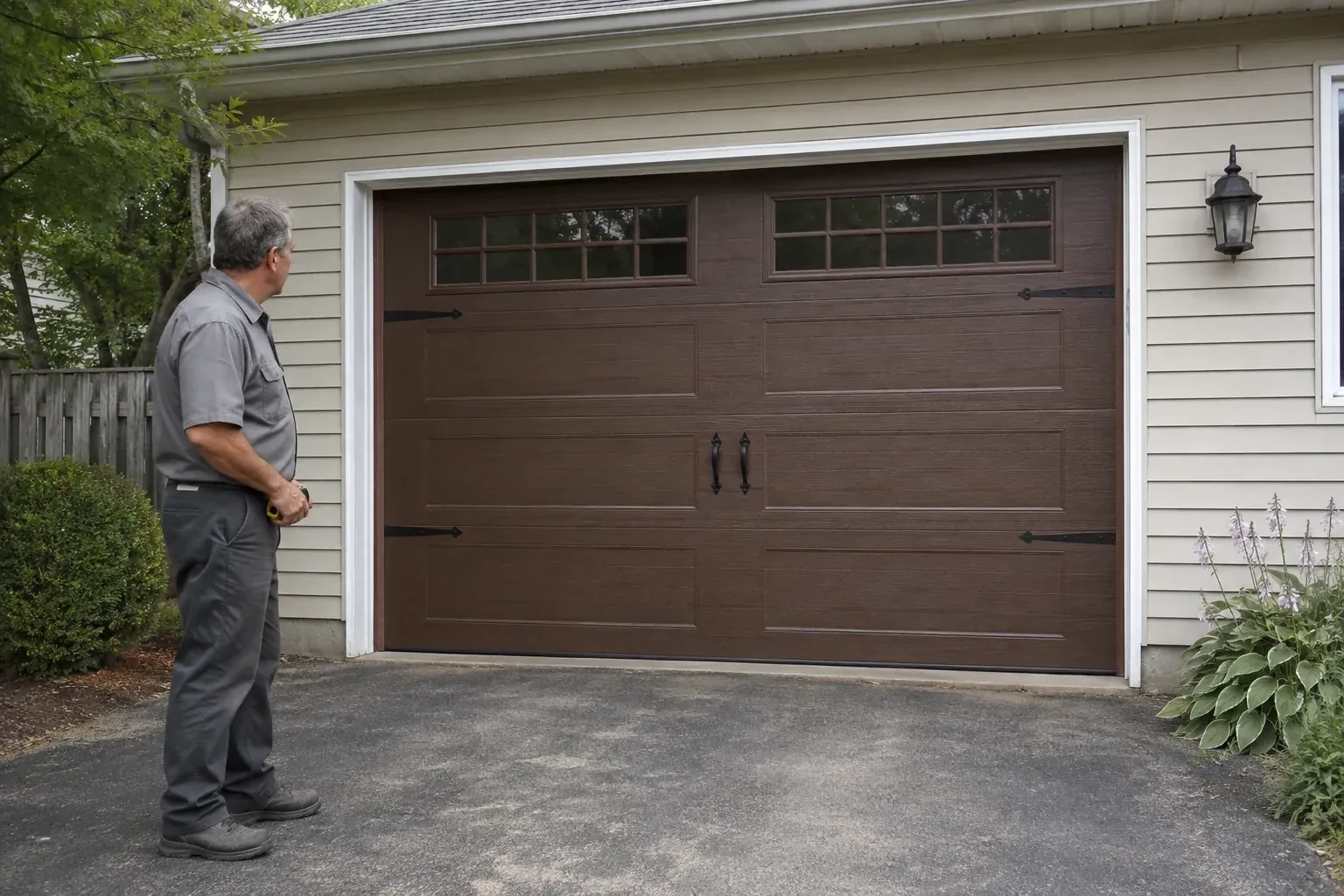
Older garages tend to have lower headroom and narrower single openings, so replacement doors and openers are chosen to fit the space rather than the other way round. Measuring the header, side room and ceiling depth is the first step on every one of these visits.
Single-detached houses make up about 23% of homes in Toronto (2021 Census).
In attached housing, a resident's remote or fob may open both their own door and a shared gate, and lost devices are a real security concern. We clear old codes from the operator, program replacements, and explain to management how to keep the access list current.
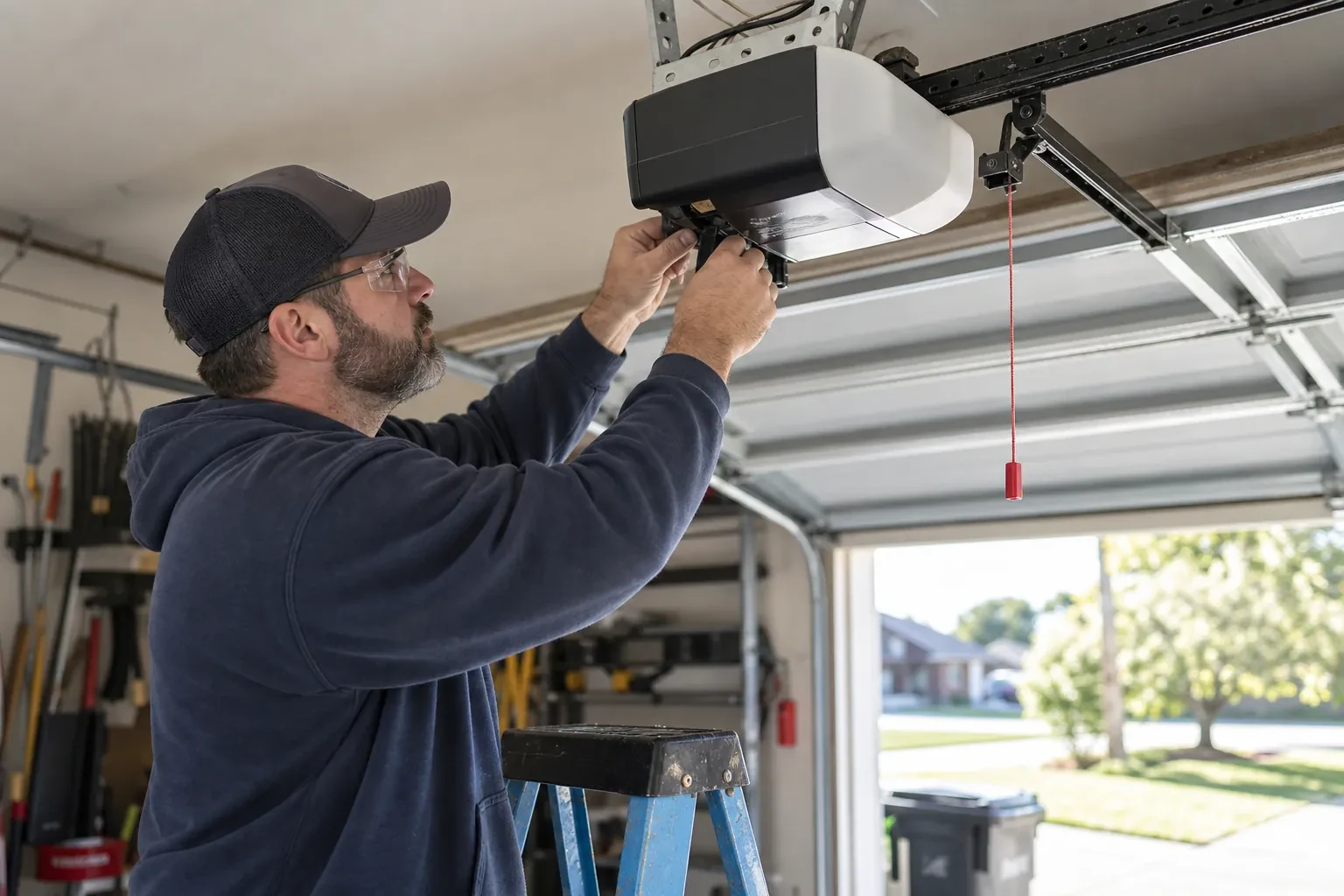
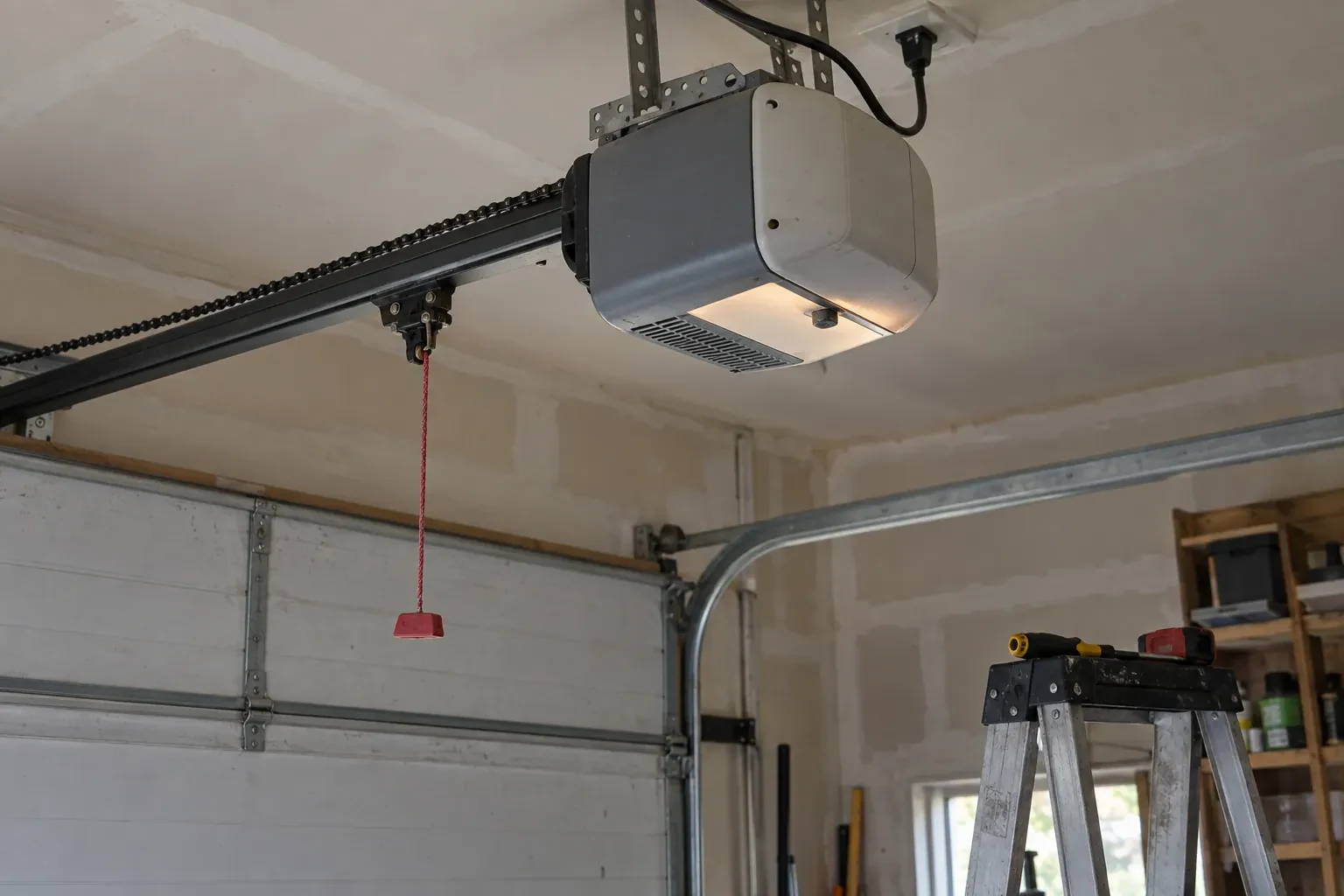
Press the button and the opener hums for a second, then quits. The trolley is jammed hard against a bolt at the very end of the rail near the motor and will not budge in either direction.
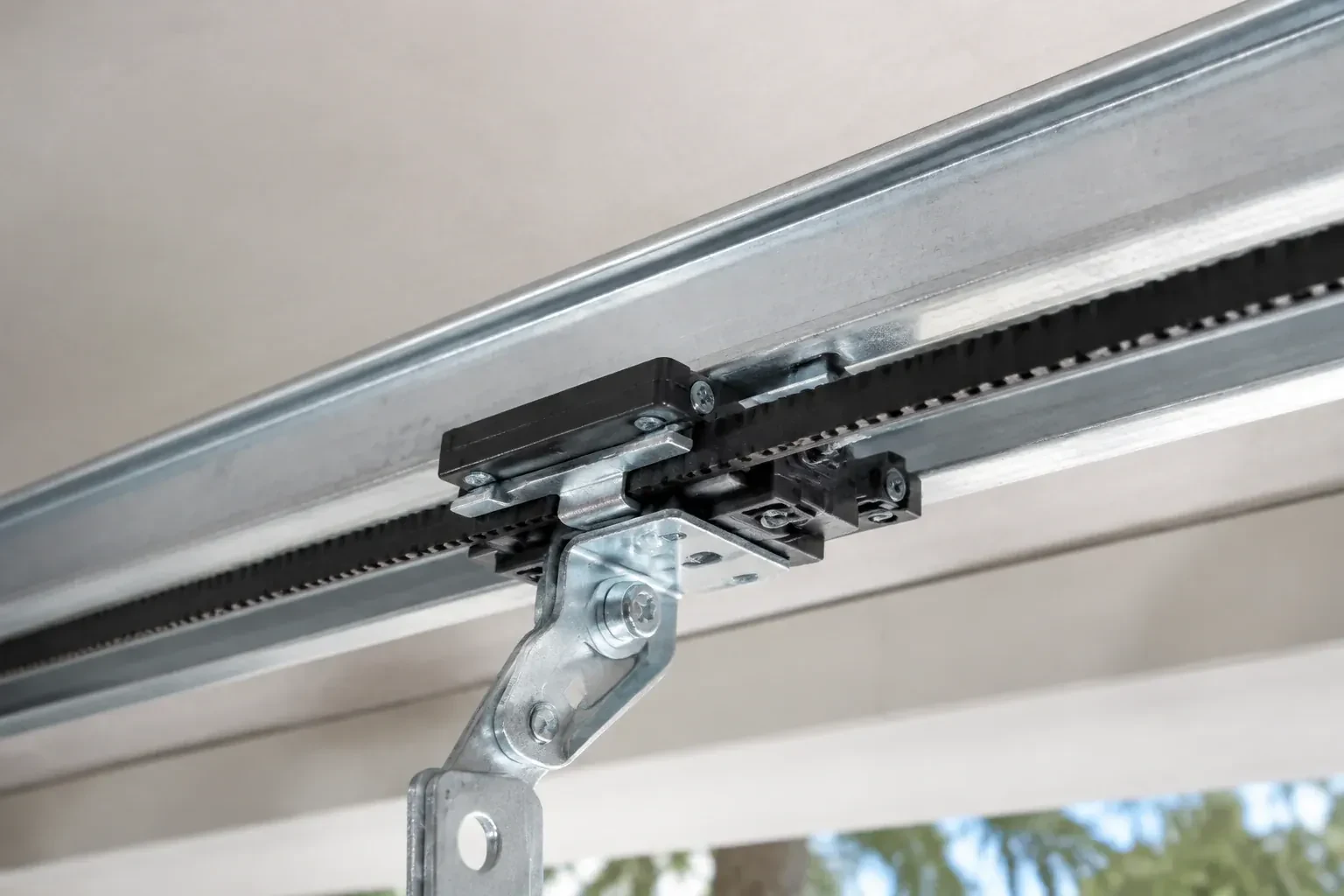
Press the remote and the motor runs its full cycle, lights on, the usual whir, but the door does not move a centimetre. Up at the trolley, the belt is hanging loose where a small plastic clip used to hold it.
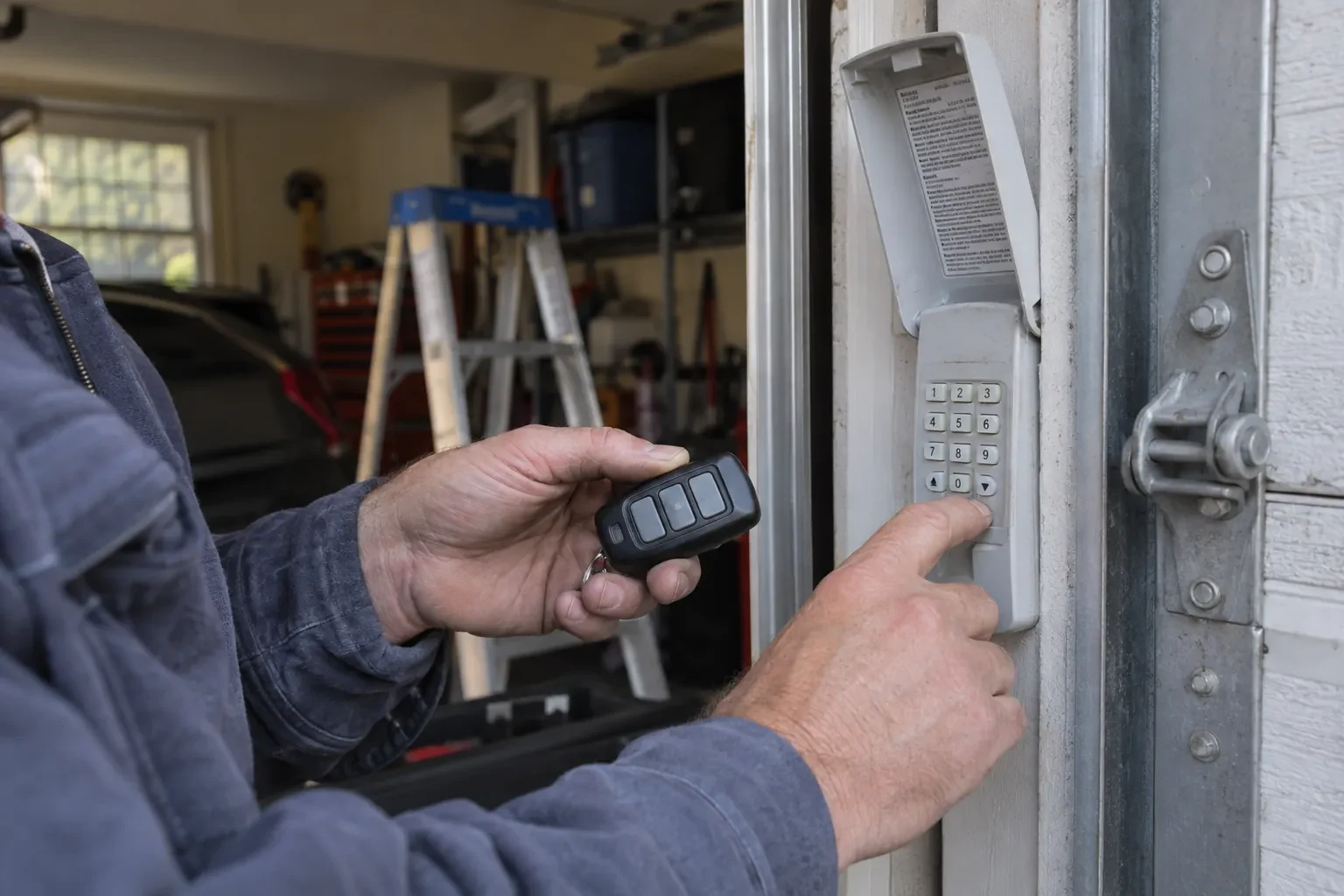
The remotes only work from the end of the driveway now, and one of them disappeared with a set of keys last month. Inside the remote are tiny switches instead of a learn button, so excluding the missing one means resetting the switch pattern on every remote and the receiver.
The new car has three buttons in the mirror for garage doors. You held the old remote up to it as the manual said, the light in the car changed, and yet the door ignores it completely.
The house came with a controller already screwed to the garage ceiling and a sensor on the door, but the app insists the device belongs to another account. The seller has moved provinces, the emails go unanswered, and every evening the door still reports to a stranger's phone.
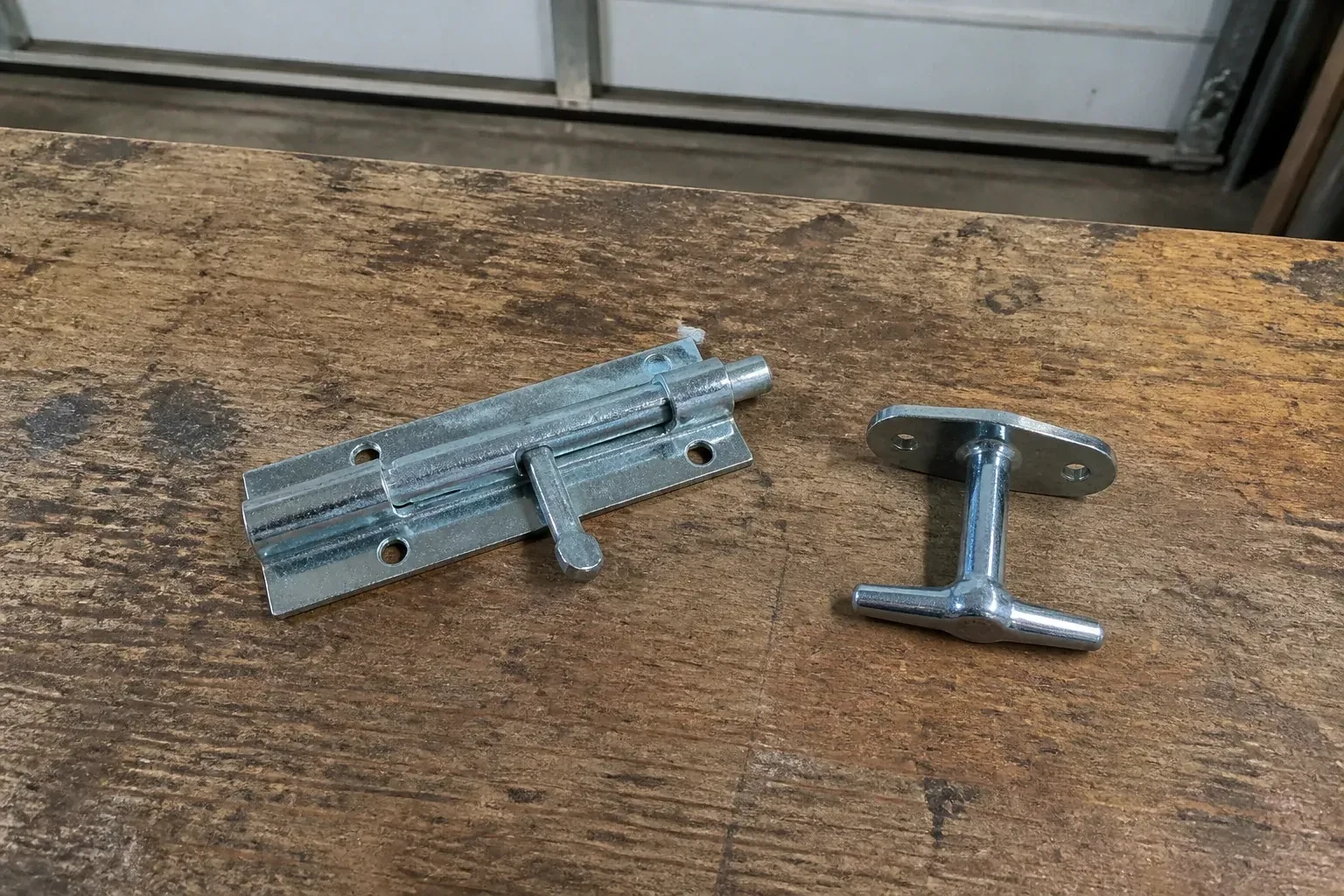
A previous owner knotted the release cord around the rail and stacked storage shelves right beneath it. You only discovered this in the dark, with the power off, a flashlight in your teeth and a car that needed to be somewhere.
Which fix fits?
The rollers on the door have been squealing for months.
There are mouse droppings along the wall behind the recycling bins, and at one bottom corner of the door the vinyl has a neat chewed notch the width of a thumb.
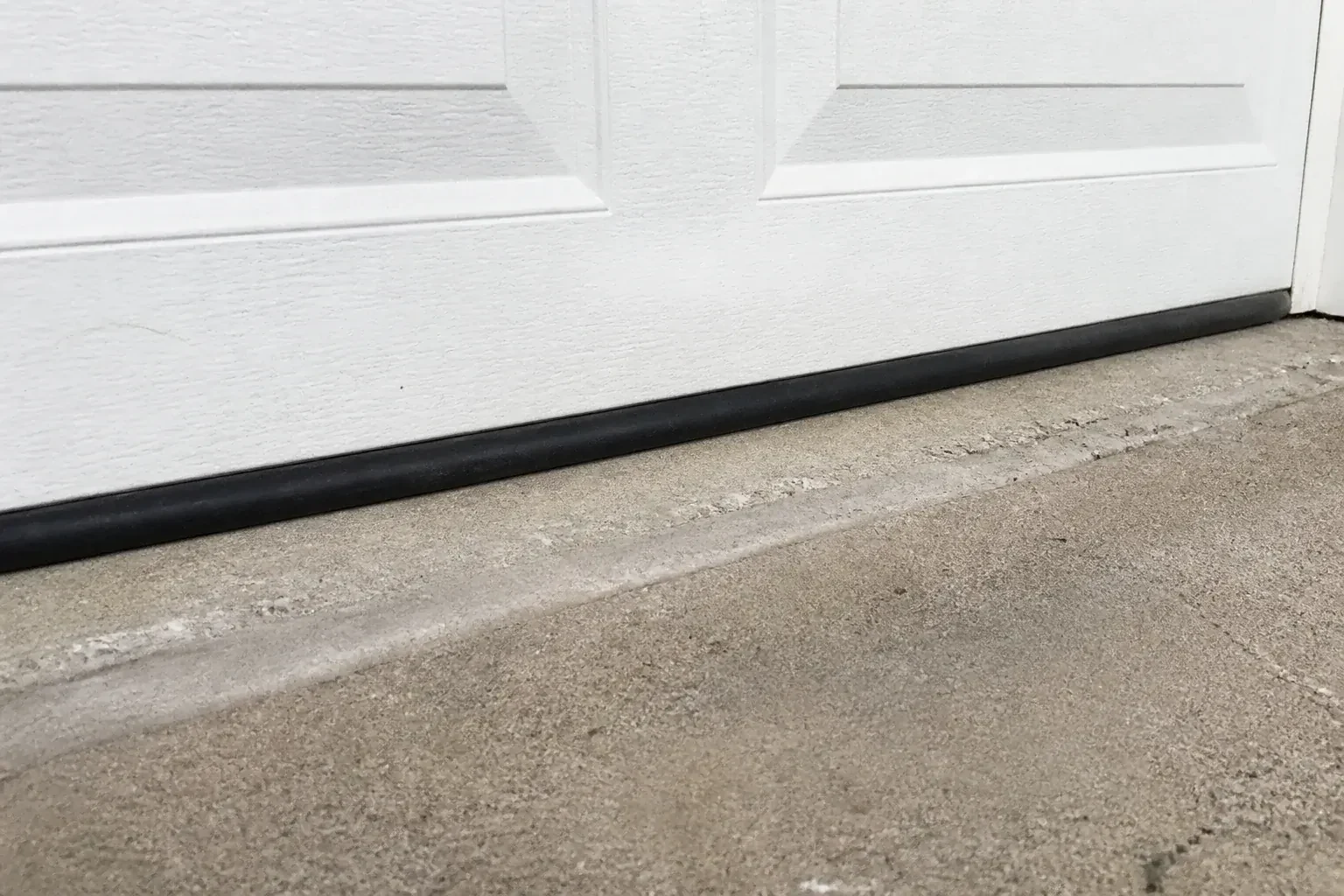
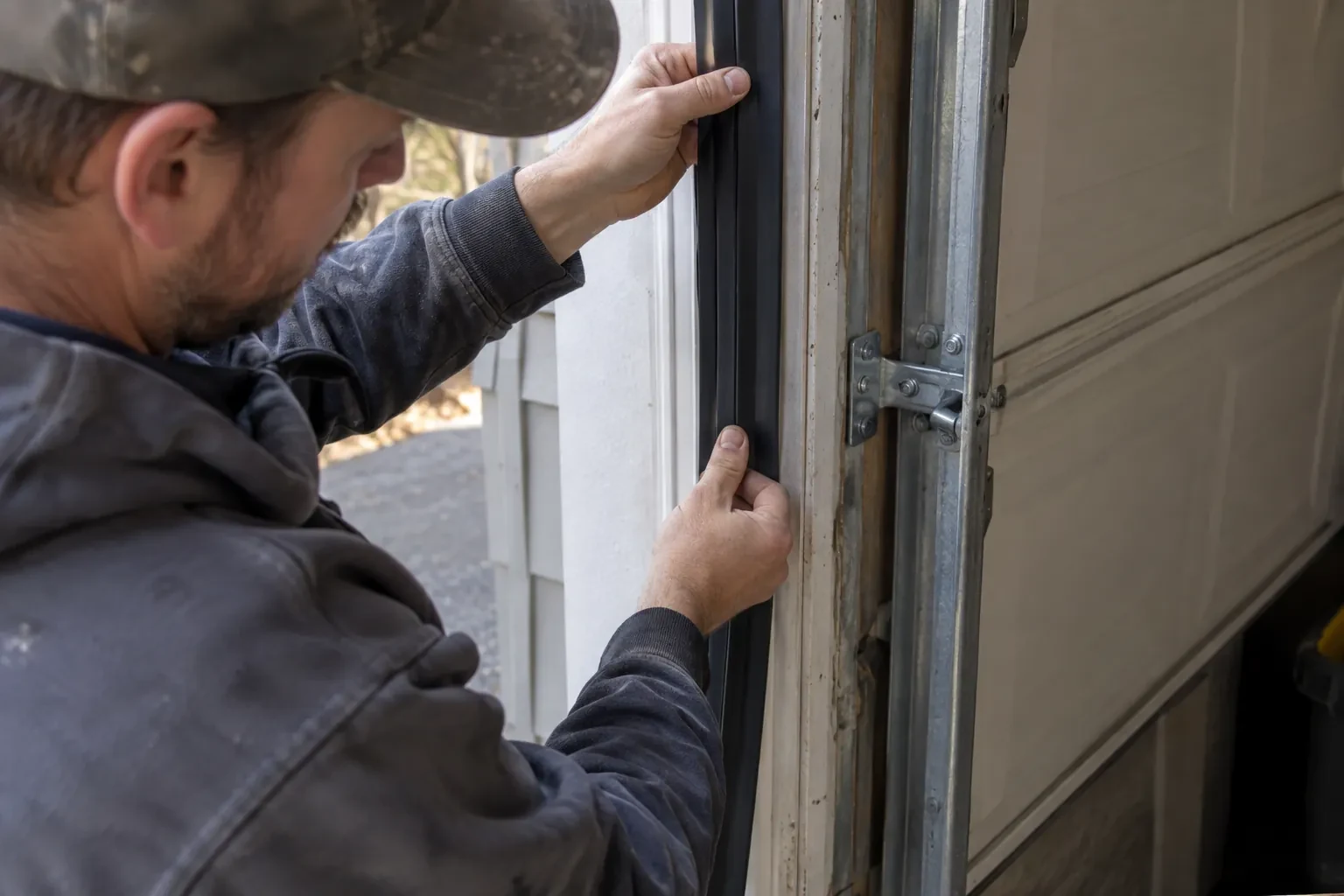
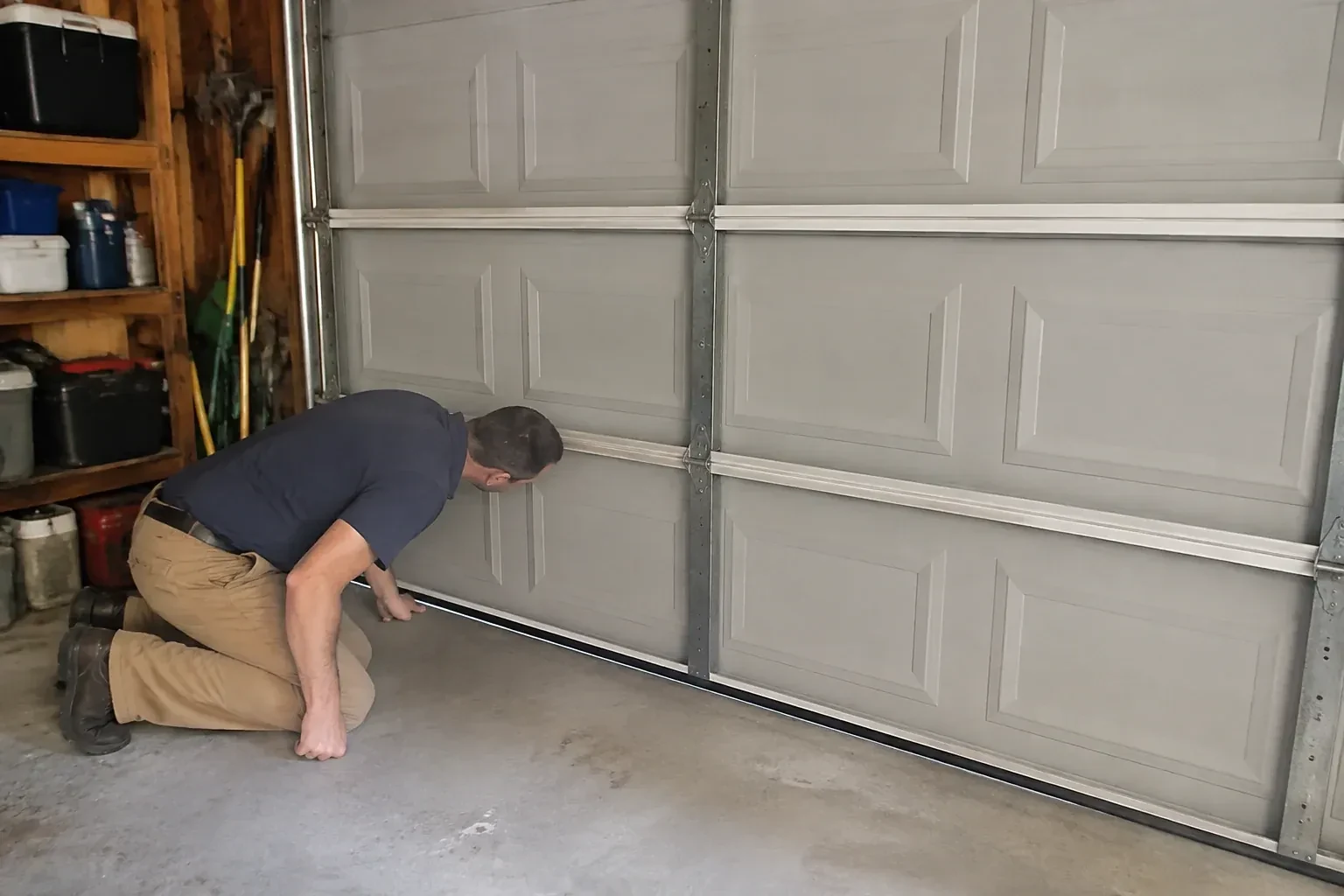
WhyThe bottom seal, called an astragal in the trade, is the flexible strip along the underside of the lowest door section that squashes against the floor when the door closes.
WhyImpact repair is more than flattening a dented panel.
Workshop equipment is moving in, and the present opener rail and door sections occupy the same overhead zone planned for lighting and clear working space.
WhyHigh lift sits between standard lift and full vertical lift.
How a visit goes
Describe the property, the hardware and what has changed, and the visit starts from what you have seen.
01
Say what you noticed
A new noise, a hesitation, a gap at the bottom. Small observations point us to the right part before we even arrive.
02
Diagnosis you can follow
We show you what we find as we find it: the worn cable, the tired spring, the sensor out of line. No mystery about the cause.
03
Work done and shown
The repair is completed, the door tested through full travel, and the result demonstrated so you know exactly what changed.
An entrance. Not an afterthought.
1/10Off-Track Garage Door Reset
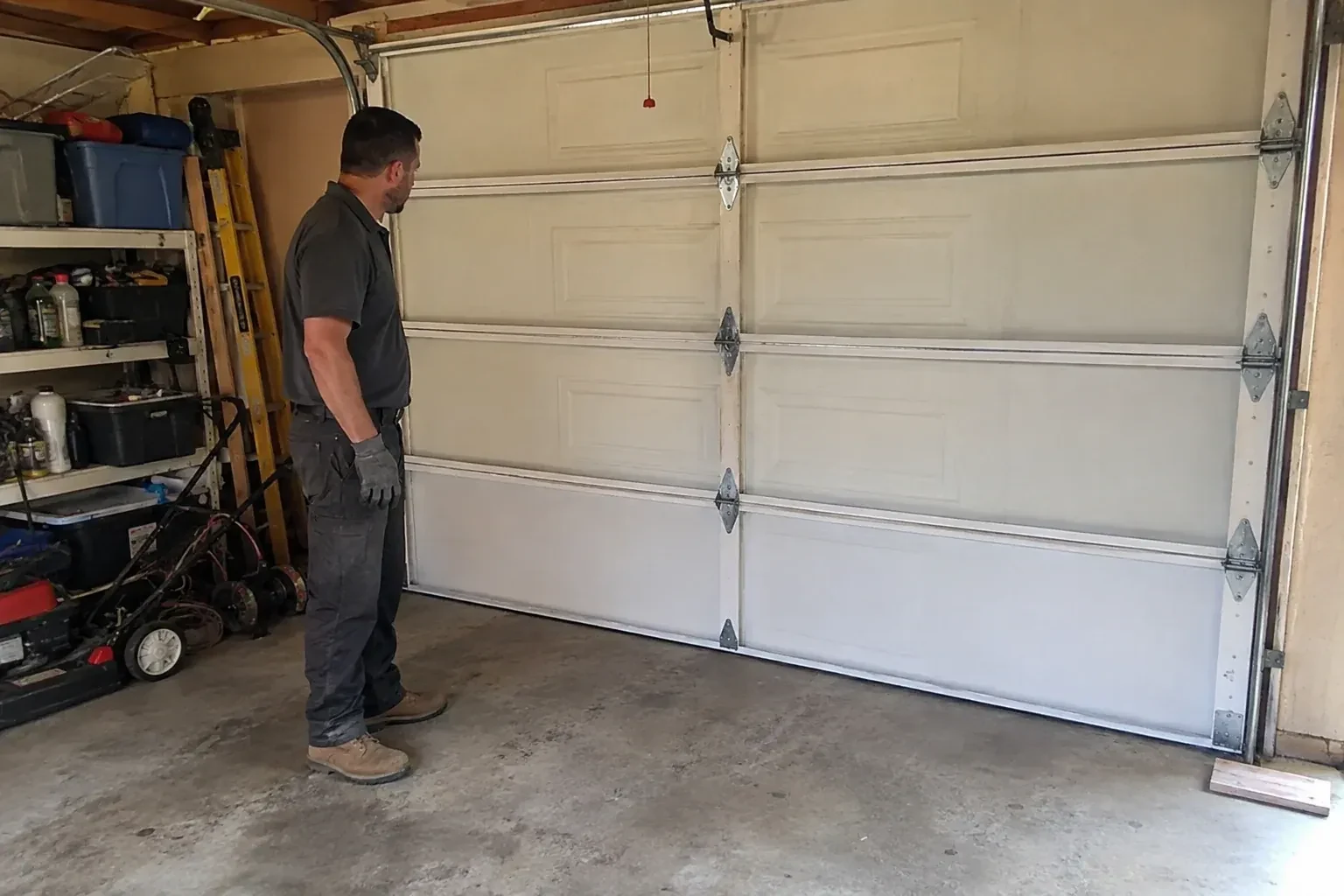
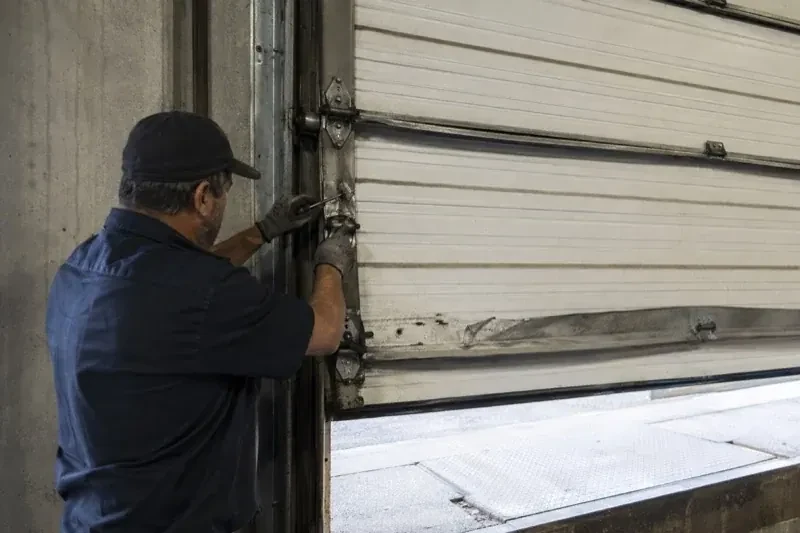
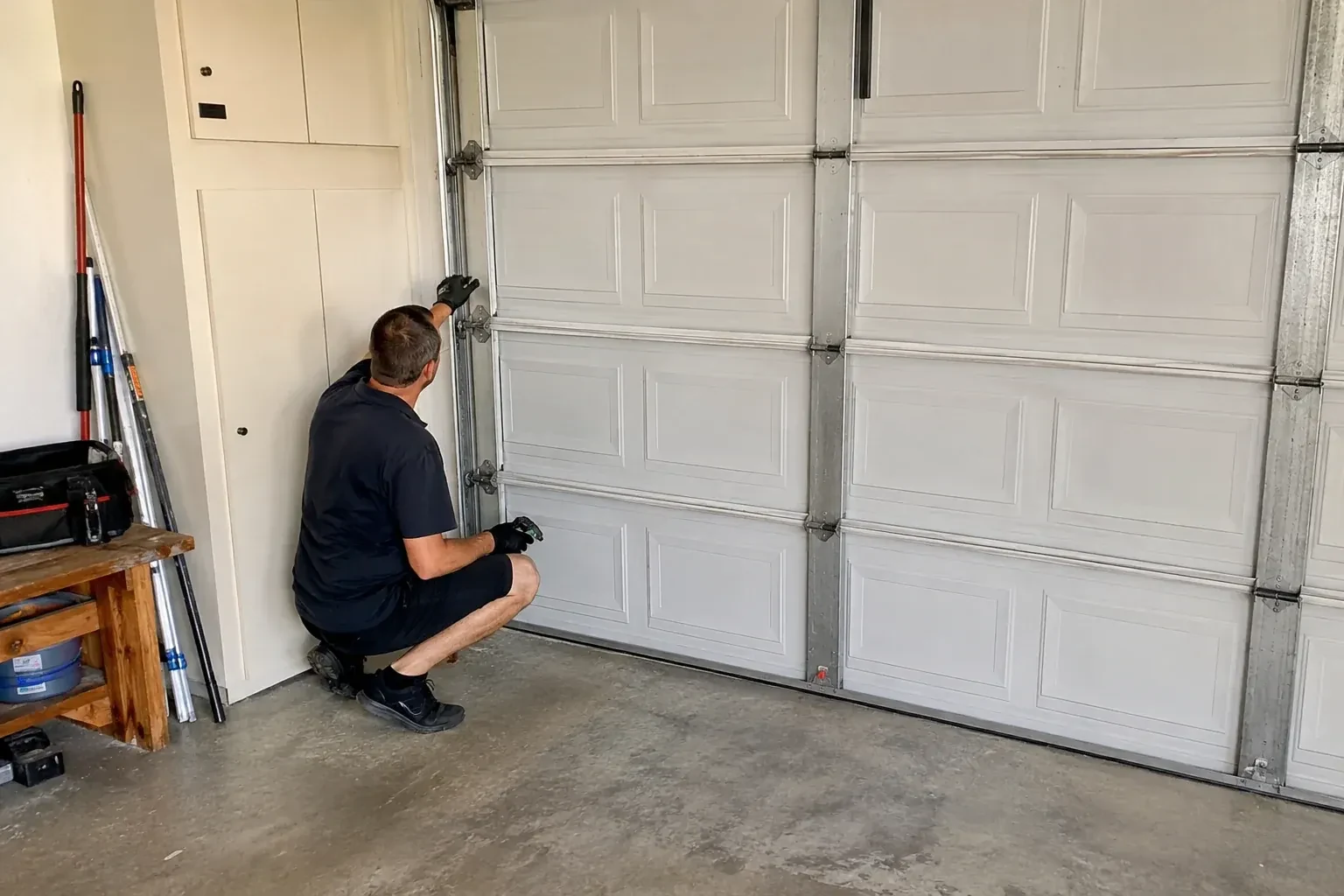
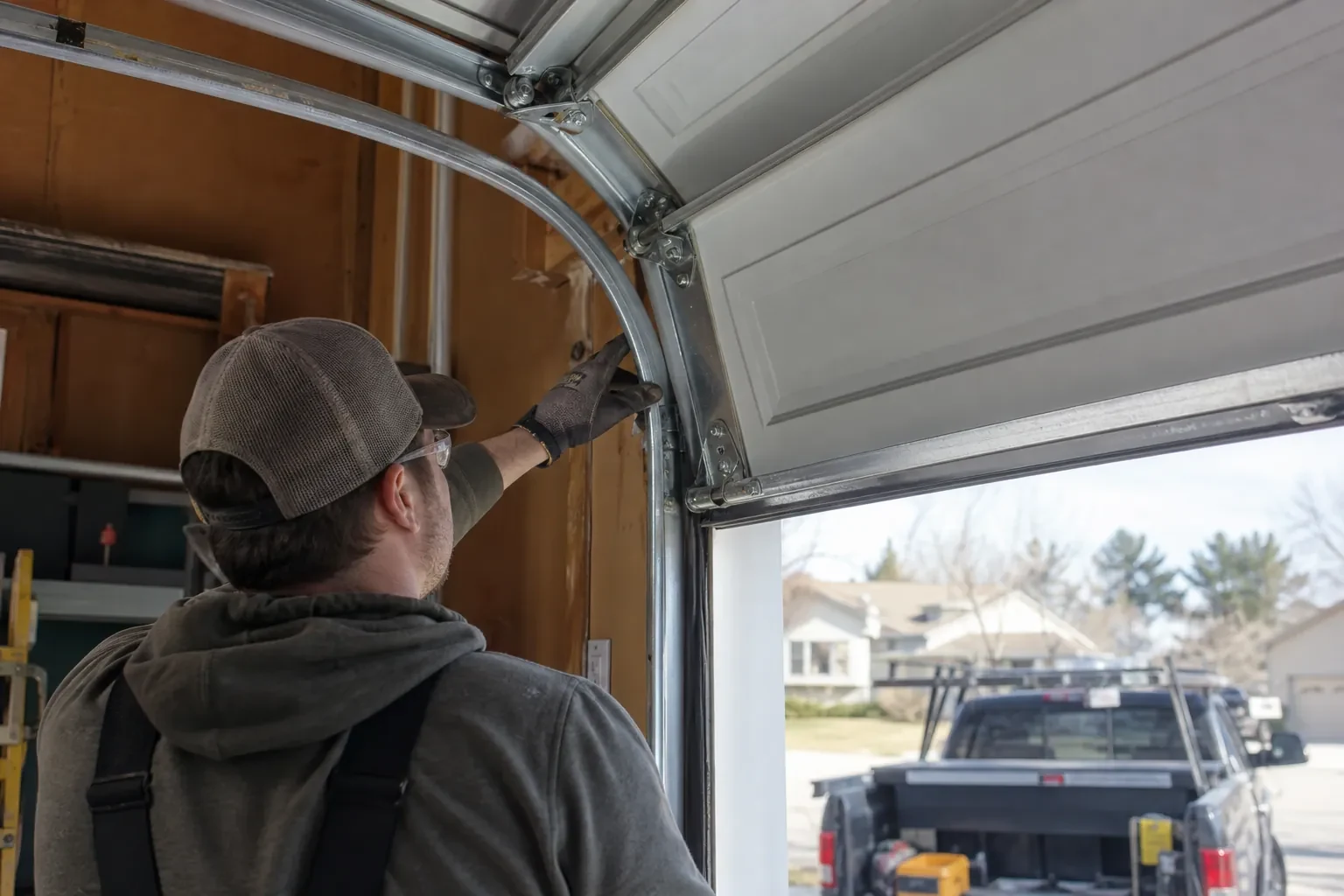
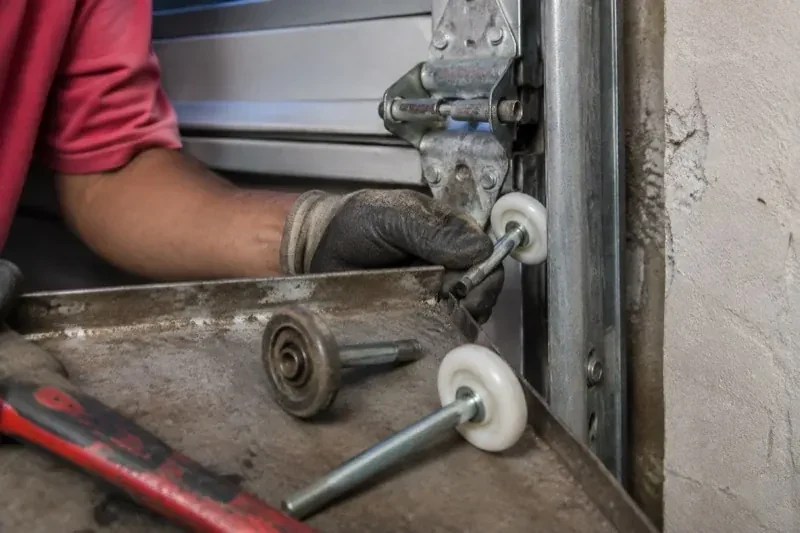
The rollers on the door have been squealing for months. Today one of them simply fell out of the track at the curve, its wheel worn down to the stem, and the top section sagged sideways as the door opened.
After an overnight freeze the door stuck to the slab, the opener strained, and something gave. The bottom section is bowed inward, one hinge has torn free of its screws, and the rubber seal along the bottom no longer sits flat.
There are mouse droppings along the wall behind the recycling bins, and at one bottom corner of the door the vinyl has a neat chewed notch the width of a thumb. Something has found its way in for the winter.
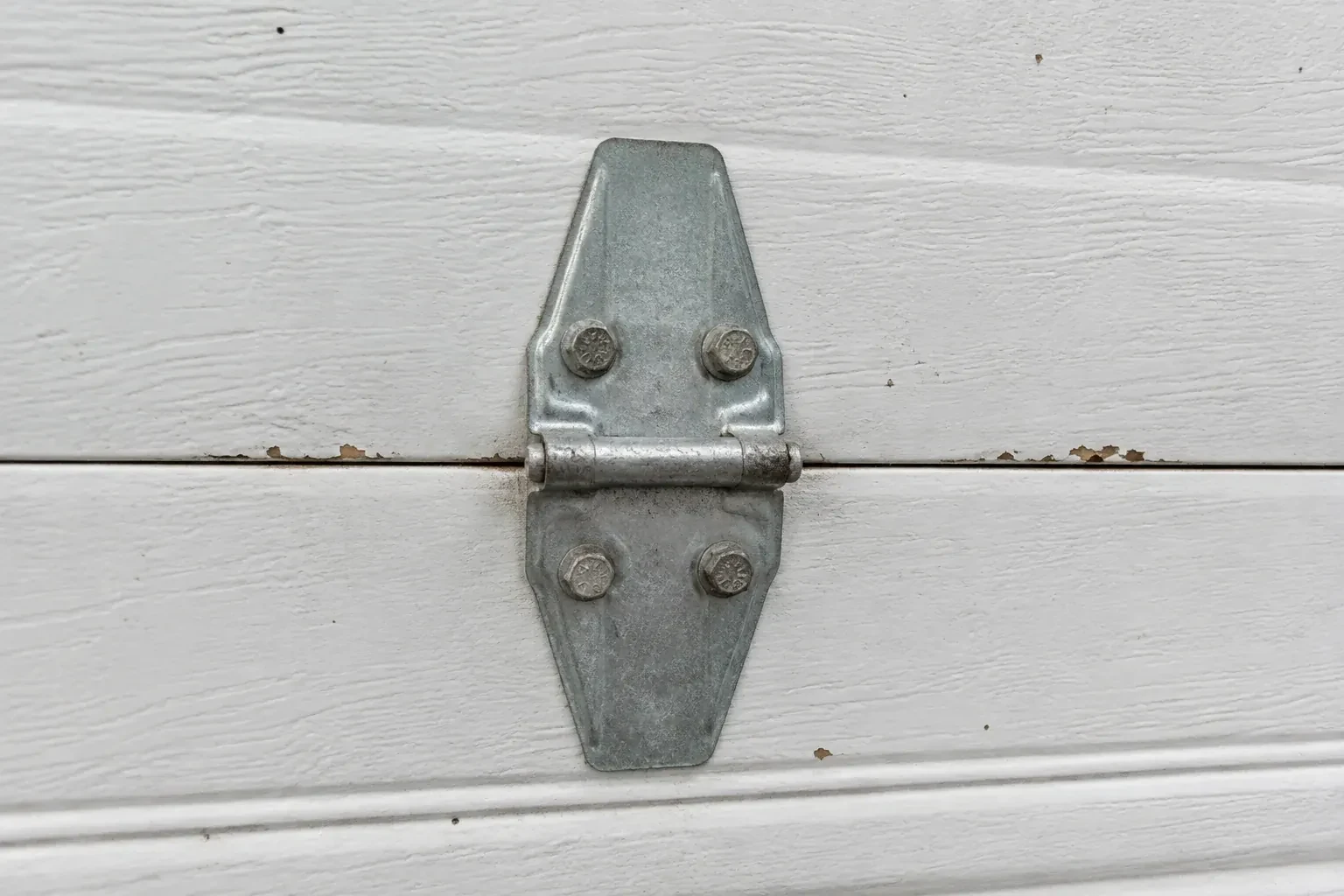
The car nudged the door on the way in. There is a dent low on one end, and above it the hinge that carries the roller is bent so the panel edges rub together and squeal as the door lifts.
It is minus twenty in the detached garage and the door climbs in jerks, the belt stiff as a board. By the afternoon, when the sun has been on the door, it runs almost normally again.
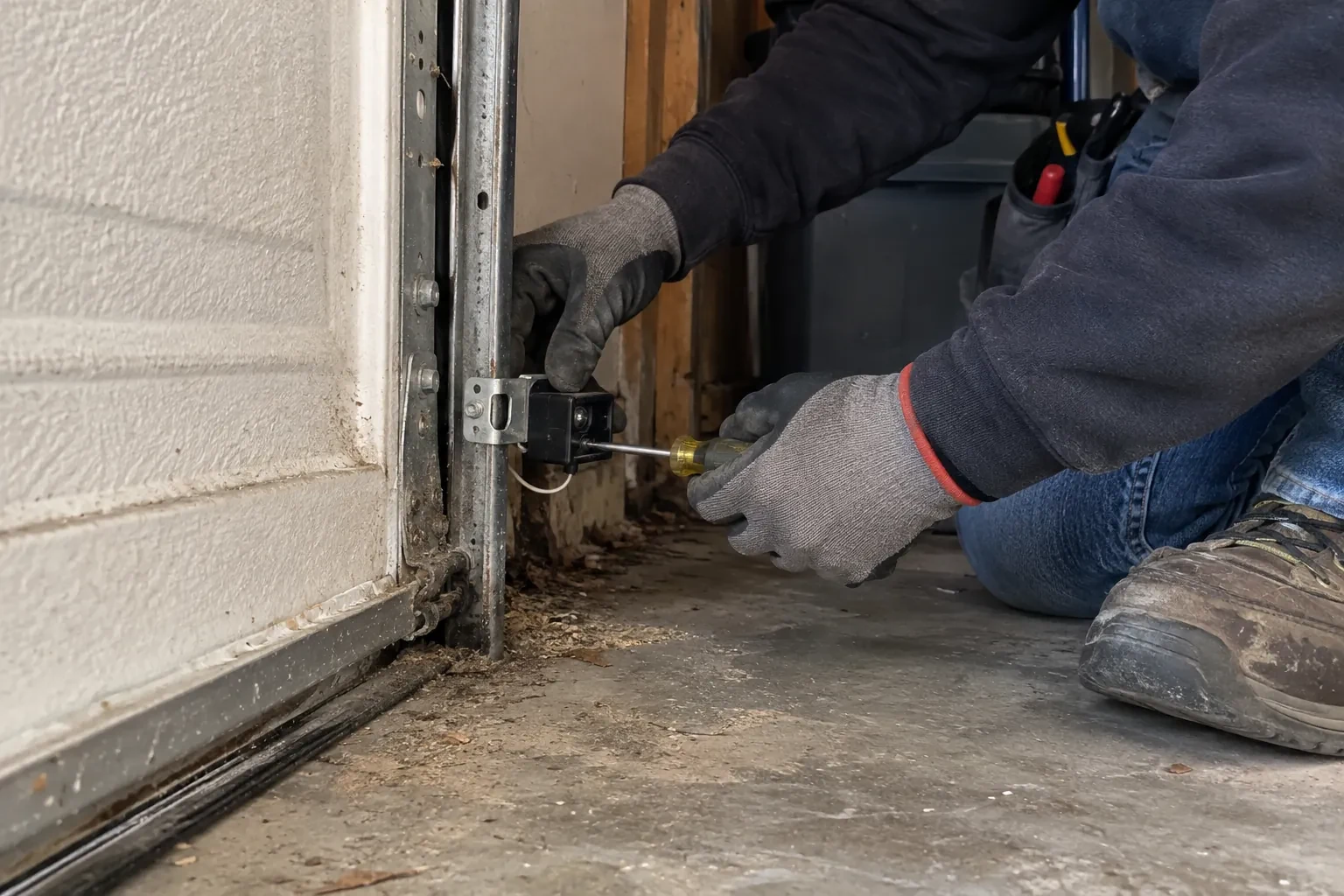
On bright mornings the door will not close, then by lunchtime it behaves itself. The garage faces the low sun, and the light reaches straight across the floor to one of the little black sensors.
Two garage openings sit side by side, and small differences in window spacing or decorative hardware would be obvious. You are looking for a measured installation with aligned panels and balanced proportions.
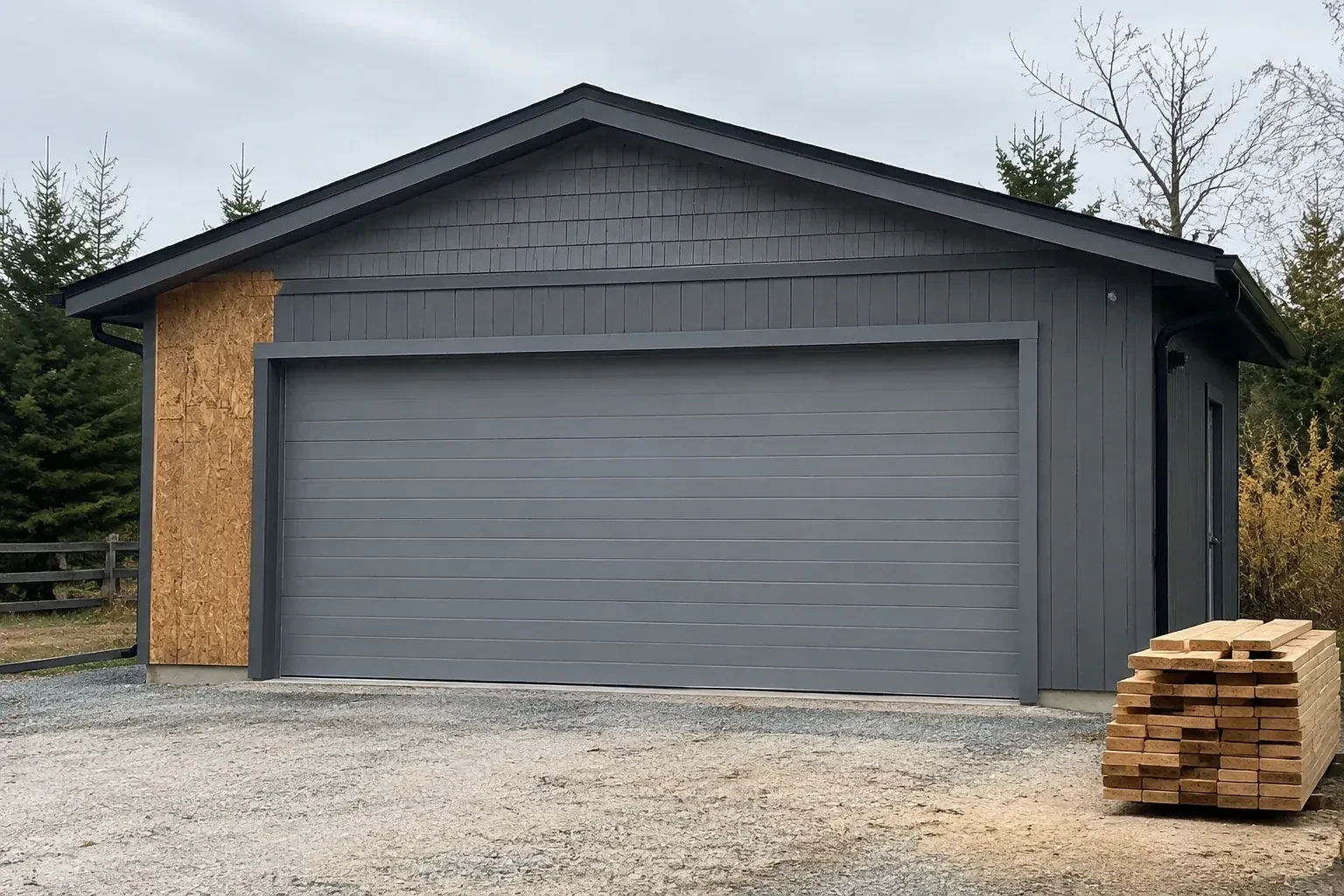
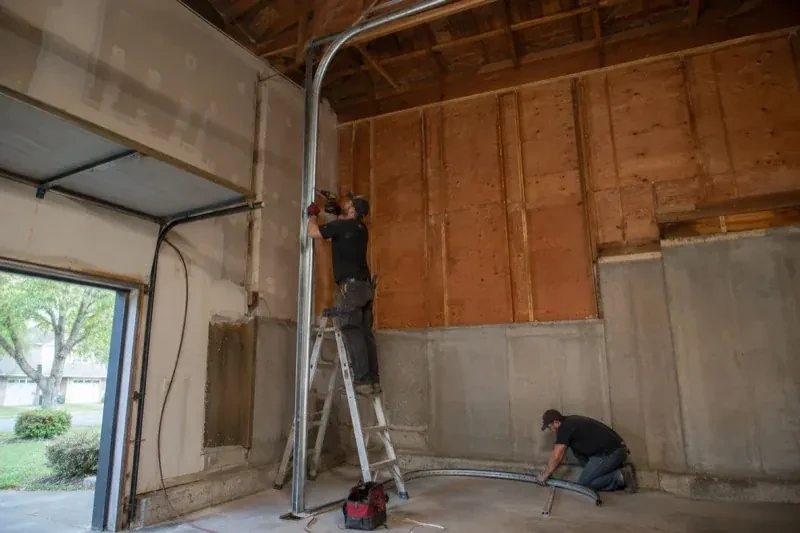
The garage walls are framed, the roof is on and the opening is taking shape. Now the build needs a complete sectional door system measured to the finished width, height and surrounding clearances.
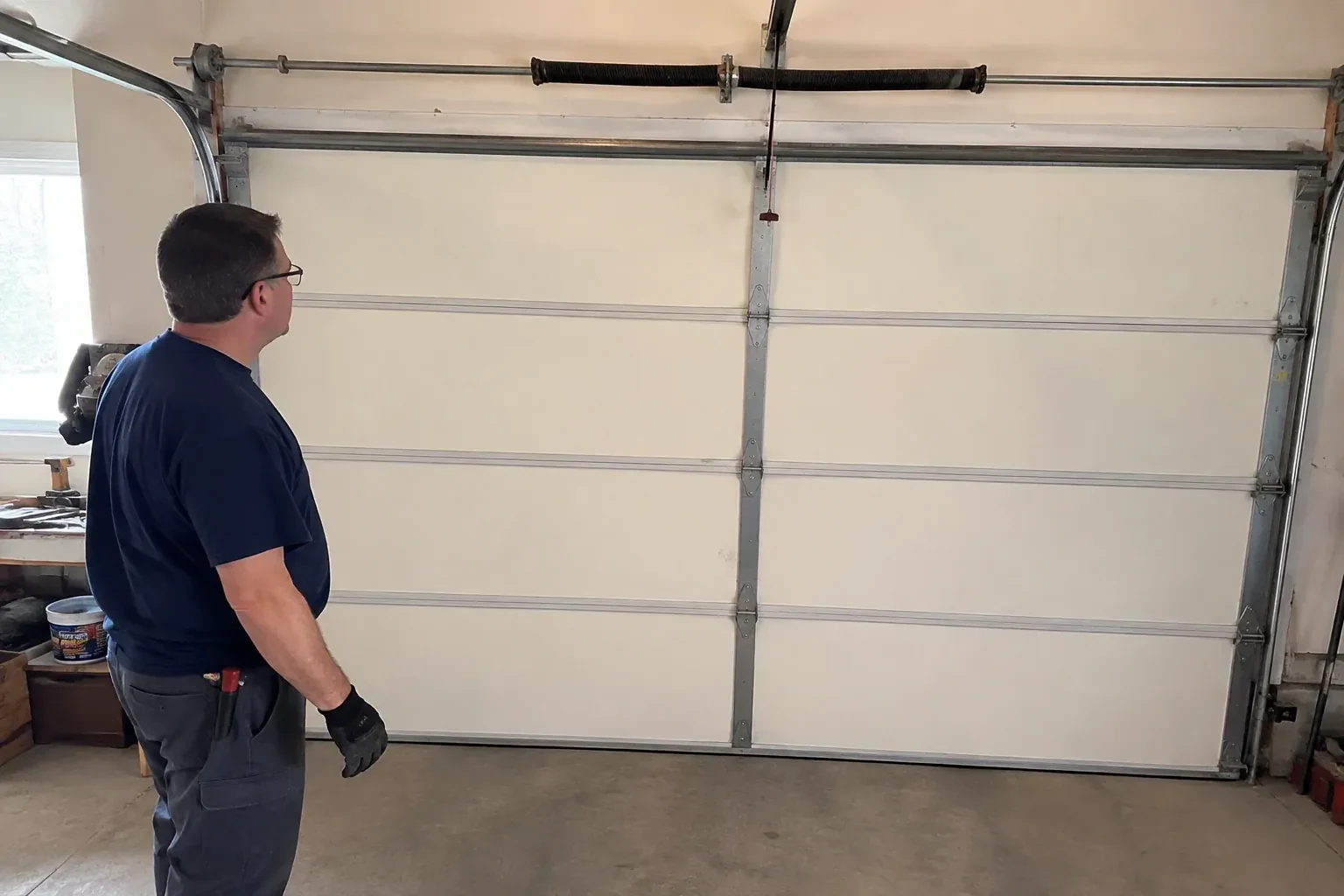
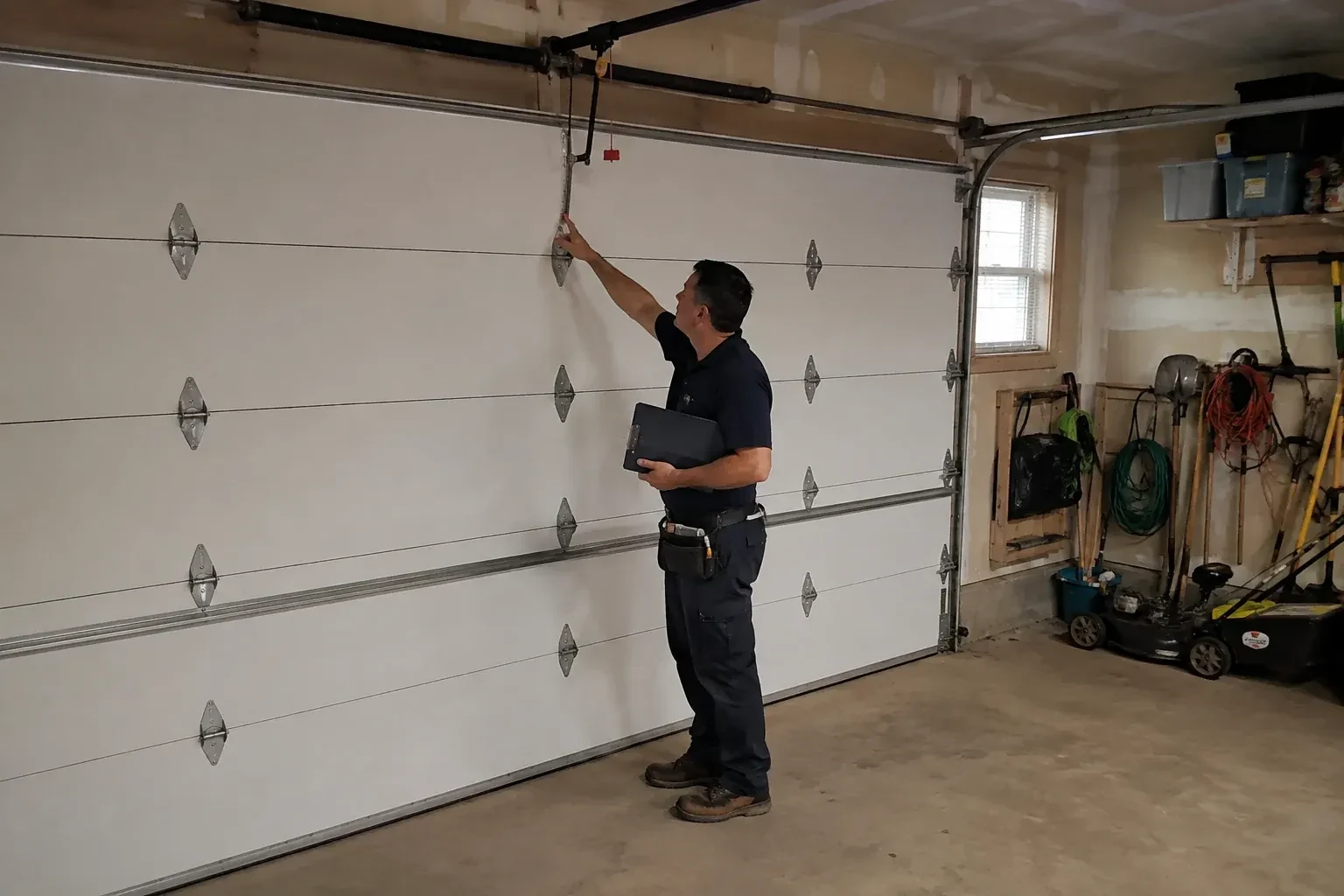
The operator runs and the drive chain moves, yet the sectional door hesitates near the floor. It feels unusually heavy during manual operation, pointing to a counterbalance problem rather than a simple control-station fault.
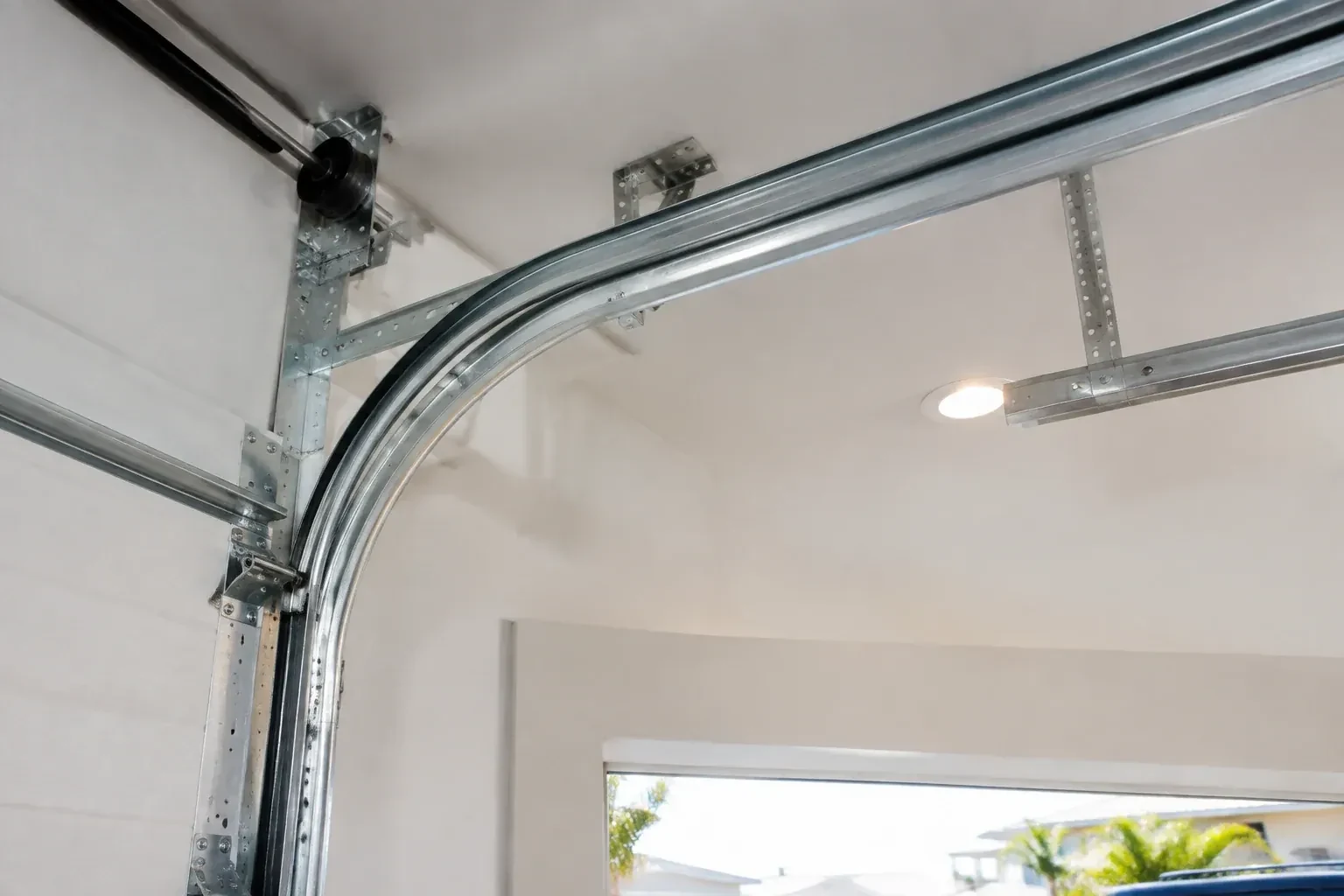
Workshop equipment is moving in, and the present opener rail and door sections occupy the same overhead zone planned for lighting and clear working space. A different travel path could organize that ceiling area more effectively.
I only tapped the door with the bumper. Why is it off its track?
A sectional door is strong in the direction it travels and surprisingly easy to push sideways at a single roller. A light nudge on the bottom section can flex the track lip enough for the roller to slip out, after which the section twists and the rollers above follow. The good news is that this kind of event usually leaves the cables and springs alone, so the reset is often rollers, a re-formed track lip and a hinge check.
Why is the bottom section handled differently from the others?
The bottom section is where the lift cables attach, through the bottom brackets at each end, and those cables are under the full pull of the springs. Before the brackets come off, the springs have to be unwound or unhooked so the cables go slack. The bottom section also carries the seal retainer and astragal that meet the floor. After the new section is in, the springs are re-tensioned and the balance reset.
The seal looks fine, so why is there still daylight under the door?
A seal can look intact and still have taken a permanent set, so the bulb no longer springs up to fill the gap. Otherwise the gap belongs to something else: a door hanging out of level, a bowed bottom section, a floor that has settled at one end, or an opener down limit set so the door stops short. The first look during the visit sorts these apart so the fix goes to the right place.
Do the rollers get replaced with the hinges?
They are checked every time and replaced when they need it. The roller stem sits in a tube on the edge hinge, so when that hinge comes off the roller is already in hand, and fitting a new one adds a minute. A wheel that is cracked, flat-spotted or grinding on its bearing is the sort of thing that strained the hinge, so leaving it would ask the new hinge to carry the same load.
What information helps when I book a belt-drive repair?
The make and model printed on the motor head, roughly how old the operator is, what the belt is doing and what it sounds like, when it started, whether the red cord has been pulled and whether anyone has adjusted anything. A photograph along the rail showing the belt, and one of the label, settle most questions before the visit.
How high off the floor should the sensors sit?
Low. The industry checklist expects the beam no more than roughly 15 cm (6 in) up from the floor, so that a small child, a pet or a bicycle wheel breaks it. Both sensors are set at the same measured height and level with each other, since a difference of a couple of centimetres is enough to lose the beam. Within that rule the technician can raise them a little to keep them out of the strip where slush collects.
Which materials are used for carriage-house garage doors?
Common choices include embossed steel sections, insulated steel with composite overlays, and wood or wood-faced sectional construction. They differ in weight, surface depth, grain, moisture response and care. Samples are helpful because photographs can flatten texture and alter colour. The chosen construction also guides spring sizing, reinforcement, fasteners and the kind of finish maintenance expected later.
Is an electric operator part of every installation?
No. The door system can be installed and balanced for manual operation, while an electric operator is an additional selected component. When included, the scope should name the operator type, controls, sensors, support and electrical preparation. The door is commissioned by hand before powered travel is set. This sequence confirms that the motor is connected to a freely moving, properly counterbalanced assembly.
Can several doors be assessed during one facility visit?
Yes. Numbering each opening and providing a short symptom list keeps the assessment organized. The technician can define the requested repair for the affected door and record visible conditions on comparable doors separately. Shared model data and installation history may help with parts planning, while each opening still receives its own mechanical and control checks before any work is scoped.
Can a high-lift conversion create room for a vehicle lift?
That is a common reason to consider one. The assessment uses the lift's raised height, the vehicle profile and working clearance to define the needed zone. The proposed door path is then measured against that zone, including the lowest section in the open position. Final feasibility depends on available wall height, ceiling conditions, structure and equipment placement.
Request a visit
The garage door on a house in Cliffside is usually the entrance the family uses most, so we treat a repair as something that has to hold. That means finding the cause rather than the symptom, replacing the worn neighbour as well as the broken part, and setting the door up so the opener is not straining.