Springs · Toronto
Garage Door Hinge Replacement
After a cold night the bottom seal had frozen to the slab.
In plain words
A hinge rarely fails on its own. A door that has drifted out of balance makes the opener drag it, and every hinge takes that strain on each trip. A roller whose bearing has seized twists the hinge that holds it. A track that has crept out of line makes the panels bind at the curve, and the hinge at that joint flexes until it cracks. Hinge replacement therefore begins with the whole door: rollers, track, balance and the panel edges around each hinge. The cause is corrected alongside the new hinge so the fresh part is not asked to absorb the same stress that finished the old one.
How the visit goesEvery time the door goes up there is a sharp pop from the same spot, about a metre off the floor, and the whole door gives a little shudder. Come back down and it happens again at exactly the same place.
Garage Door Hinge Replacement
How the visit goes
Stopping the door before anything else
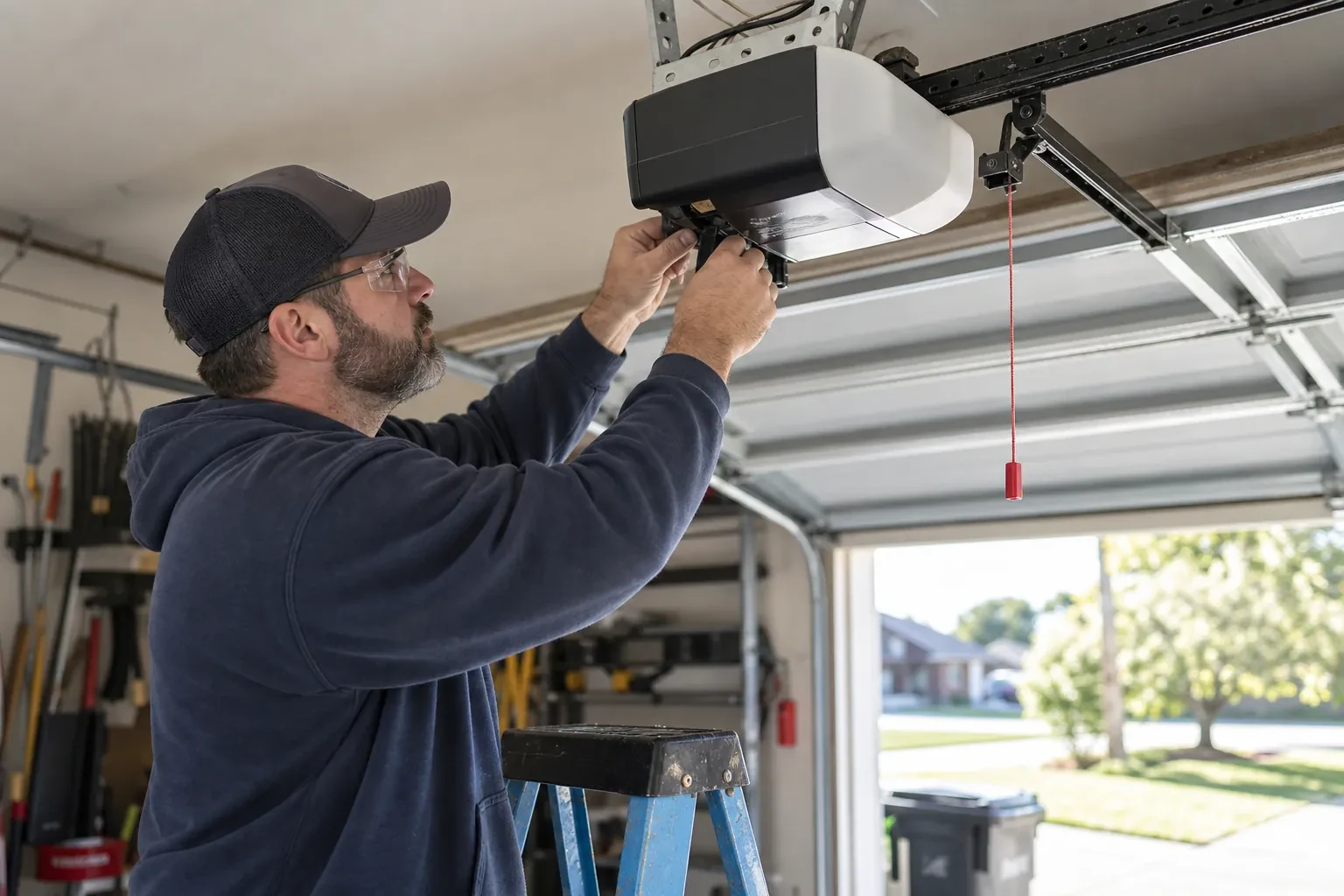
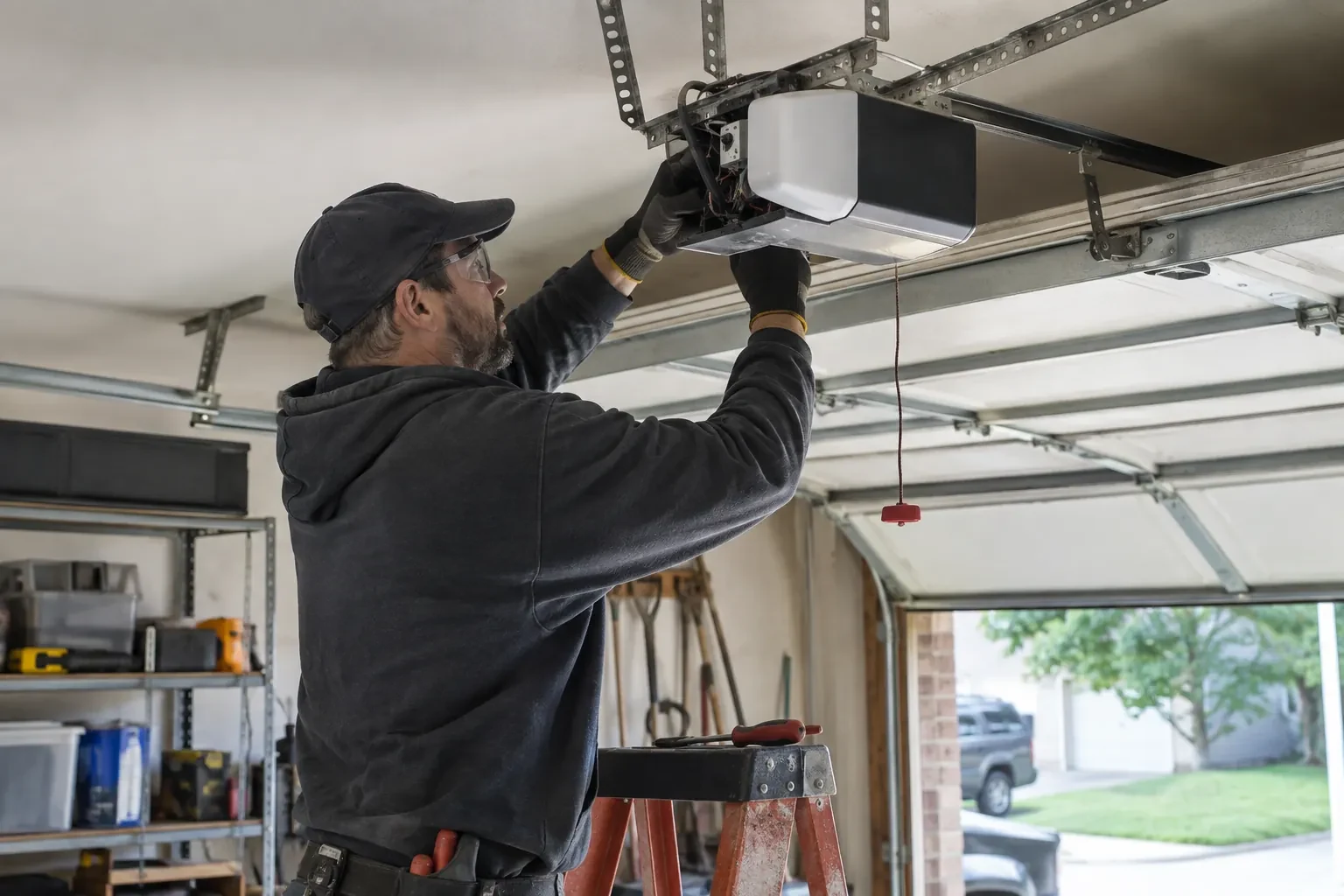
The first job is to take the door out of play. The technician pulls the opener's release cord so the motor is disconnected from the door, and leaves the door fully closed. Closed is the right position for hinge work, because each panel is resting on the one below and the bottom panel is sitting on the floor, so the hinges are holding the panels together rather than holding them up. If a hinge has already let go and a panel is hanging awkwardly, a clamp on the track or a prop under the section takes that weight before anyone touches it. Only then does the inspection begin.
Going over the rest of the hardware
With tools out and the door still, the technician goes down the whole door: every hinge screw snugged, roller stems and hinge knuckles given a garage door lubricant, top fixtures checked for tight fasteners, and the track brackets on the jambs confirmed secure. The bottom brackets are looked at but left alone, because they anchor the lift cables and are under spring tension. Struts and their fasteners get the same pass. This sweep takes little time and usually catches the next loose screw before it becomes the next cracked hinge, so the door leaves in better shape than the single repair would suggest.
Keeping salt off the low hinges
The two lowest joints live in the wettest part of the garage. Through winter, push slush away from the inside of the door rather than letting it sit against the bottom panels, and when a mild day comes wipe the road salt off the lower hinges, brackets and rollers with a damp cloth followed by a dry one. A light mist of silicone on the low knuckles in late autumn helps meltwater run off. Clear the ridge of ice that forms at the threshold before running the door, so the opener is never pulling against a panel frozen to the slab. These habits protect exactly the hinges that fail first here.
Garage Door Hinge Replacement
In the van
Hinge support plates
Panel strut
Flashlight and level
Silicone or lithium hinge lubricant
Replacement rollers
Garage Door Hinge Replacement
What affects the quote
Corrosion and seized fasteners
Screws rusted solid take time to drill out, and heavily corroded hinges on the lower joints are replaced rather than reused, which shows in the parts list.
Manufacturer-specific hinge patterns
Hinge width and hole spacing differ between door makers. A door that needs a maker-specific hinge rather than a standard one may involve ordering, which the quote notes.
Edge hinge or centre hinge
A centre hinge unscrews and refits in a few minutes. An edge hinge carries the roller and has to be worked out of the track, so it takes longer and is often paired with a roller.
What to have ready
- Is the door steel, wood or insulated steel?
- Has a car, bin or anything else bumped the door recently?
- Is the door a single or a double, and how many panels does it have?
Garage Door Hinge Replacement: questions
QuestionsWhat do the numbers stamped on garage door hinges mean?
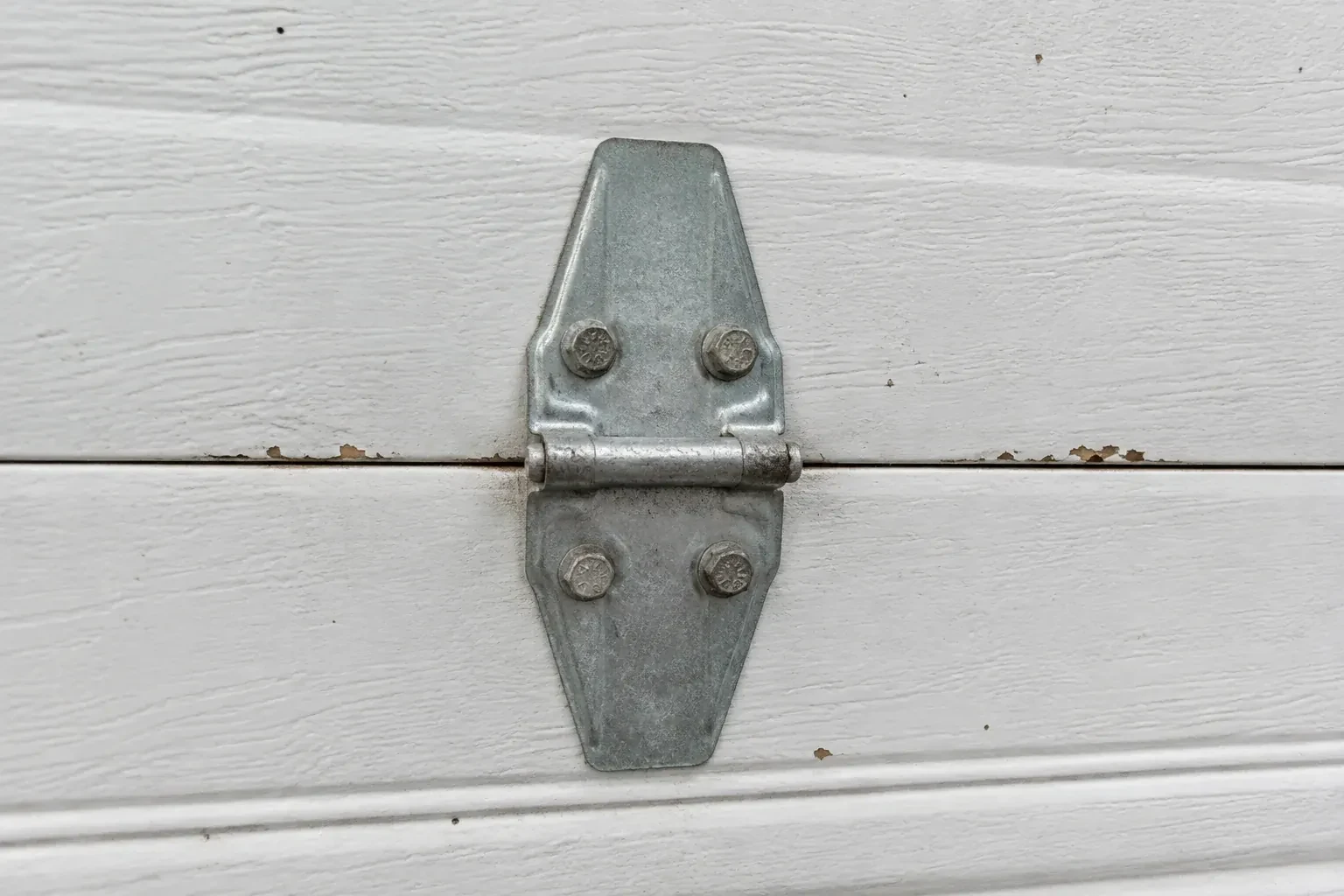
They mark the joint the hinge belongs to, counted from the bottom. A 1 goes at the joint above the bottom panel, a 2 at the next one up, then 3, with 4 and 5 on taller doors. Each higher number stands the roller a little further off the door face, so the door leans into the jambs when closed and follows the track as it climbs. Centre hinges use the geometry of a 1.
Do the rollers get replaced with the hinges?
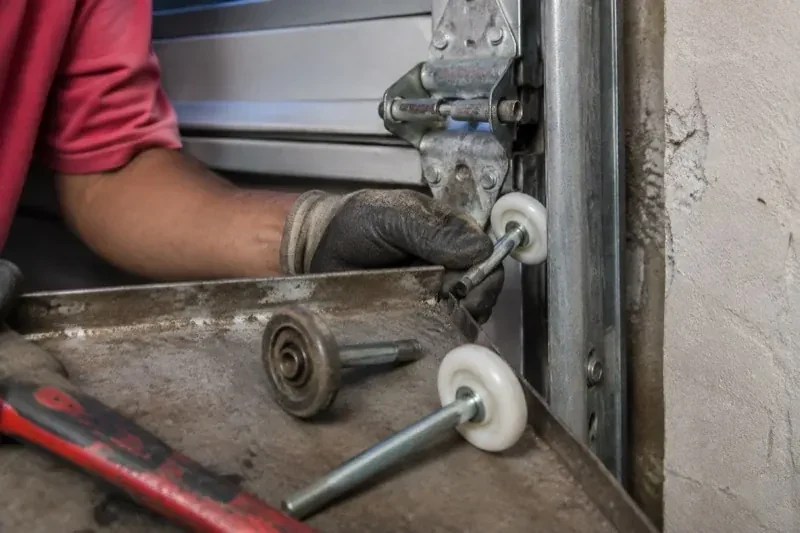
They are checked every time and replaced when they need it. The roller stem sits in a tube on the edge hinge, so when that hinge comes off the roller is already in hand, and fitting a new one adds a minute. A wheel that is cracked, flat-spotted or grinding on its bearing is the sort of thing that strained the hinge, so leaving it would ask the new hinge to carry the same load.
Why does the door pop or click at the same spot every time?
A noise at a fixed height points at the joint passing through the curve at that moment. A cracked hinge leaf flexing open and snapping back, a pin rocking in a worn hole, or a roller stem shifting in a loose hinge all make a sharp report as the load transfers. Because it always happens at one place, the technician can go straight to that joint and usually finds the hinge or roller responsible.
Related services
- Garage Door Track Repair or ReplacementYou bought the house with a door that sticks near the top of its travel.
- Garage Door Cable ReplacementThe car bumper kissed the door on the way in.
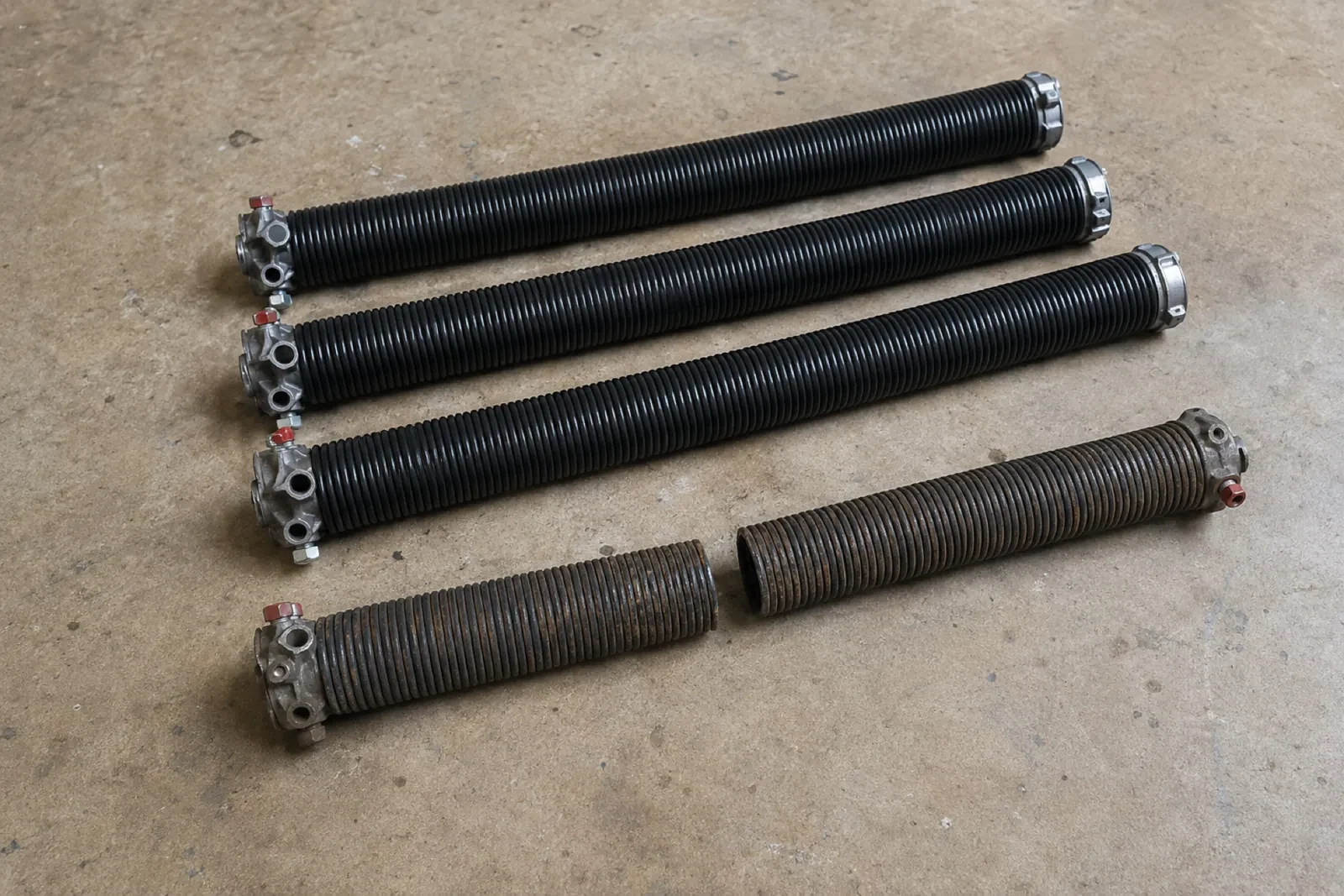
- Torsion Spring ReplacementYou heard a sharp bang from the garage, and now the opener hums for a second and gives up.