Repairs · Toronto
Garage Door Manual Lock Repair
The T-shaped handle on the outside turns a full quarter, exactly as it has for twenty years, but nothing moves behind it.
In plain words
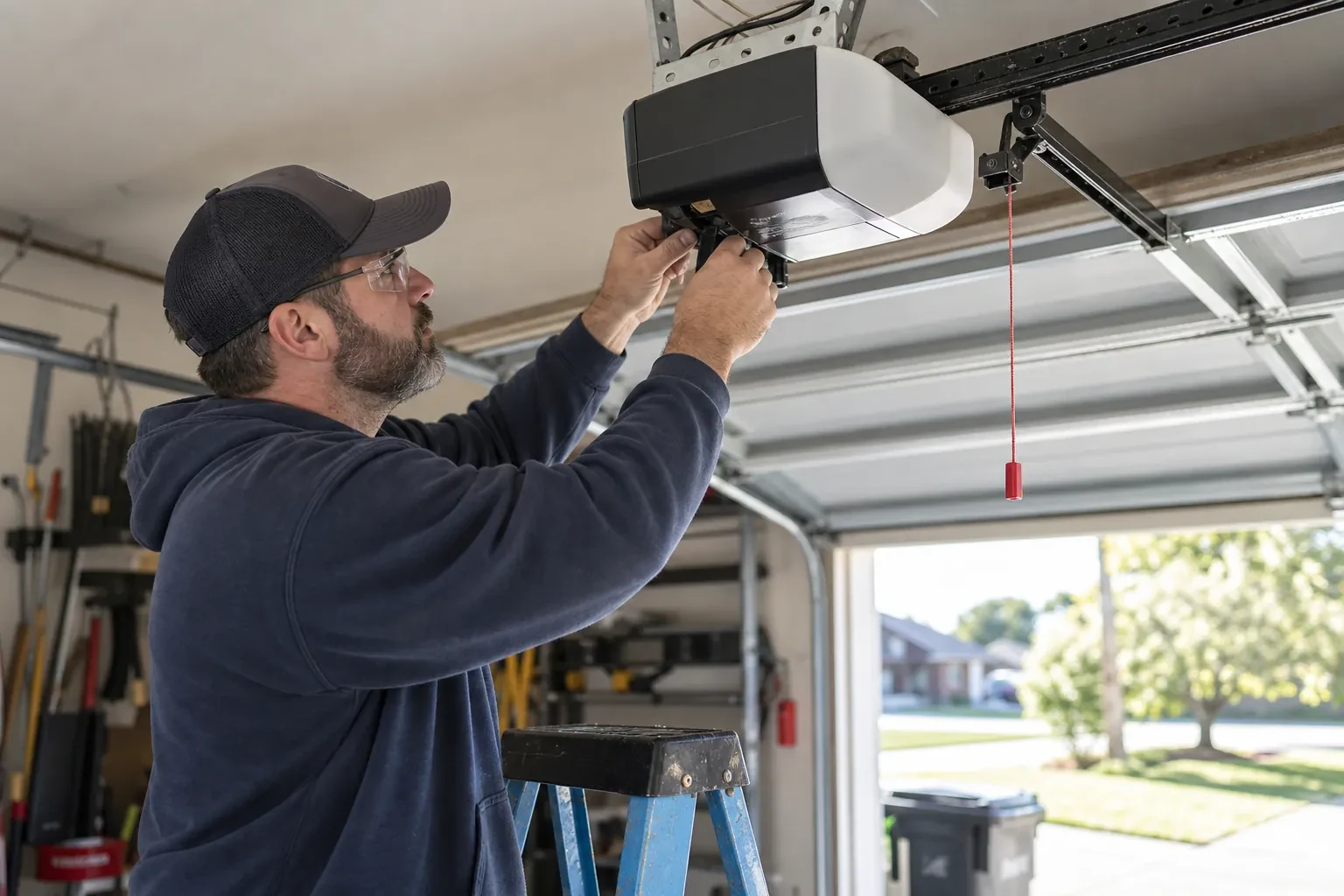
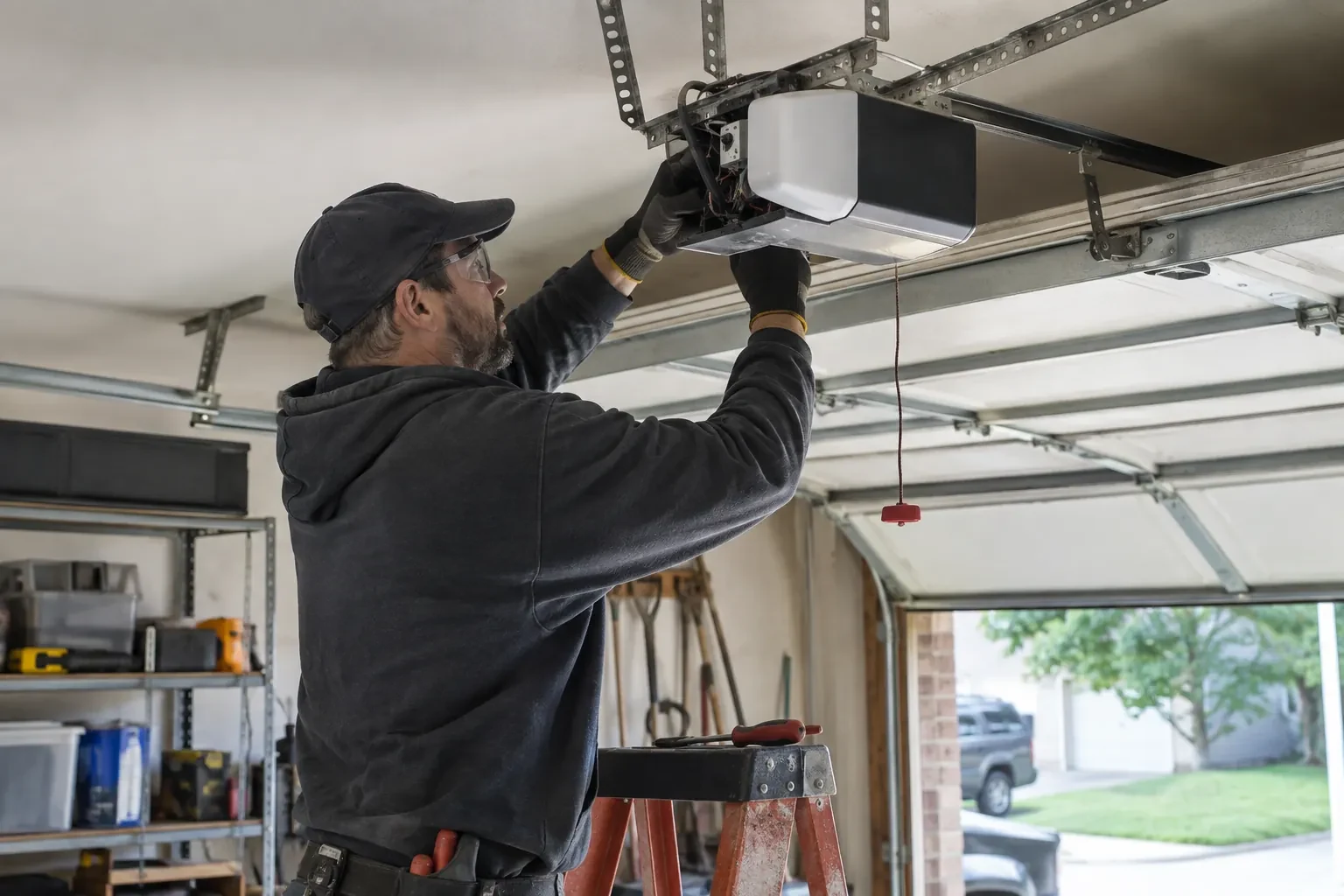
When an automatic opener is on the door, the manual lock and the motor have to be kept from meeting. Opener makers ask for the lock to be disabled or removed when the machine is installed, and the door industry's own guidance says the same, because a motor pulling against an engaged bar bends the bar, loosens the lock and strains the opener. Lock repair on a powered door therefore includes a decision: keep the lock removed or disabled and rely on the opener's own lock-out feature, or fit a manufacturer-approved interlock if the household wants the lock available when the power is off.
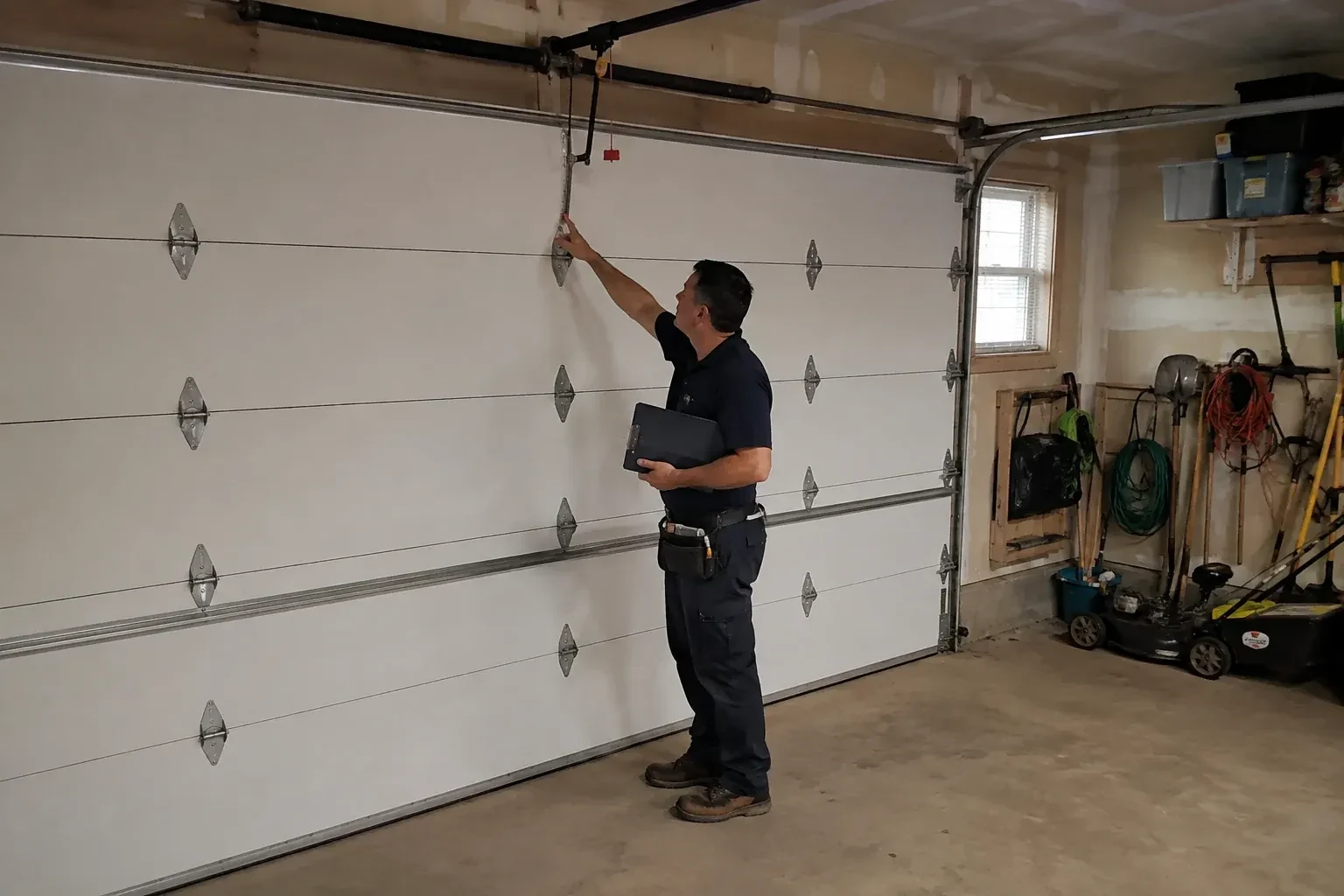
How the visit goesThe power is out in a storm, you pulled the red cord and lowered the door by hand, and now you want to lock it. The slide bolt on the inside edge is welded in place by years of rust and refuses to budge.
Garage Door Manual Lock Repair
How the visit goes
Following the bars to the tracks
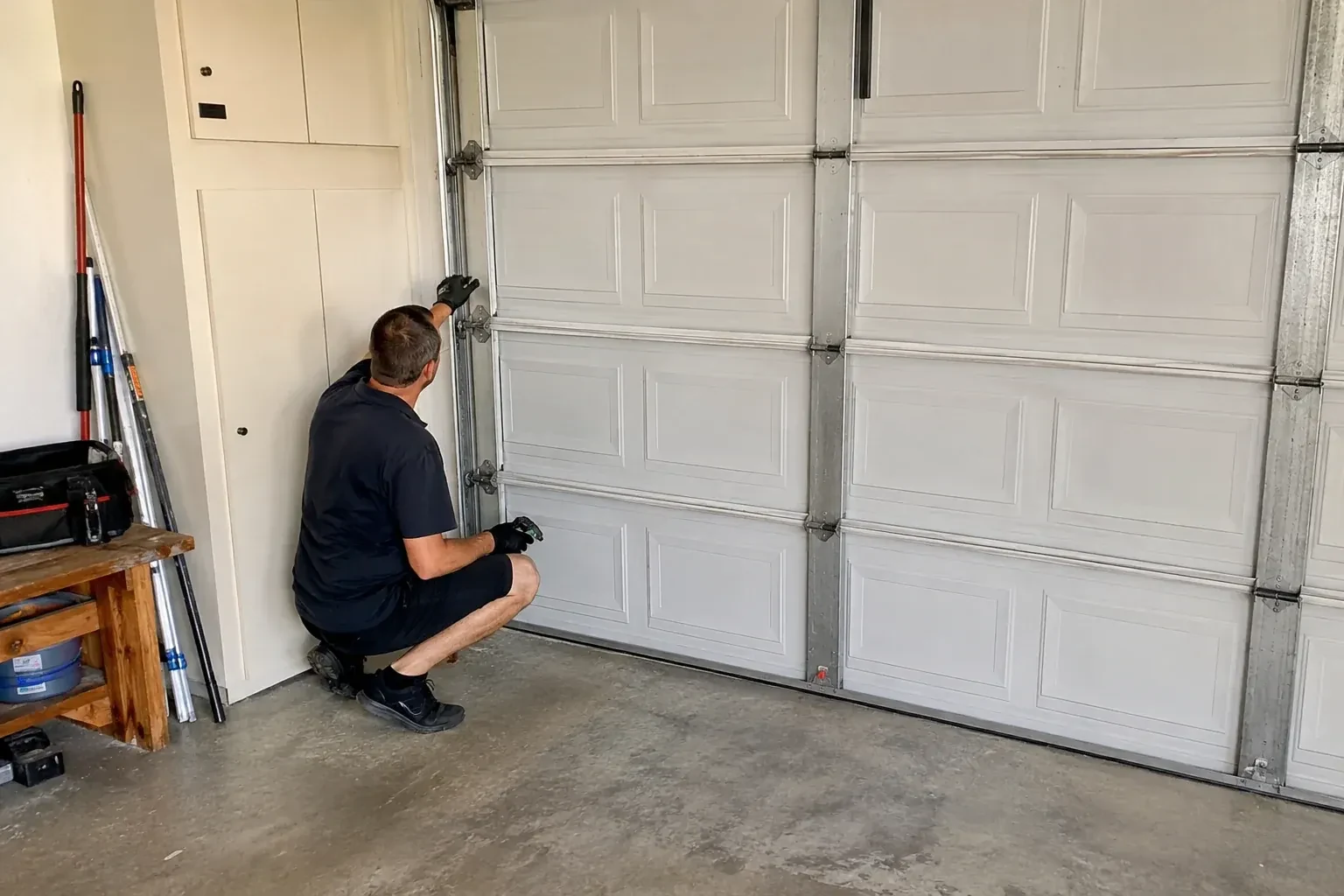
With the door shut, each bar is worked by hand while the technician watches its far end. It should travel smoothly through its guide, pass cleanly through the slot in the track, and come back the same way with no catching. A bar that binds points to rust in the guide or a guide that has been knocked out of line. A bar that reaches the track but not the slot points to alignment. A bar that is bent, kinked or hanging loose usually tells the story of an opener run against the lock. Both sides are checked even when only one is complained about, and the slots themselves are inspected for burrs, distortion and rust.
Anchoring the lock in tired material
A lock is only as sound as what it is screwed to. Where screws have pulled through a thin steel skin and left oval holes, the technician fits carriage bolts through the section with a backing plate on the inside, spreading the load across a wide patch of metal. On a wooden door with softness around the handle or along the stile, the decayed wood is cut back and a hardwood filler block or backing plate is let in, and the lock and guides are fixed to that. Holes that have grown are plugged and redrilled. The result is a handle that turns without rocking and guides that hold the bar where it was set.
Other ways to secure the door you now know about
The alternatives to a manual lock are worth knowing. Most wall consoles have a lock-out button that stops every remote from working while you are away, which is the everyday answer for a powered door. Some openers accept an automatic deadbolt that slides a bar into the track each time the door closes and withdraws it before the door opens, so the security of a manual lock arrives without the need to remember it. A keyed outside handle can also be connected to the opener's release for the day the power is out and you are on the wrong side of the door. None of these is required; they are simply options.
Garage Door Manual Lock Repair
In the van
Opener lock-out reminder label
Lock bar guides
Key blanks and rekeying pins
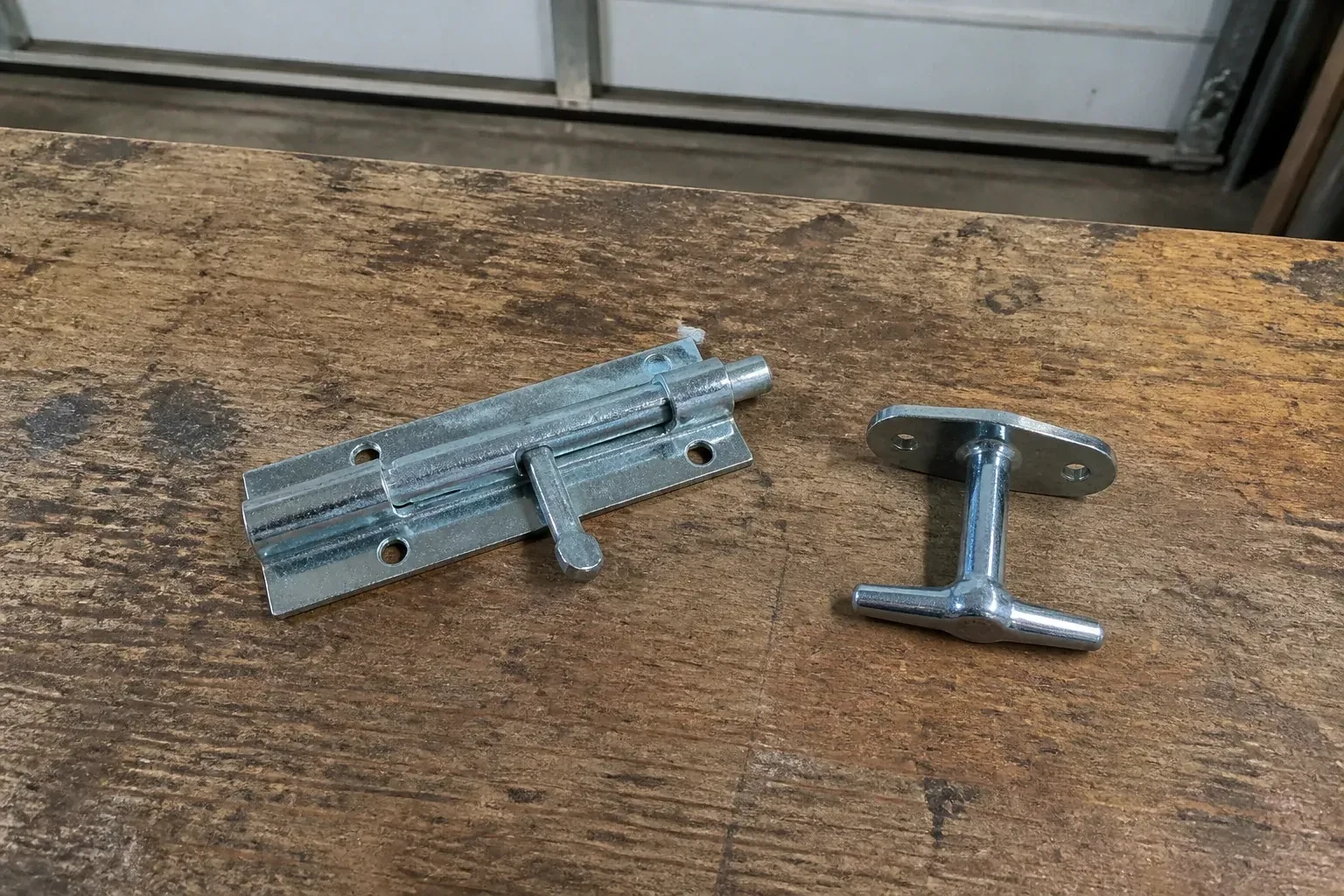
Inside slide bolt or snap latch
Inside turn handle and spindle
Garage Door Manual Lock Repair
What affects the quote
Rekeying the lock to match your other doors
Some households want the garage's manual lock to turn with the same key as the house, rather than carrying a separate one. Matching a cylinder to an existing key, or cutting a fresh set for both, is arranged once the existing hardware has been looked at.
Slide bolt or keyed handle
An inside slide bolt is a simple piece of hardware with one moving part. A keyed T-handle has a cylinder, spindle, centre body, springs and two bars, and its repair takes more time and more parts.
Whether an opener shares the door
A powered door adds the coordination step: removing or disabling the bars, demonstrating the console lock-out, or installing an automatic deadbolt if you choose one. Each is priced as chosen.
What to have ready
- Does the key go in and turn, or is it stiff or spinning freely?
- Is there an automatic opener on this door?
- Is the lock a sliding bar inside, a T-shaped handle outside with a key, or both?
Garage Door Manual Lock Repair: questions
QuestionsWhy does the inside knob spin without doing anything?
The knob is meant to grip the square spindle with a set screw, and that screw has loosened or the spindle's flat has worn so the knob no longer bites. Sometimes the spindle itself has sheared inside the door. The technician tightens a fresh set screw onto a proper flat or fits a new spindle of the correct length, and the knob and outside handle move as one again.
What kinds of manual locks are found on garage doors?
Two are common on sectional doors. An inside slide bolt sits on the door's edge and shoots sideways into a slot in the vertical track; some are spring-loaded snap latches that lock on their own when the door closes. An outside keyed T-handle turns a centre mechanism that throws a bar into each track, though some models pull a cable to release a spring latch instead. Some doors add a keyed cylinder on the side to work the slide bolt from outside.
What information helps when I book the visit?
Whether the lock is an inside sliding bar, an outside T-shaped handle with a key, or both; whether the handle turns and whether anything moves when it does; whether the key goes in and turns; whether an opener is fitted and whether it has ever run with the lock engaged; the door's material and age; and whether you hold a key. A photo of the inside of the lock is useful.