Springs · Woodbine Gardens
Torsion Spring Replacement in Woodbine Gardens
You heard a sharp bang from the garage, and now the opener hums for a second and gives up.
In plain words
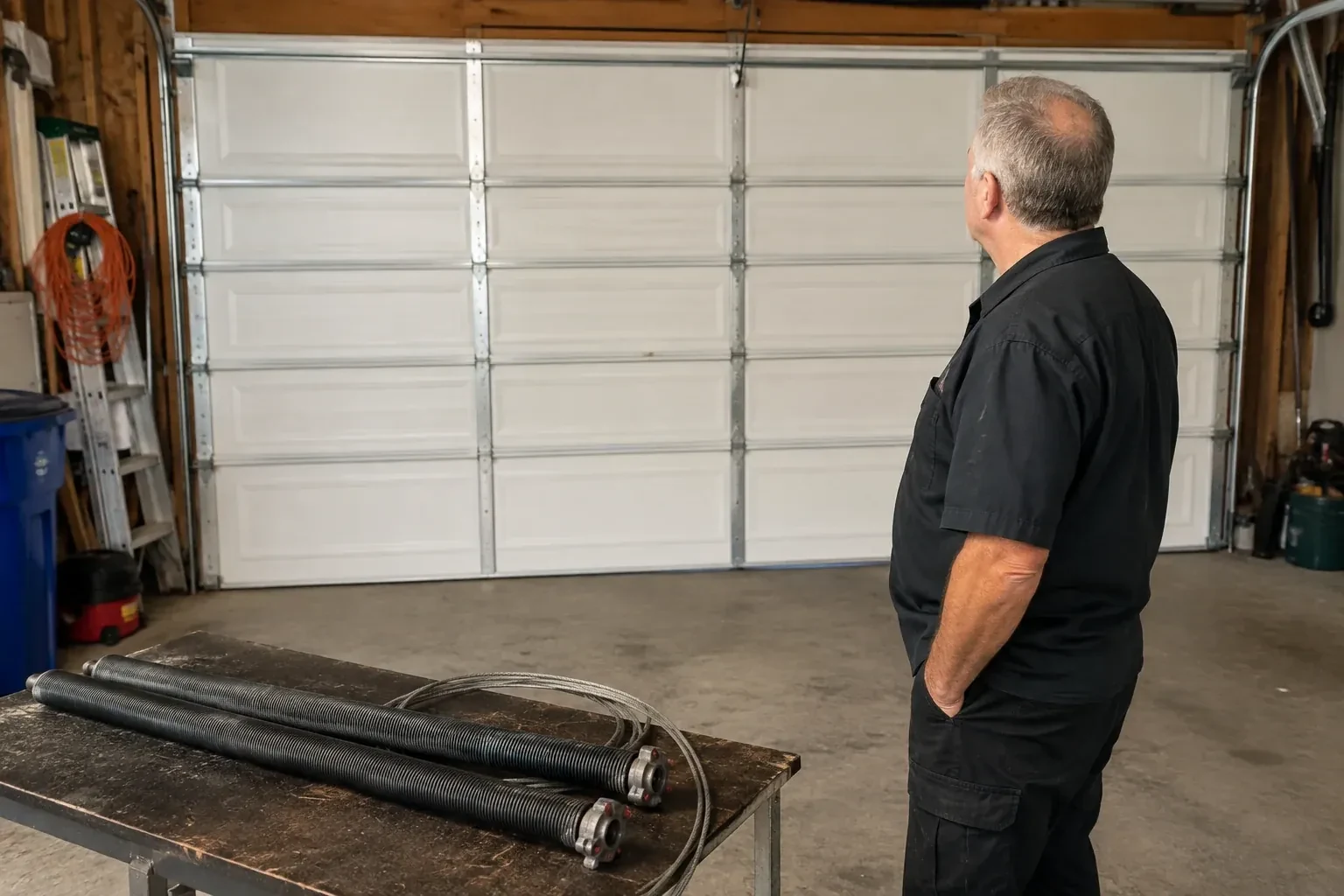
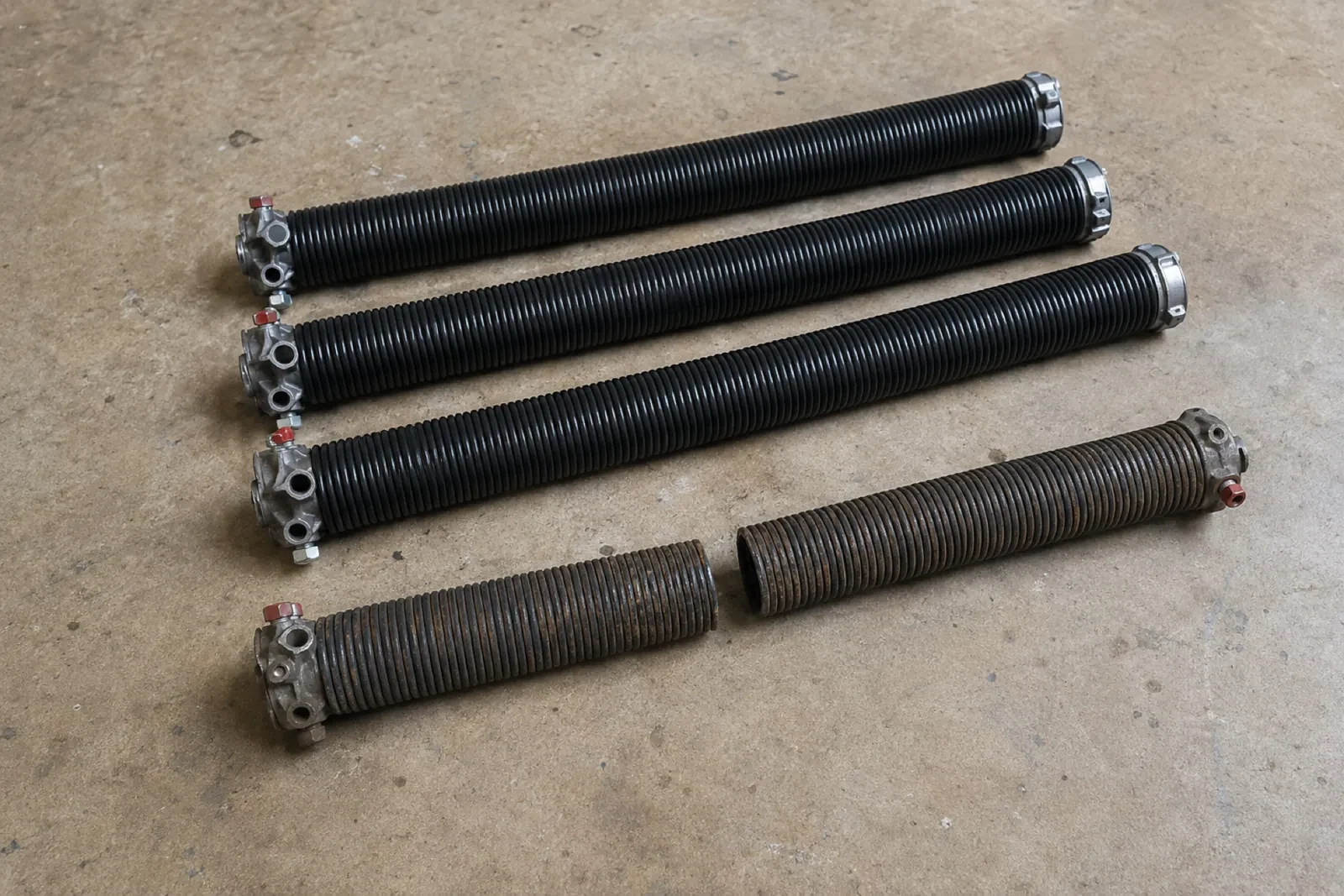
Every spring is built for a number of open-close cycles, and replacement is a natural moment to choose that number deliberately. A standard residential spring is commonly rated around ten thousand cycles; a family that opens the door six times a day uses those up in a few years. Higher-cycle springs use heavier wire and a longer coil to produce the same force with less stress on the steel, so they last proportionally longer. The technician can explain the trade-off and fit whichever option suits the household's use of the door, then wind and balance it accordingly.
How the visit goesThe door starts to rise, gets about the height of your knee, then shudders and reverses. The opener sounds strained, and the top section flexes as the trolley pulls on it, because the motor is doing work the spring used to do.
Torsion Spring Replacement
How the visit goes
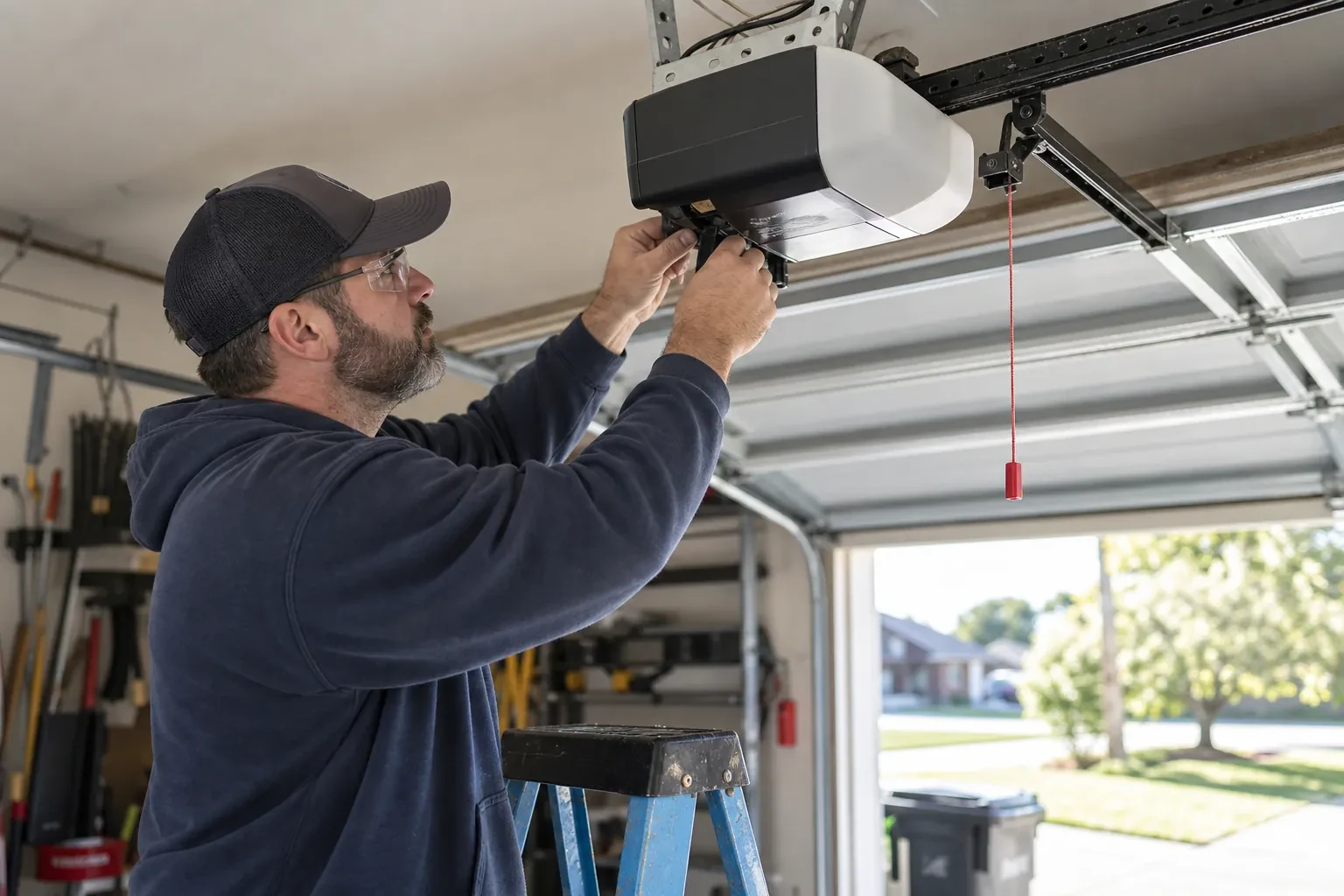
Making the door safe to work on
Before anything is measured or removed, the door and the opener are put into a controlled state. The opener is unplugged and the trolley released so the motor cannot move the door partway through the job. The door is brought fully closed, and locking pliers or clamps are set on the track just above a roller so the door stays down while spring tension changes. The technician clears the space beneath the shaft, checks that people and pets are out of the garage, and looks at where a vehicle sits so the ladder and winding position are safe.
The replacement from start to finish
With the door clamped and the opener disconnected, the technician releases any tension left in an intact spring, loosens the drum set screws and slides the drums inward, then removes the old spring from the shaft. Bearings are inspected while the shaft is free. The new spring goes on with its stationary cone bolted to the centre bracket and the winding cone facing the drum. Drums are refitted, cables seated, the shaft levelled and cable tension evened on both sides. Winding follows, then the set screws are seated and the clamps come off for a balance check. Each stage is done deliberately and in order.
Through the seasons
The new spring has been set for the door as it is today, and the seasons are part of its life. Cold mornings make steel and grease a little stiffer, so the door may feel marginally slower in deep winter while still balanced; lubrication in autumn helps. Slush and road salt carried in on tires settle on the bottom brackets and cable ends, so a rinse and a light spray in spring slow corrosion where the cables anchor. Summer humidity is easier on hardware but rewards a dry, clean track. Small seasonal habits like these let the spring reach its full rated cycle count.
Torsion Spring Replacement
In the van
End bearing plates
Torsion shaft and coupler
Wire gauge and tape measure
Socket set and wrenches
Winding bars
Torsion Spring Replacement
What affects the quote
Spring finish
Oil-tempered and galvanized springs suit different garages. A coated or galvanized spring for a damp or salt-exposed space is a choice the customer can make when the specification is discussed.
Age of the door and matching hardware
Older doors sometimes carry shaft diameters, bearing plates or drum patterns that are no longer common. Sourcing compatible hardware or adapting the mounting adds to the scope for these doors.
One spring or two
A single-spring door needs one spring; a paired system is usually replaced as a matched set of left- and right-wound springs. The number of springs and whether both are replaced is the largest single influence on the scope.
What to have ready
- Can you see a gap in the spring above the door?
- Do you know the door's age or when the springs were last replaced?
- Is there a working power outlet near the opener and clear space under the shaft?
Torsion Spring Replacement: questions
QuestionsHow can I tell if my springs are wearing out before they break?
Watch for a door that feels heavier by hand when the opener is released, an opener that strains or slows, a door that drops the last stretch rather than settling, or one that drifts down when stopped halfway. Visually, look for stretched gaps between coils, rust streaks or pitting on the steel, and any sag in the shaft. A balance check when you notice these lets you plan a replacement rather than react to one.
Can a spring be adjusted rather than replaced?
A spring that is intact but has relaxed slightly can be given a little more tension, within limits, to restore balance; this is a normal adjustment on a door that has settled. A spring with a broken coil is replaced as a unit, since the wire has reached the end of its life. The technician checks the condition of the steel and recommends whichever restores a balanced, safe door.
Why do springs seem to break in cold weather?
Cold makes steel slightly less forgiving and thickens the grease on the coils, so a spring that has already used most of its cycle life is more likely to let go on a frosty morning when the door is first opened. The cold is the final straw rather than the cause; the underlying reason is fatigue from years of cycles, sometimes helped along by rust and dry coils.