Springs · Toronto
Garage Door Track Repair or Replacement
You bought the house with a door that sticks near the top of its travel.
In plain words
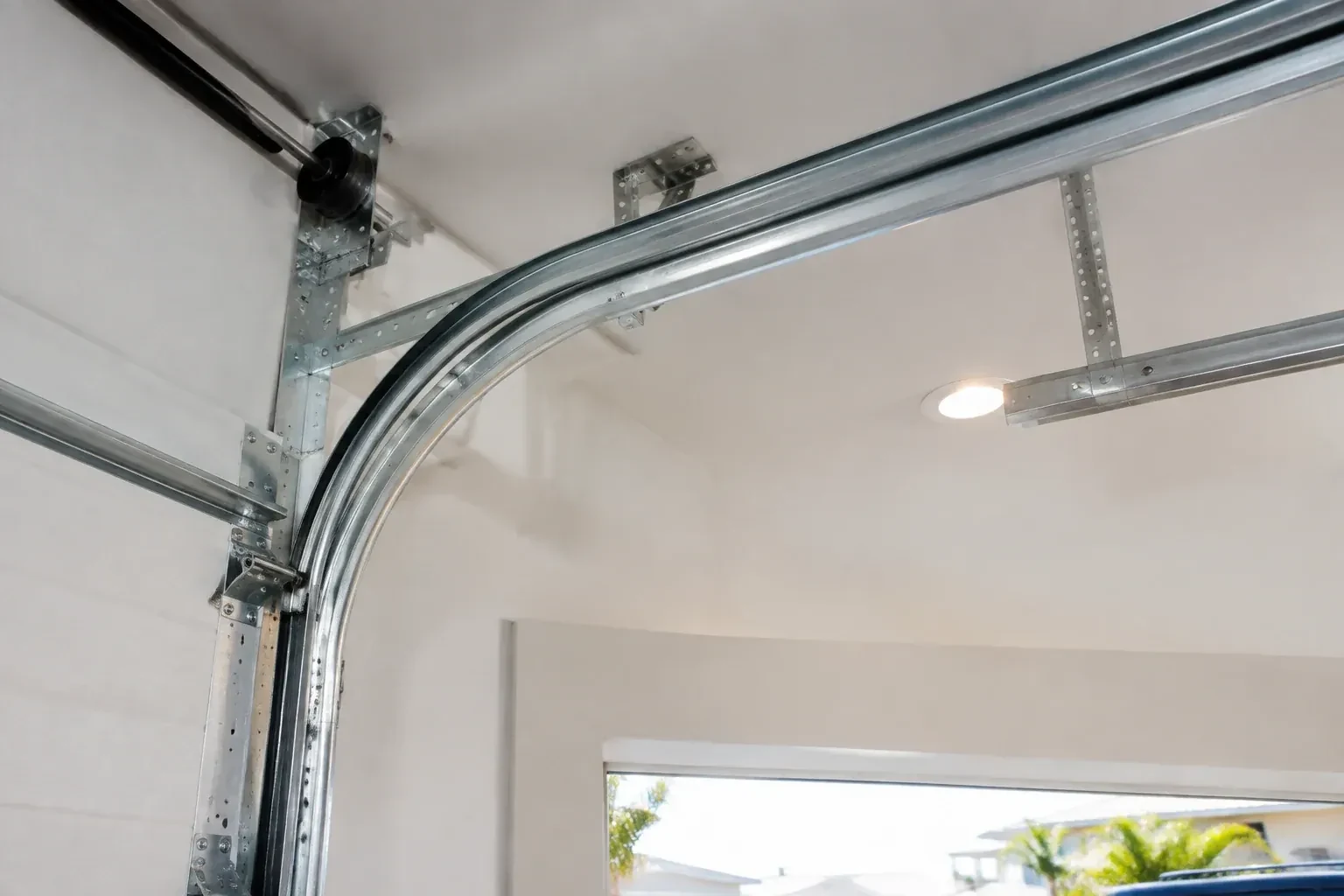
Vertical track is fixed to the jamb in one of two ways, and the assessment begins by reading which one your door has. Bracket-mounted track hangs on a few L-shaped jamb brackets, each lag-screwed into the wood, and can be shifted a little at each bracket to set spacing and plumb. Angle-mounted track uses a full-height continuous angle and is common where sideroom is tight. Either way the vertical run ends at a flag bracket that also carries the horizontal track and, on a torsion door, the spring shaft bearing. Track repair works with those fixings, tightening, replacing or repositioning them so the run sits true.
How the visit goesAfter a decade of slushy winters the bottom foot of the track is flaking rust. A roller squeals as it passes, and the channel edge has gone rough and thin where the salt collects.
Garage Door Track Repair or Replacement
How the visit goes
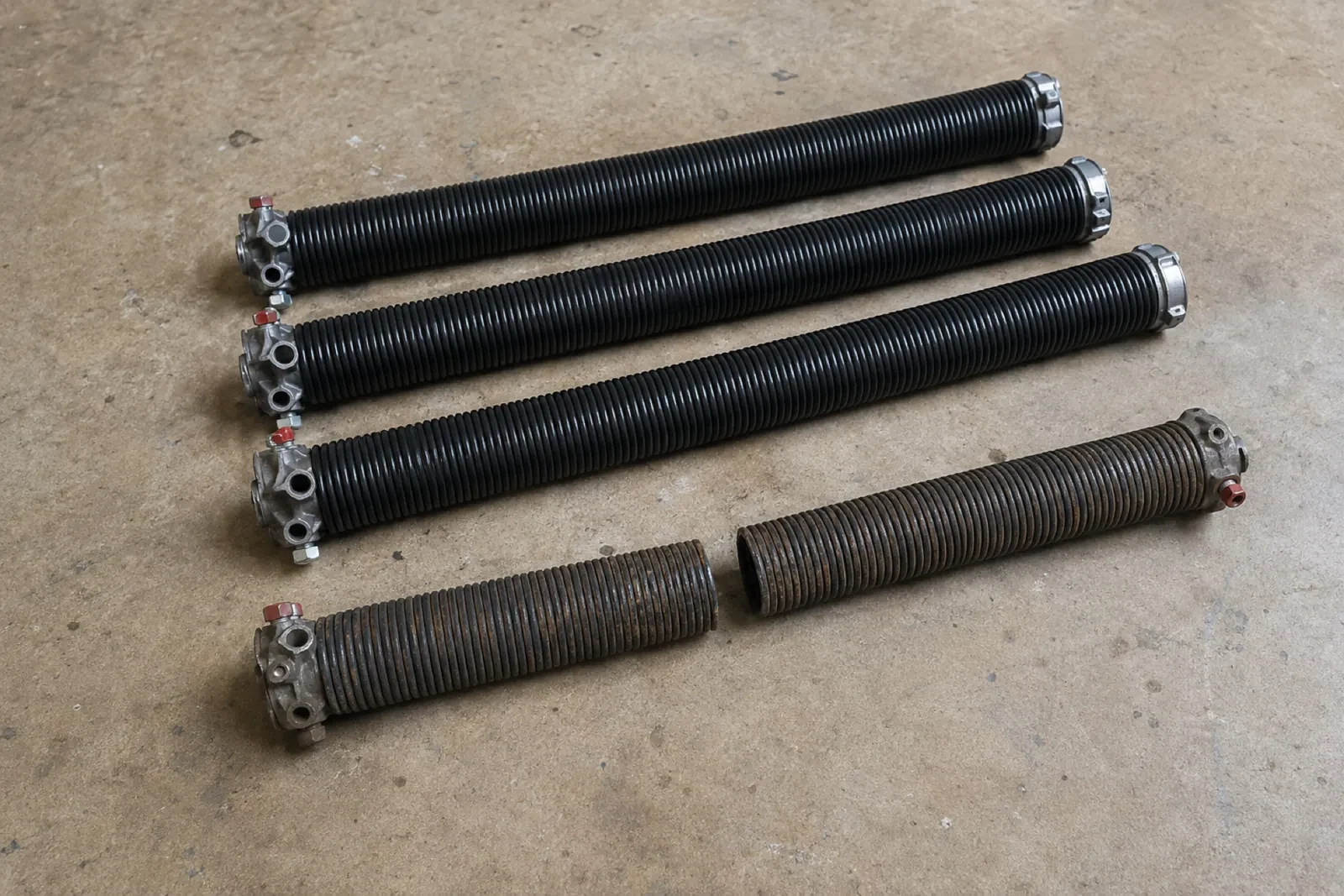
What bent it
The last question is why the track moved, because the answer shapes the repair. A crease at bumper height with paint transfer is impact. A track that has crept off the jamb with screws backed out is vibration and time. Rust at the floor is winter. A twisted section on one side with a slack cable beside it usually follows a cable or spring failure that tipped the door. Overhead damage tends to trace back to storage, a ladder or a hanger that gave way. You will be asked what happened before the symptom, since a shovel in the opening or a nudge from the car is a fact only you can supply.
Fixing into sound framing
Track is only as steady as the wood it is screwed to. Where the bottom of a jamb has gone soft, the technician cuts back to solid timber and sisters a new piece alongside or replaces the lower length, fastening it through to the framing behind. Enlarged or stripped screw holes higher up are plugged and re-drilled, or the bracket is moved to fresh wood. Lag screws of the right length and diameter are driven into the jamb, and any hanger anchored into ceiling finish alone is moved to a joist or given a length of angle to reach one. This is unglamorous work, and it is the reason the alignment lasts.
A monthly look at the brackets and hangers
Track problems announce themselves early to anyone who looks. Once a month, with the door closed and the light on, run your eye down each vertical track: the brackets should sit flat against the wood with no gap behind them and no screw heads standing proud. Then look up at the horizontal runs and the angle hangers holding them; a hanger that has begun to lean or a run that no longer looks level with its partner is worth a call while it is a small adjustment. Finish by watching the door open once, checking that every roller stays in its channel through the curve, which is the same check the industry checklist asks for.
Garage Door Track Repair or Replacement
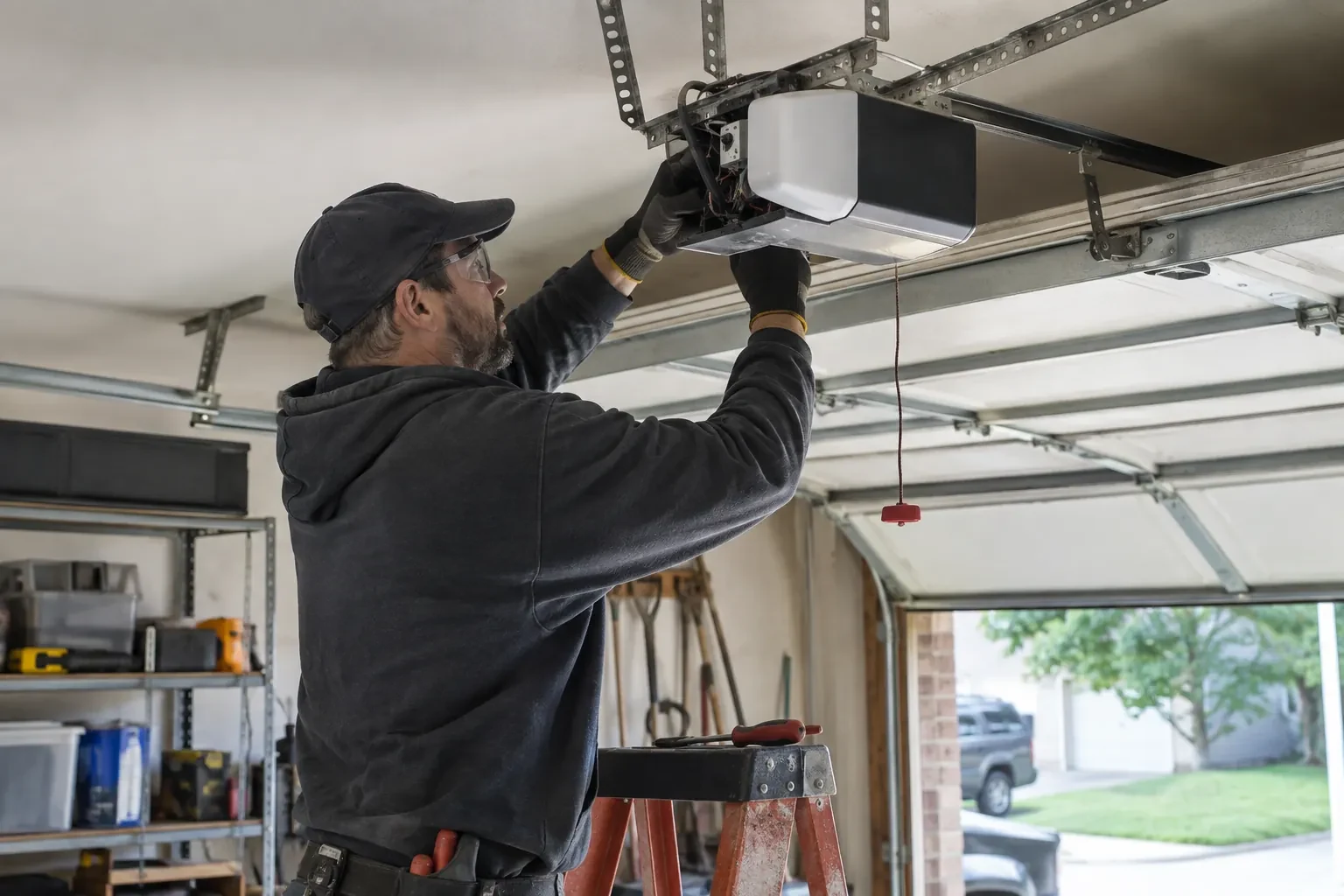
In the van
Winding bars and track clamps
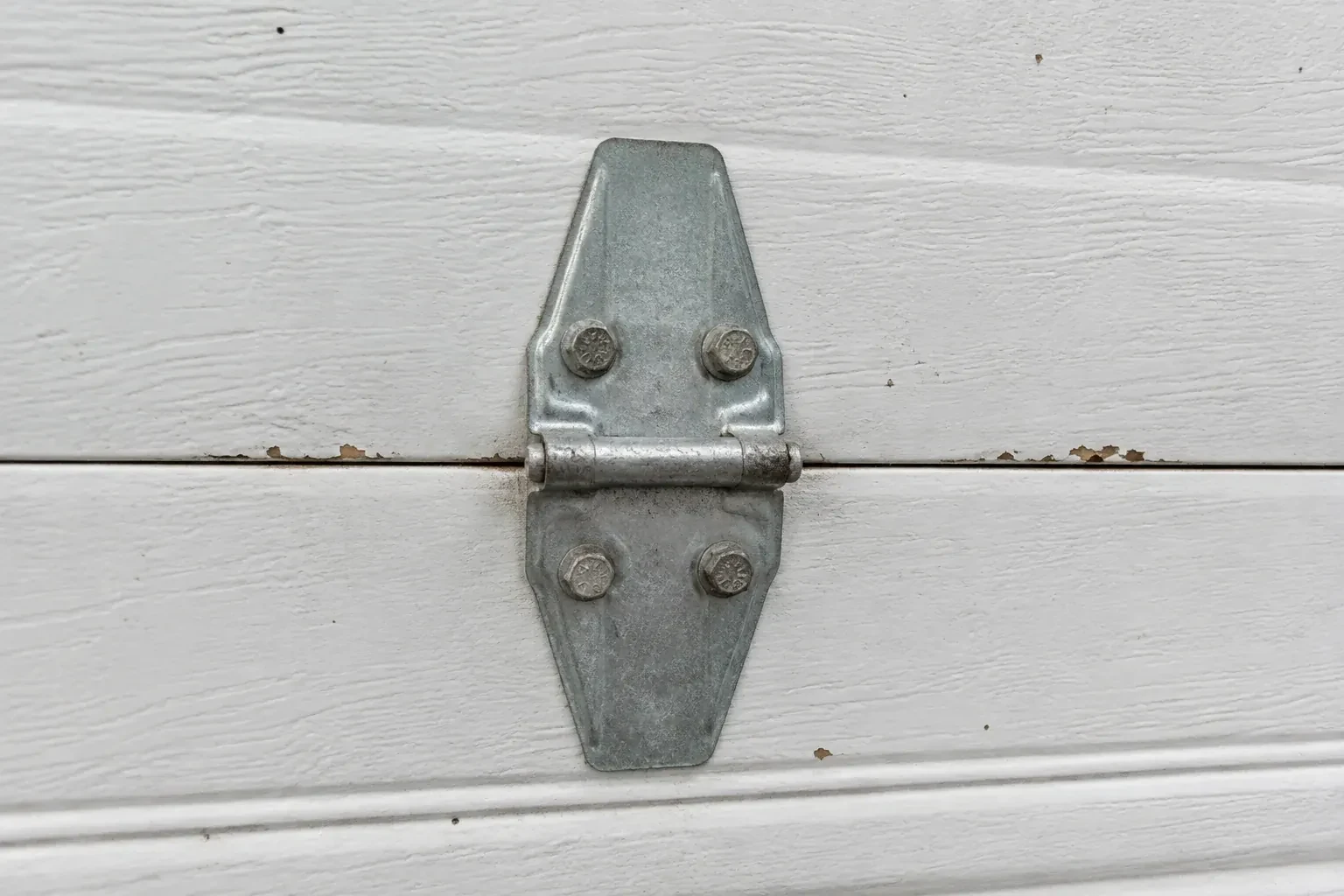
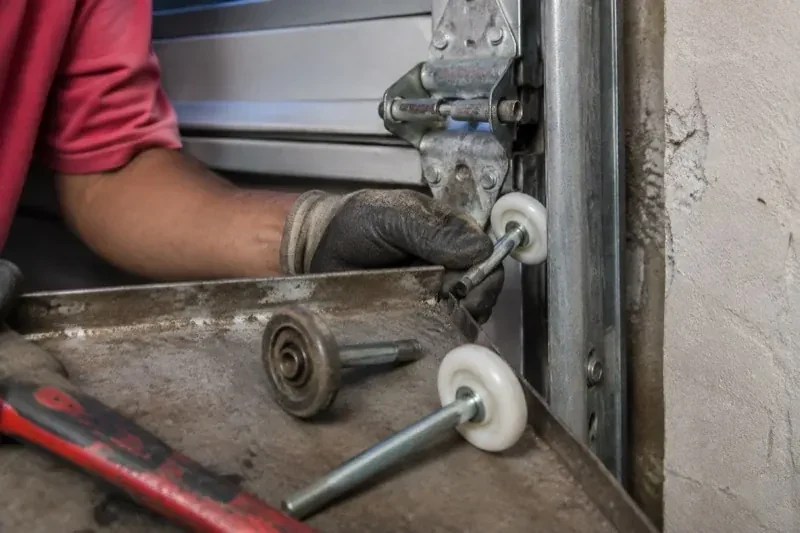
Replacement rollers and hinges
Level, plumb line and square
Top fixtures
Track pliers and dead-blow hammer
Garage Door Track Repair or Replacement
What affects the quote
Straighten or replace, piece by piece
A dent dressed in place is labour only, while a kinked, cracked or rusted length means a new piece of track. The quote lists which pieces get which treatment.
Which part of the run
A vertical section below the curve is the simplest change. The curve itself, or the horizontal run overhead, involves the flag bracket and hangers and takes longer to set.
Damage to sections and bottom hardware
When a bumper strike has also dented the bottom section or bent a bottom bracket, that repair is described and priced separately from the track so you can decide each on its own.
What to have ready
- Is there one spring above the opening, or springs along the tracks?
- Has any roller come out of the channel?
- Do you have the door's manual or a label with its model?
Garage Door Track Repair or Replacement: questions
QuestionsWhat is the flag bracket and why does it matter?
The flag bracket is the L-shaped angle at the top of each vertical track. It ties the vertical run, the curve and the horizontal track together, and on a torsion-spring door it also carries the end bearing plate for the spring shaft. Because so much meets there, a loose or bent flag bracket throws the whole path off. The technician unloads the springs before moving it and squares it carefully when it goes back.
What happens during the visit?
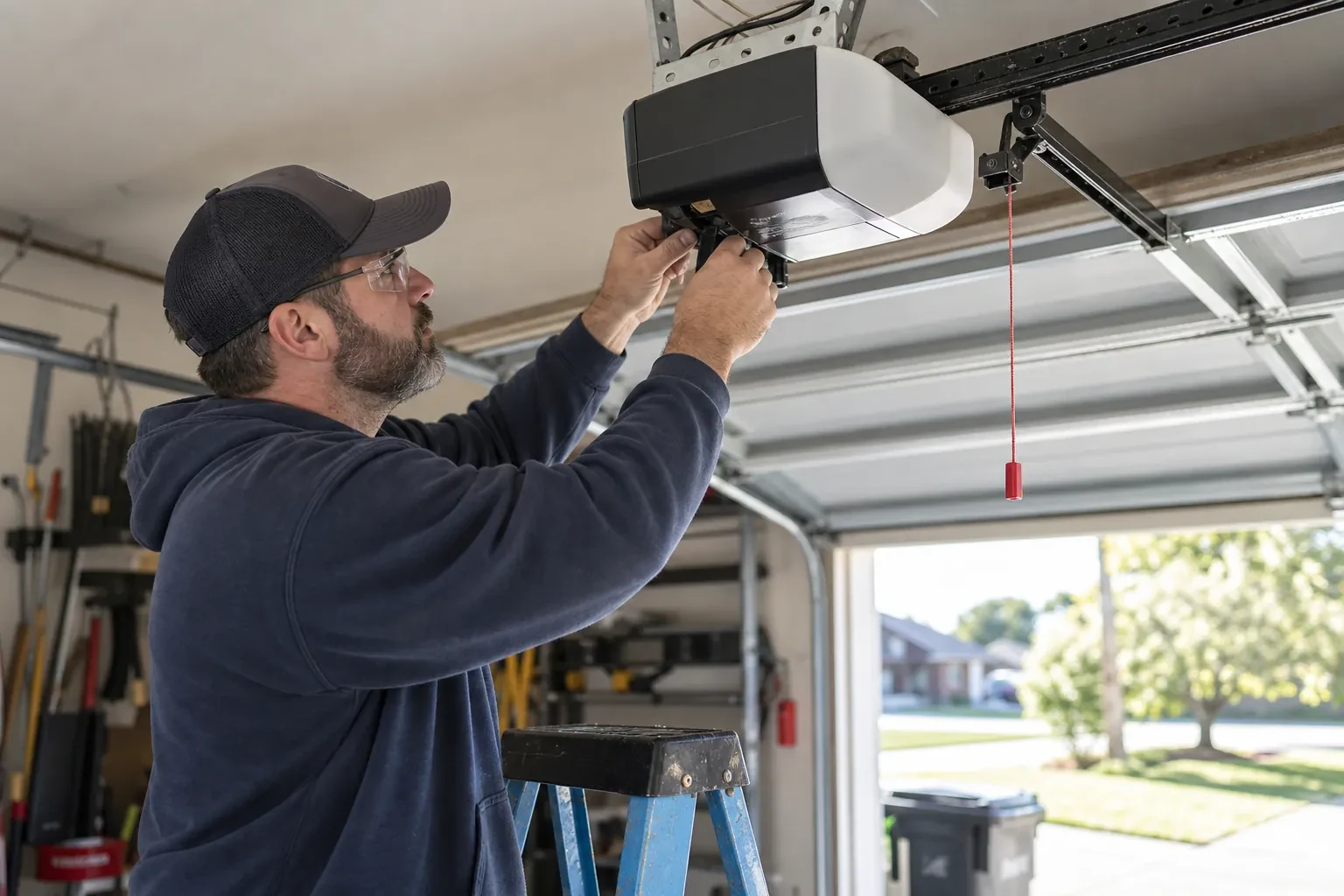
The opener is disconnected and the door clamped. The technician identifies the track type and layout, checks each vertical run for plumb, spacing and fixing, looks at the jamb wood, the curve, the flag brackets, the horizontal runs and their hangers, and how each roller sits. Damaged pieces are dressed or replaced, brackets refixed into sound wood, the geometry reset, rollers reseated, springs re-tensioned if they were unloaded, and the door balanced and the opener tested.
Why does the door catch at the same spot every trip?
A catch that repeats in one place is the signature of a local track fault: a dent, a spread section, a step at a joint, or a bracket that has let the track drift. Each roller reaches the flaw at the same point in the travel and bumps over it. The technician finds the spot by running a roller through the channel by hand, then dresses or replaces that length and checks the rest of the run for the same problem.