Repairs · Toronto
Garage Door Perimeter Weatherstrip
Every time the door closes there is a rubbing squeal along one side, and the flexible fin has folded under itself and torn.
In plain words
Perimeter seal comes in two common forms, and the visit begins by deciding which suits your opening. The simpler is a flexible vinyl fin nailed to the face of the existing wood stop, which works well where the stop is sound. The other is a one-piece vinyl stop moulding with the fin built in, which replaces the wood stop altogether and suits jambs that are weathered or where the old stop is cracked and paint-heavy. Commercial doors sometimes carry an aluminum retainer with a replaceable rubber insert. Each is cut to your header and sides on site and set against the closed door.
How the visit goesAfter a windy night there is a fine ridge of snow on the garage floor along one side of the door, and another across the top step. The door was shut the whole time; the snow came in around it.
Garage Door Perimeter Weatherstrip
How the visit goes
A daylight test from inside
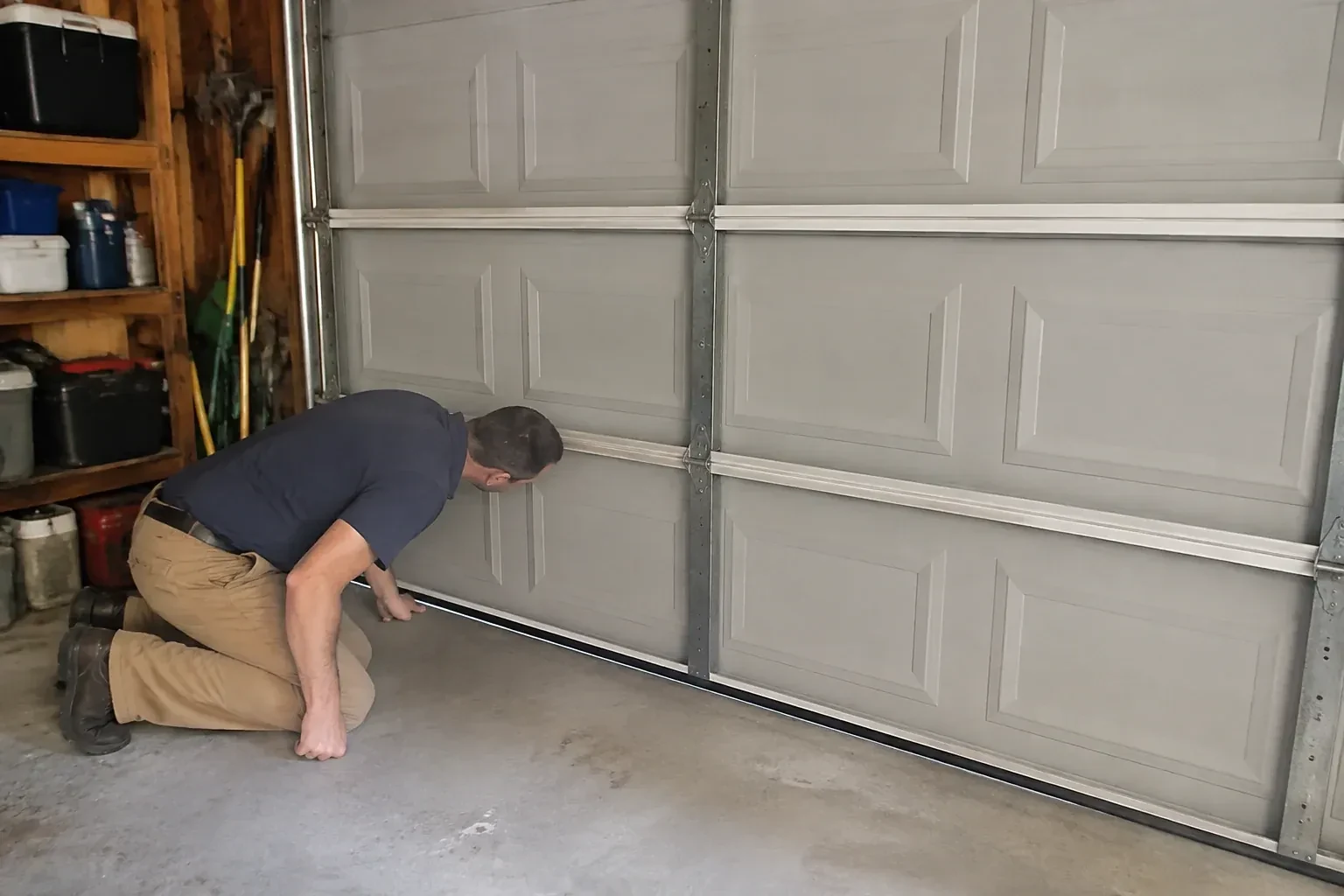
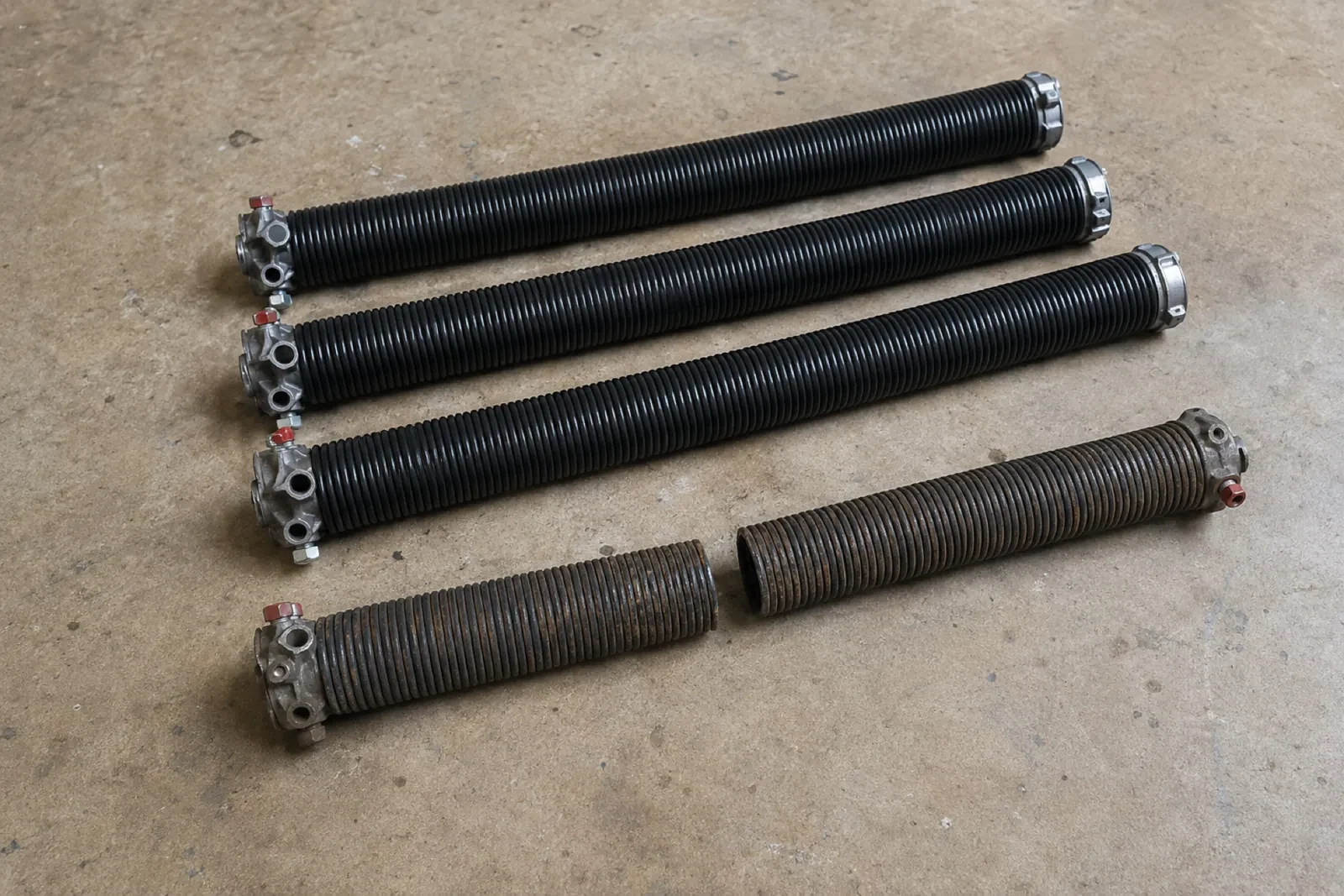
The first check needs no tools. The door is closed, the garage lights go off, and the technician stands inside looking along each side and across the header for lines of daylight. A bright, even line means the fin has shrunk back or hardened; a wedge that widens toward the top or bottom points to the door sitting out of square; a gap only at a corner means the pieces were never overlapped. On a windy day a hand or a smoke pencil along the edge finds drafts that daylight misses. The pattern of the gaps is what tells the technician whether the seal alone is the answer or whether the door needs a small adjustment first.
Fastening that lasts through the seasons
Fasteners are chosen for the weather they will live in: galvanized or stainless trim nails, exterior screws where the stop is heavy or the wood is hard, and weatherproof staples only for a light fin on sound wood. They are spaced evenly so the strip stays straight between them, and a nail set is used so the heads sit flush without crushing the vinyl. In cold weather the lengths are kept warm in the van until the moment they are fitted, because cold vinyl is brittle and splits at the ends. Fasteners near the end of each piece go in a little further back for the same reason.
Slush, salt and the bottom of the jambs
The lowest part of each jamb is where the weather does its work, so a little attention there protects the whole seal. Push slush away from the jambs when clearing the driveway rather than piling it against them, and rinse the salt off the bottom of the stop on a mild day. Keep the joint between the jamb and the sill caulked so meltwater runs off the face instead of behind it. If a section of jamb was replaced, keep its paint or PVC surface intact. A dry jamb base holds its fasteners, and fasteners that hold keep the seal tight.
Garage Door Perimeter Weatherstrip
In the van
Exterior screws and weatherproof staples
Vinyl stop moulding with integral seal
Jamb repair lumber or PVC trim
Exterior caulking and gun
Utility knife and mitre saw
Garage Door Perimeter Weatherstrip
What affects the quote
Fin on the existing stop or a one-piece vinyl stop
Nailing a new fin to a sound wood stop uses less material than replacing the stop with a one-piece vinyl moulding, which costs more as a part but needs no paint and does not rot.
Partial replacement
Replacing one damaged length rather than all three is a smaller job, provided the remaining pieces are still soft and the profile can be matched.
Weather on the day
Cold weather means keeping vinyl warm between the van and the opening and fitting each length with extra care, so a winter visit can run a little longer than one in mild weather.
What to have ready
- Is anything stored against the jambs, or a car parked close to the opening?
- Where do you see daylight, drafts or snow: sides, top, or corners?
- Is your garage attached to the house, and is it heated?
Garage Door Perimeter Weatherstrip: questions
QuestionsThe wood around my door is rotten near the floor. Can the seal still go on?
Yes, and the rot is handled first. The soft wood at the base of the jamb is cut back to sound material and a new piece of lumber or PVC trim is spliced in, fixed and primed, so the fasteners for the new stop bite into something solid. This is one of the most common additions to a perimeter seal job here, because slush and salt sit against the jamb base all winter.
Why should the seal only touch the door lightly?
The fin is meant to bend against the door with a small, even deflection. That is enough to seal, and it lets the fin spring clear as the door lifts. Pressed hard, it drags on the door face, folds under on the way down, squeals and wears through well before its time, and it adds load to the opener. Set too far off, it leaves a standing gap. The light touch is the setting that lasts.
Why is there daylight on one side but not the other?
It can be either. Worn rollers, a track bracket that has shifted or a top section that bows can move the door face toward one jamb and away from the other, and a seal that is damaged, shrunk, the wrong size or set slightly off the door face shows the same way. The technician checks both the door's alignment and the seal itself, corrects what is out of true, then fits the new seal to a door that closes evenly.