Repairs · Toronto
Garage Door Bottom Seal Replacement
With the door closed and the lights off, a bright line of daylight runs along the floor from one side to the other.
In plain words
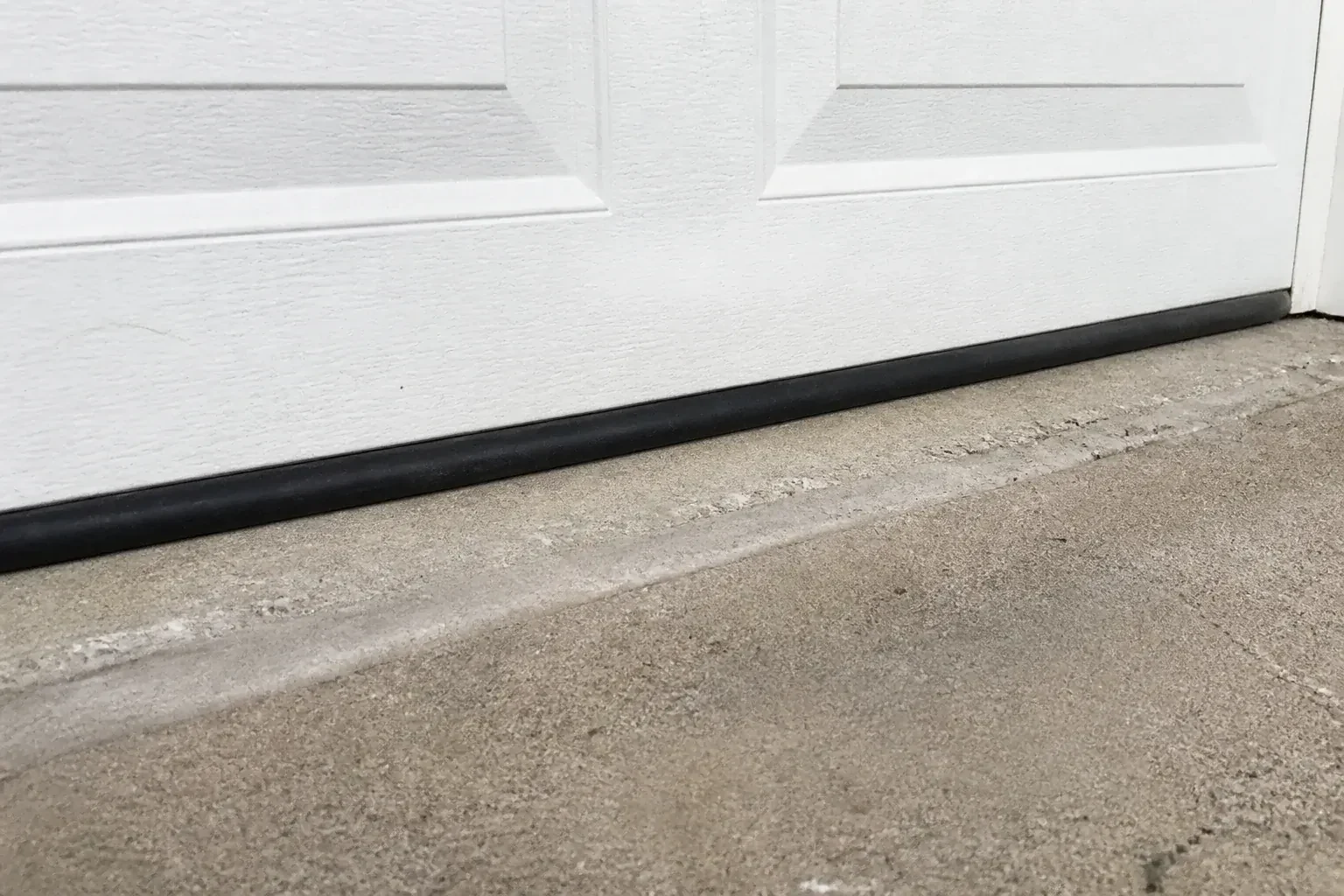
The material matters as much as the shape when the garage sees real winters. Vinyl is the common choice: it resists moisture and sun well but grows stiff in deep cold and stops moulding itself to the concrete. Rubber stays supple at low temperatures and follows an uneven floor, though it can harden after many years of sun. Silicone keeps its flexibility through hot and cold alike and resists cracking, at a higher cost per metre. Choosing the right compound for a door that faces the weather is part of the service, and it is one reason a replacement seal often outlasts the one it replaces.
How the visit goesThere are mouse droppings along the wall behind the recycling bins, and at one bottom corner of the door the vinyl has a neat chewed notch the width of a thumb. Something has found its way in for the winter.
Garage Door Bottom Seal Replacement
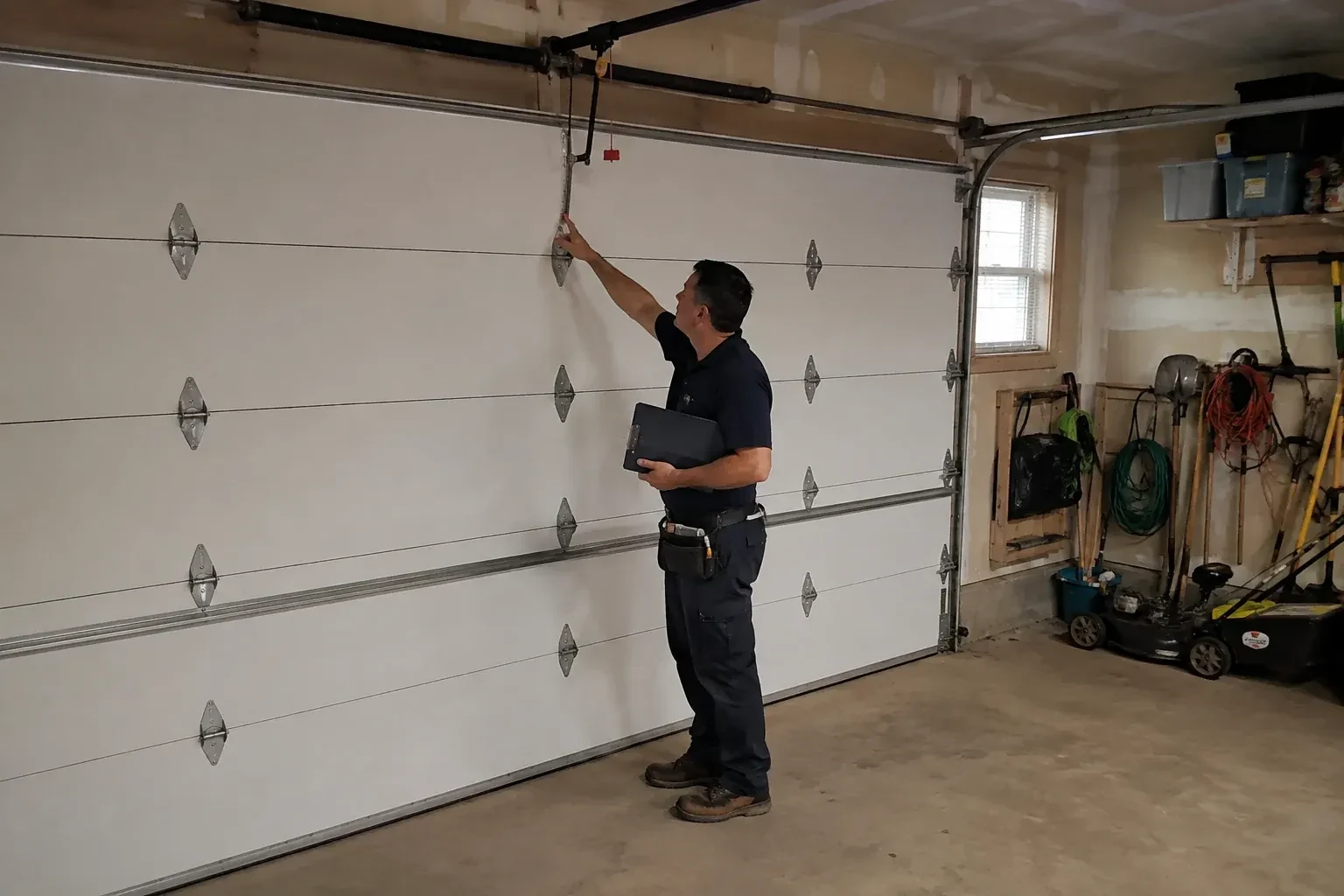
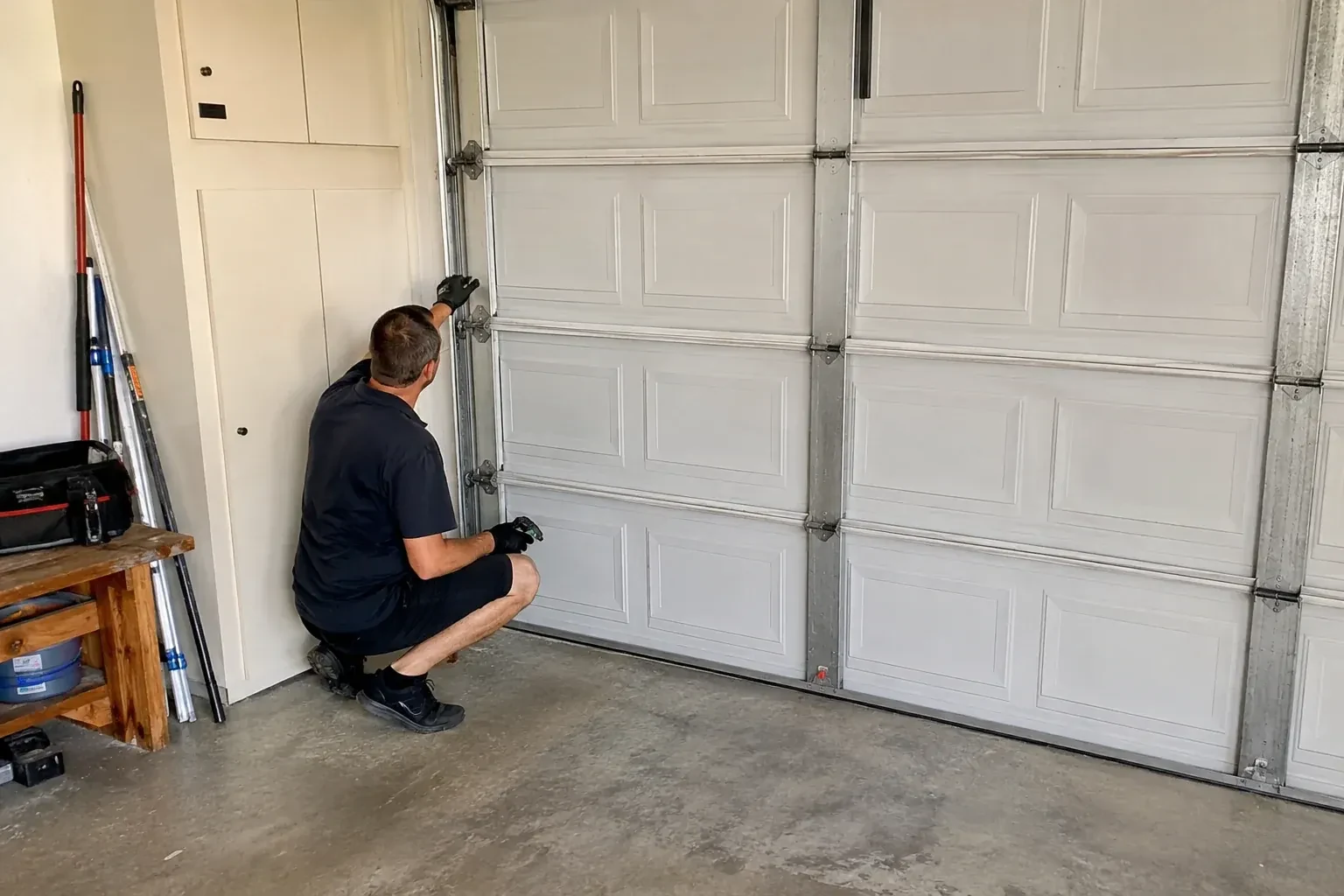
How the visit goes
Which retainer and which profile
Next the retainer along the bottom rail is identified. Most steel doors carry an aluminum extrusion with two channels that take the T-shaped or beaded edges of a U-shaped seal; some insulated doors have the channel moulded into a plastic bottom cap; older doors may have a single channel; wood doors often have a strip nailed straight to the rail. The technician measures the channel spacing and the T or bead size, checks the door width, and notes the height of the old strip. A seal chosen from these measurements slides in cleanly and holds, which is the difference between a replacement that lasts and one that works loose.
Wood doors and nail-on strips
A wood garage door usually carries a flat or angled strip of vinyl or rubber nailed directly to the bottom rail rather than a channel seal. The technician removes the old strip and nails, checks the rail for soft spots and cupping, and treats or dries damp wood as needed. The new strip is positioned so its lip angles toward the outside and touches the floor along the full width, then fastened with galvanized nails or screws at close, even spacing so it cannot ripple. On a rail that follows an uneven floor, the strip's flexibility takes up the difference.
Fewer visitors of the four-legged kind
A continuous seal removes the easy route mice and insects used along the floor. If rodents were part of the reason for the visit, a few habits finish the job: keep birdseed, pet food and grass seed in lidded bins, move firewood and cardboard away from the walls, and check the jamb seals at floor level, where a gap beside the door is as inviting as one under it. Seals with a stainless mesh embedded in the vinyl are available for garages that have had repeated trouble. A sealed bottom edge plus tidy corners keeps the garage a place where nothing wants to nest.
Garage Door Bottom Seal Replacement
In the van
Bead-style bottom seal
Nail-on vinyl strip for wood doors
Threshold seal and adhesive
Seal end caps
Track clamps
Garage Door Bottom Seal Replacement
What affects the quote
Door width
A single door takes a shorter length of seal than a double, and the widest doors need more time to feed the strip evenly across. The quote starts from the width measured on the day.
Threshold seal added
Where a floor threshold is recommended, its length, its type, whether rubber or aluminum-backed, the adhesive and the floor preparation before it is laid appear as a line of their own.
Condition of the old seal
A supple strip slides out in a minute. One that has hardened and seized in its channel, or been torn and frozen into the corners, has to come out in pieces, which takes longer.
What to have ready
- Does the door stop short of the floor or reverse before it closes?
- Is the old seal hard and cracked, torn, hanging loose, or missing?
- Can you send a photo of the end of the bottom section showing the retainer?
Garage Door Bottom Seal Replacement: questions
QuestionsWill I need a new retainer as well as a seal?
Only if the existing one is damaged, and most are reused. A retainer that is straight, tight to the rail and free of heavy corrosion stays. One that has been kinked by a bumper or shovel, spread open so the seal slips out, or eaten by salt is replaced with a matching aluminum extrusion so the new seal seats properly. The inspection at the start of the visit settles which applies.
The seal looks fine, so why is there still daylight under the door?
A seal can look intact and still have taken a permanent set, so the bulb no longer springs up to fill the gap. Otherwise the gap belongs to something else: a door hanging out of level, a bowed bottom section, a floor that has settled at one end, or an opener down limit set so the door stops short. The first look during the visit sorts these apart so the fix goes to the right place.
Does a wood garage door use the same kind of seal?
Usually not. Wood doors most often carry a flat or angled strip of vinyl or rubber nailed directly to the bottom rail, rather than a profile that slides into a retainer. Replacement means removing the old strip and nails, checking the rail for soft or cupped wood, and fastening a new strip so its lip angles outward and meets the floor along the full width. A retainer can be added to a sound rail if you prefer a channel seal.