Springs · The Golden Mile
Garage Door Roller Replacement in The Golden Mile
The door is the one the builder installed and has never had a part changed.
In plain words
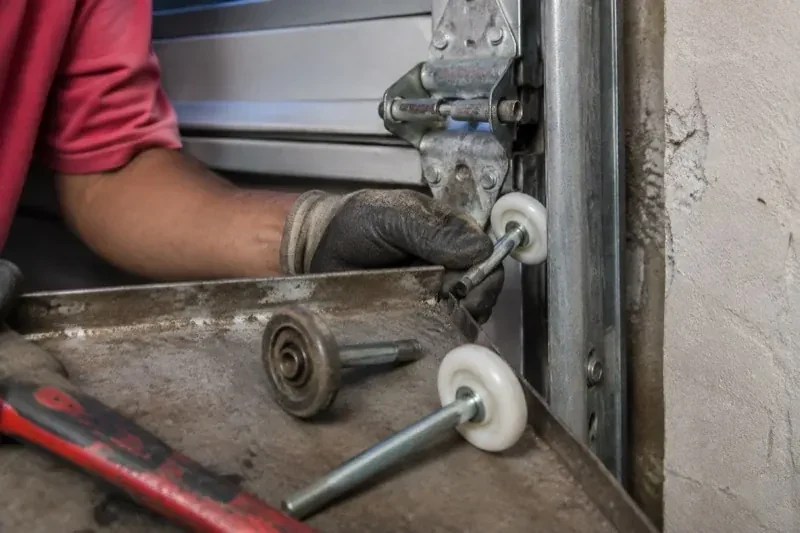
Most of the noise a garage door makes comes from its rollers. Steel wheels on a steel track are loud by nature and grow louder as their bearings dry out and pit, and the plastic wheels fitted to many new doors have no bearings at all, so they simply grind as they wear. Moving to nylon rollers with sealed ball bearings changes the sound of a door more than any other single part, because the nylon tire absorbs vibration instead of passing it into the track and the ceiling. The same visit lubricates the hinges and squares the track so the quiet lasts.
How the visit goesOne of the little wheels along the edge of the door has a chunk missing, another sits crooked in its hinge, and there is a fine grey dust on the floor under the track where plastic has been wearing away.
Garage Door Roller Replacement
How the visit goes
Listening to a full cycle
The assessment begins with the door in motion. The technician runs it up and down on the opener, then releases the opener and moves it by hand, because a hand on the door feels what an ear alone misses: a catch at one height, a wheel that drags rather than turns, a section that rocks as it rounds the curve into the horizontal track. Where the sound or shake happens narrows the search. Trouble at the curve usually points to worn or oval wheels, a rhythmic click travelling with the door points to a failed bearing, and a shudder near the floor often traces to the lowest rollers and whatever the winter left in that end of the track.
Running it in and testing
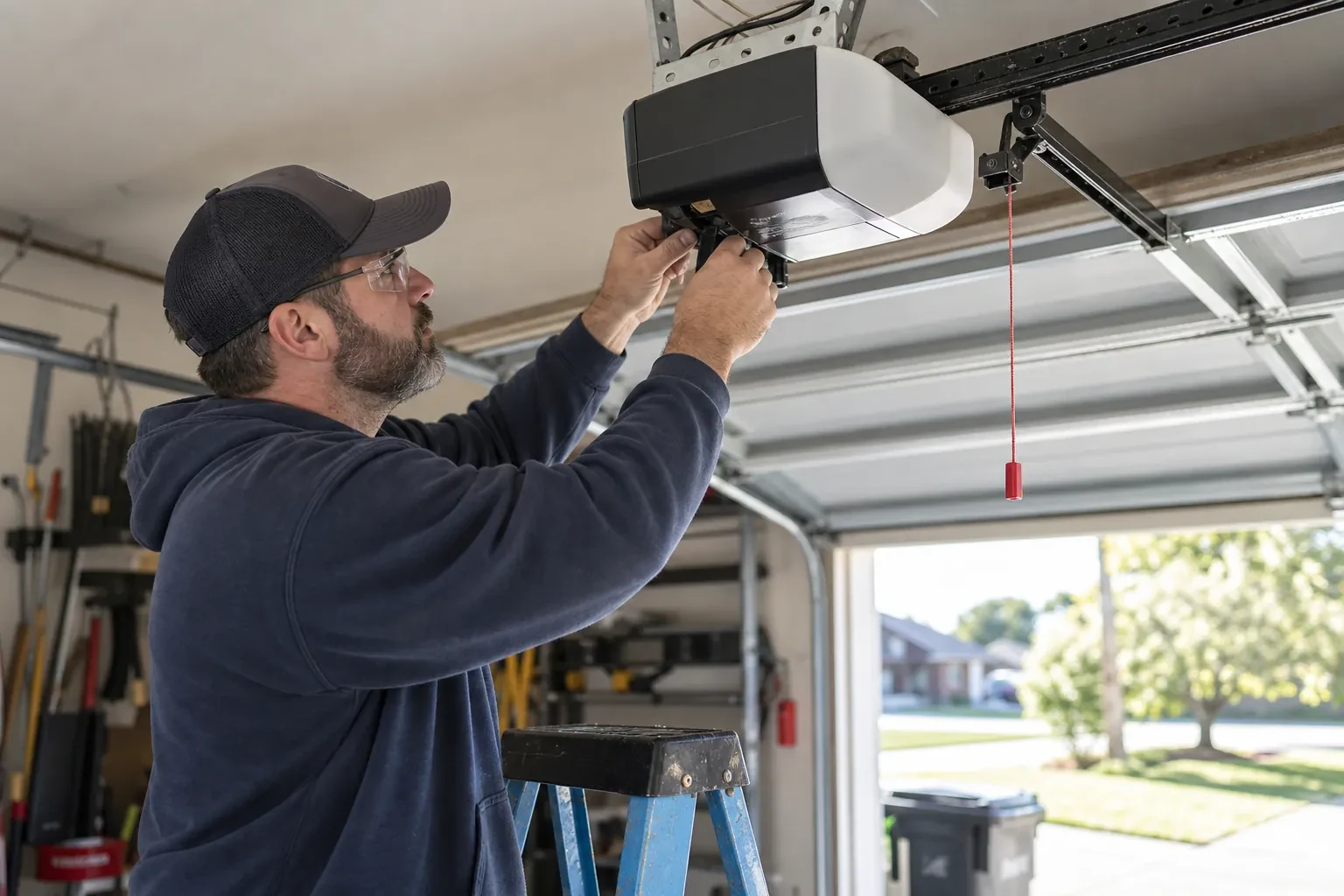
The opener is reconnected and the door is run through several full cycles while the technician watches each wheel stay seated in its track and listens for anything left over. Balance is rechecked with the opener released. Then the opener's settings are confirmed: the force limits, which may need reducing now that the door moves so freely, and the reversal, tested against a 1-1/2 inch block laid on the floor in the door's path exactly as the industry checklist describes. Only when the door travels smoothly, seals at the top and reverses on contact is the job called finished.
A record of what was fitted
You should know what is on your door. The technician leaves you with the roller type and material, wheel size, stem length by position, bearing count and load rating, along with any hinges, fixtures or brackets replaced and any track adjustment made. Keep this with the owner's manual and the date of the last spring replacement. It answers the questions that come up later, such as which stem length to order if a single wheel is ever damaged, and it lets a future technician see at a glance what the door carries and when it went in.
Garage Door Roller Replacement
In the van
Bottom brackets
1-1/2 inch reversal test block
Steel ball-bearing rollers
Track clamps or locking pliers
Jamb bracket fasteners
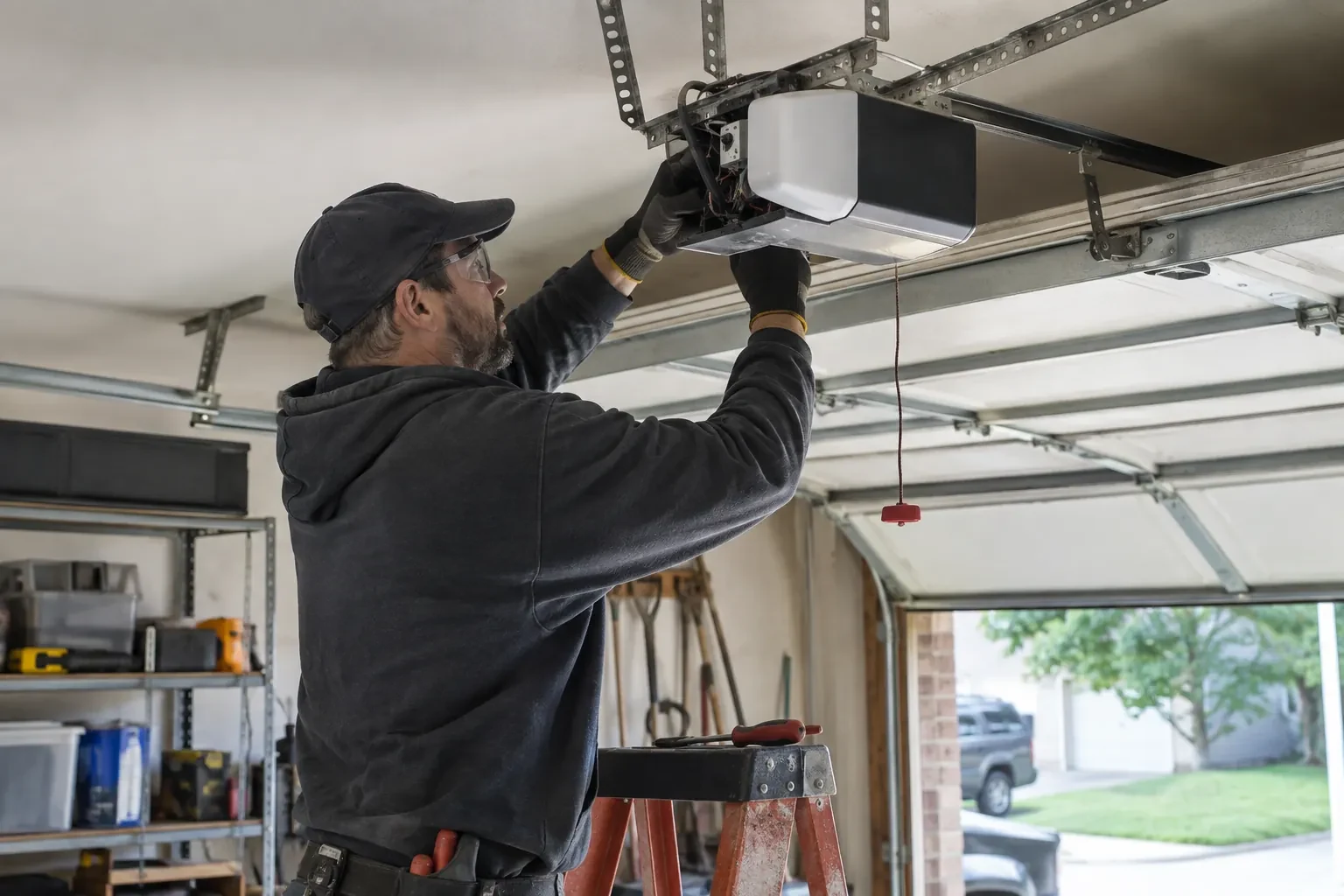
Garage Door Roller Replacement
What affects the quote
Relieving spring tension for the bottom rollers
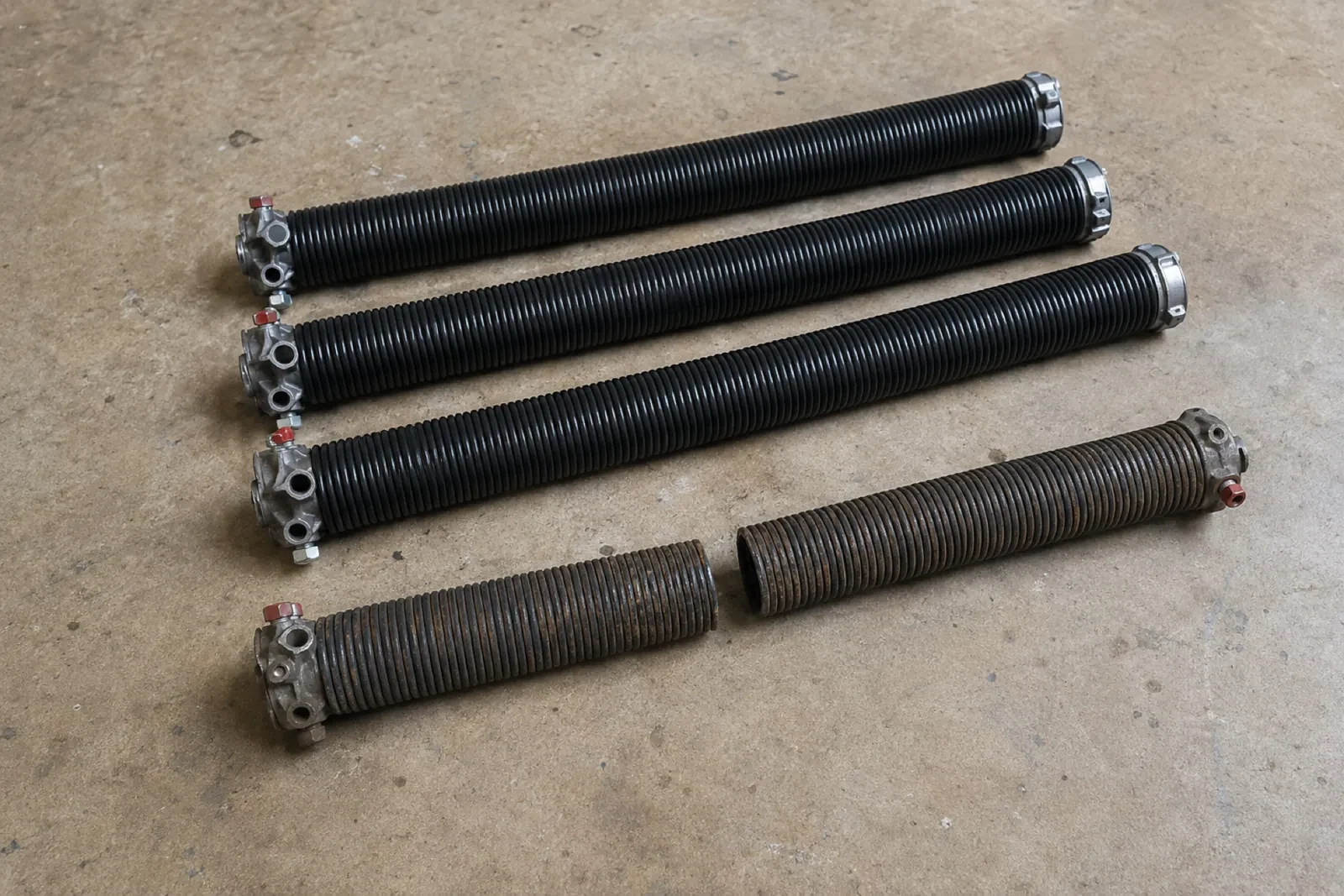
When the bottom brackets have to be unbolted, the technician takes the spring load off first with winding bars, skilled extra work that is included in the figure for that position.
Weight and construction of the door
A heavy insulated steel or solid wood door needs higher-rated rollers and takes more care to secure and handle than a light single-skin door, which shows in both parts and time.
Number of sections and rollers
A four-section door carries ten rollers and a five-section door twelve; taller doors with more sections, or doors fitted with extra rollers at the top, add to the set, and the quote follows the count.
What to have ready
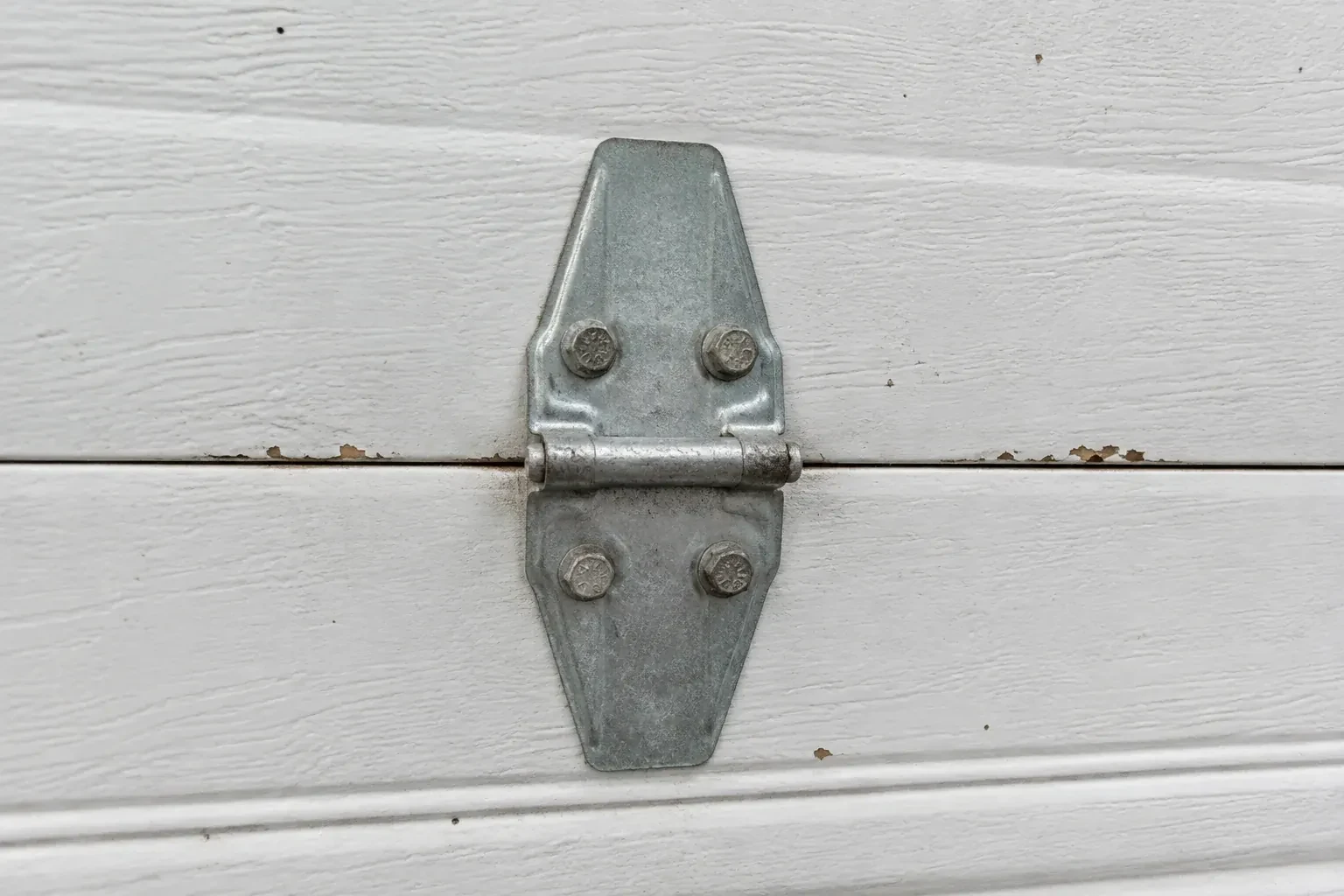
- Are there two hinges stacked at the ends of each section, or one?
- Where in the travel does the noise, shake or hesitation happen?
- How many sections does the door have, and is it wood, insulated steel or single-skin?
Garage Door Roller Replacement: questions
QuestionsHow many rollers does a garage door have?
A standard four-section residential door has ten: one at each end of the three hinge lines between sections, one in each of the two top fixtures and one in each bottom bracket. A five-section door carries twelve, and taller doors more still. The technician counts and inspects every one, because replacing the full set together keeps the door's travel and sound even from side to side.
Are the bottom rollers different from the rest?
The wheels themselves are usually the same, but their home is not. The bottom rollers sit in the bottom brackets, which also anchor the lifting cables and therefore carry the counterbalance load whenever the door is closed. That is why manufacturers put warning labels there and why this position is handled by a trained technician who either exchanges the roller without disturbing the bracket or relieves the spring tension first. It is also the position most exposed to salt and slush, so it is inspected with extra care.
Can I replace just the one roller that looks bad?
One roller can be changed on its own, and sometimes that is the sensible stopgap after a wheel breaks. The better result comes from a full set, because the other wheels have done the same number of cycles and are close behind, and mixing new with old, or nylon with steel, leaves the door running unevenly and sounding different on each side. A matched set also lets the technician set every top fixture and check every hinge in one pass.
Related services
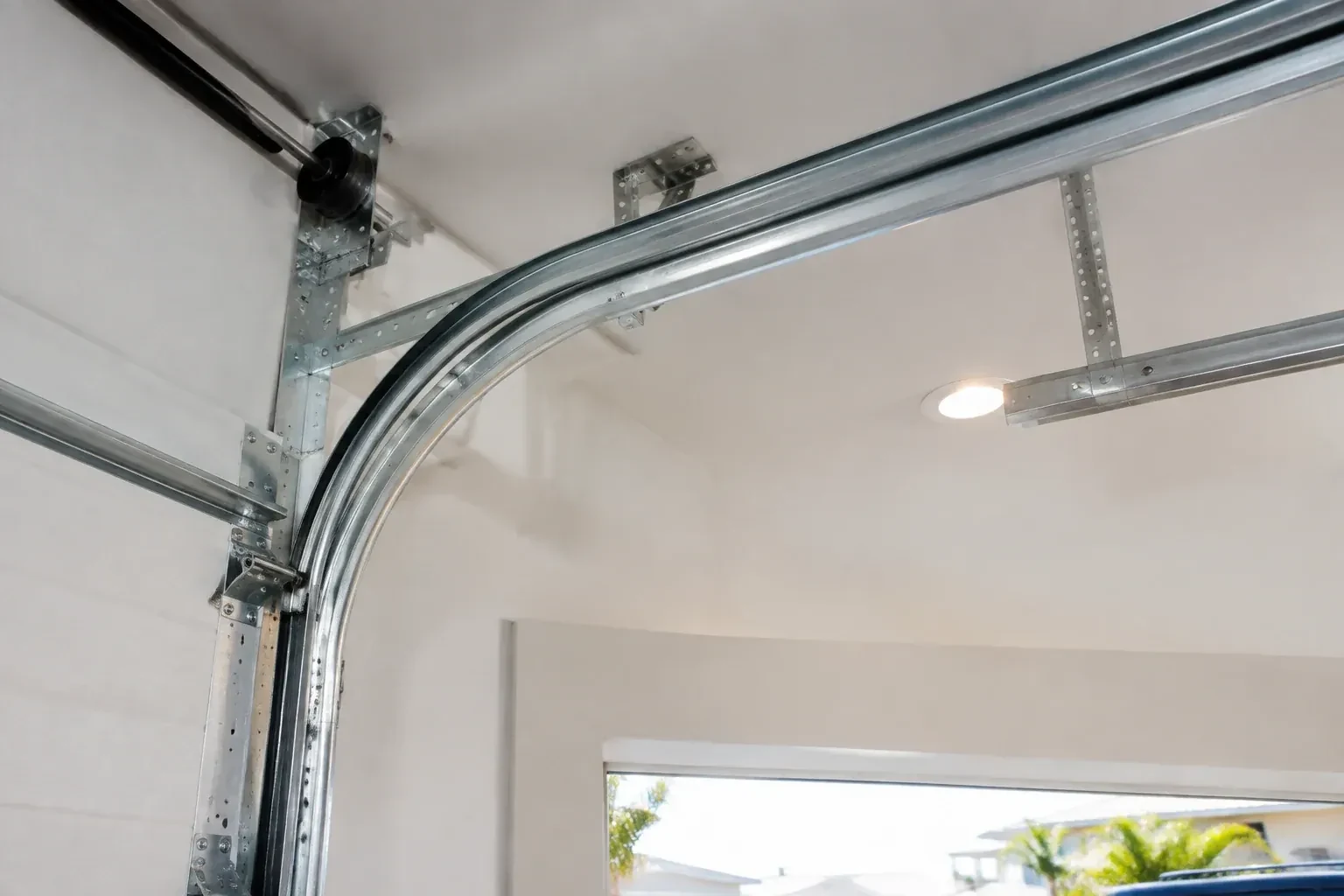
- Garage Door Track Repair or ReplacementYou bought the house with a door that sticks near the top of its travel.
- Garage Door Cable ReplacementThe car bumper kissed the door on the way in.
- Torsion Spring ReplacementYou heard a sharp bang from the garage, and now the opener hums for a second and gives up.