Repairs · Toronto
Off-Track Garage Door Reset
The rollers on the door have been squealing for months.
In plain words
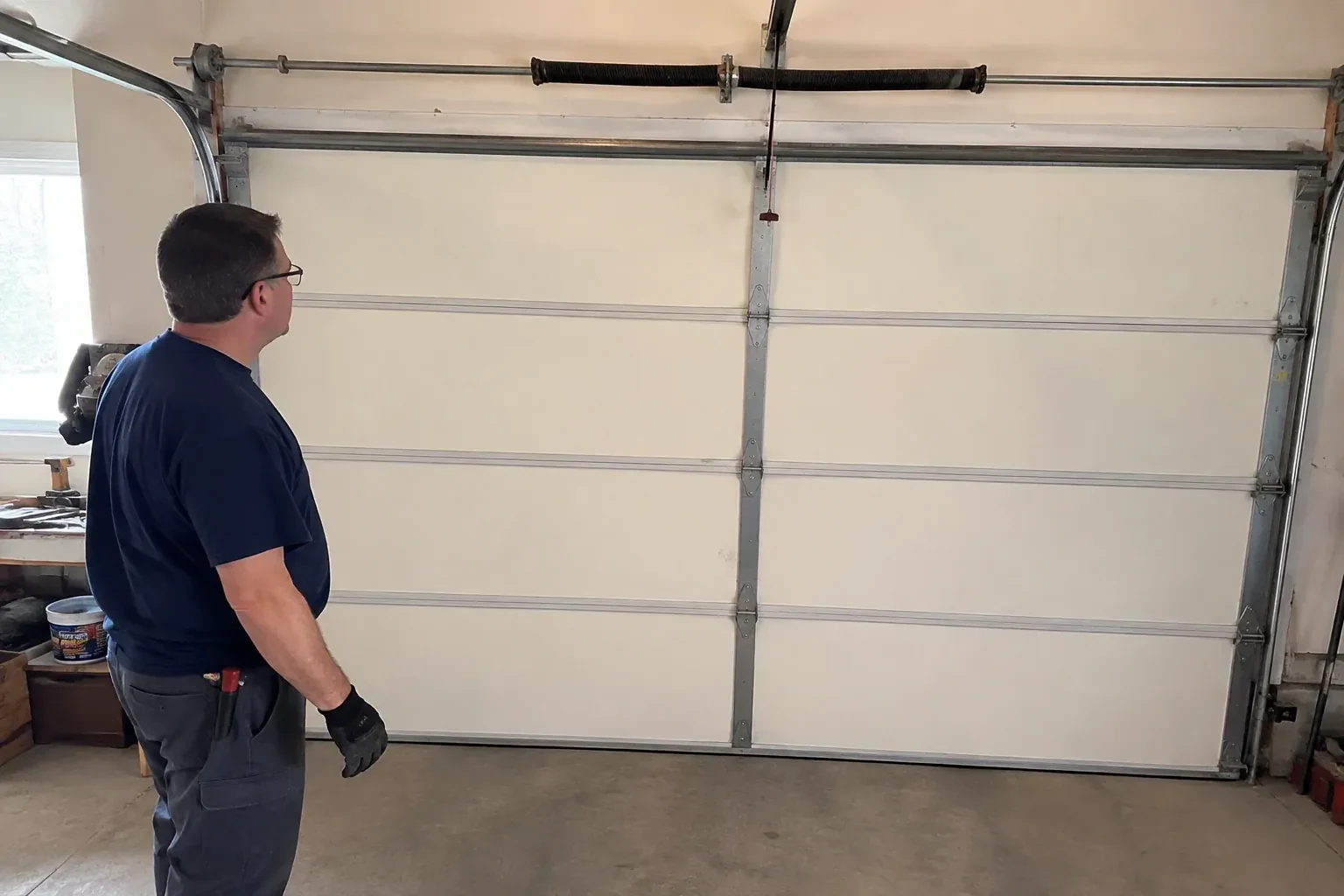
Off-track doors are really two problems in one, and the reset addresses both. The first is the visible one: a roller outside its rail and a door out of square. The second is the cause, which is often a slack or broken lifting cable, a worn roller, a bent hinge or a track bracket that has let go of the wall. Putting the roller back without fixing the cause invites a repeat within weeks. So the visit pairs the re-seating work with a whole-system check of cables, drums, springs, hinges, brackets and track geometry, and replaces the piece that started the trouble.
How the visit goesThe morning after a thaw the opener groaned, the door stayed stuck to the icy floor for a second, then lurched up crooked. It stopped halfway with a grinding scrape and has not moved since.
Off-Track Garage Door Reset
How the visit goes
Track, brackets and the wall behind them
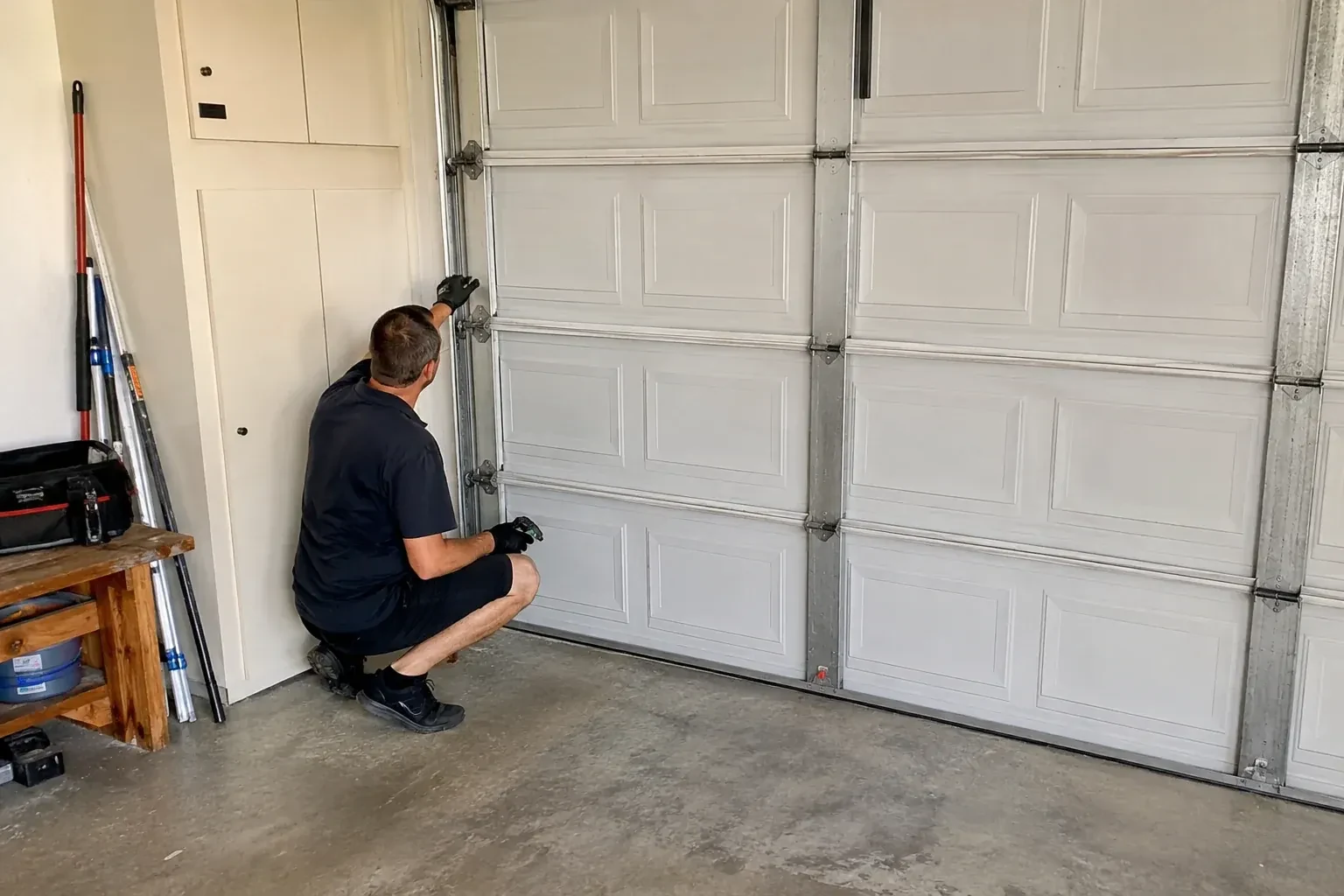
The rails are examined as a system. Is the vertical track plumb and spaced correctly to the door edge, or has it bowed away from the jamb? Are the jamb brackets and flag brackets tight, and are the lag screws biting into sound wood or spinning in split, dry framing? Is the horizontal track level or slightly rising toward the rear, and are the back hangs still firmly fixed to the ceiling joists? A rail that has been crushed or kinked by an impact is measured against the door's roller size, because a tight spot in the track will pop a roller again as soon as the door is run.
Running the door by hand
Before the opener comes back into the picture the door is proven manually. The clamps come off, the technician lifts the door slowly from the bottom, watching each roller pass through the curve and along the horizontal rail, and listening for any scrape that would mean a tight spot. At the halfway point the door is let go and should hold there with little drift. It is raised fully and must stay up. Then it is lowered and must close level along the floor. Any drag, sway or roller lift at this stage is fixed now, because the opener would only hide it until the next event.
Keeping the opener honest
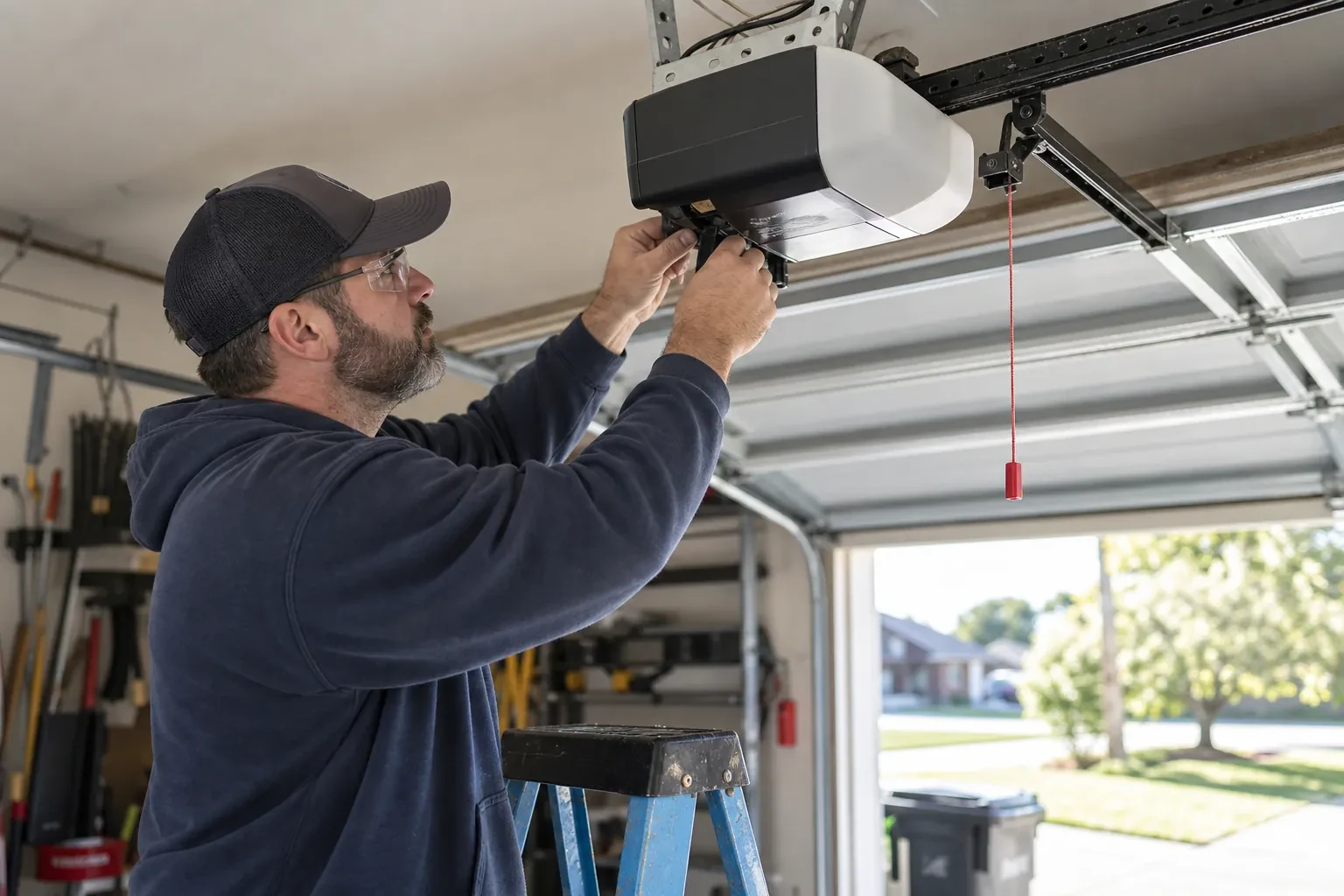
The opener leaves the visit re-taught to the trued door, and a monthly test keeps it that way. Lay a piece of wood about 1.5 inches thick flat on the floor in the door's path and close the door from the wall button: it must touch the block and reverse. Then start the door closing again and pass an object through the photo-eye beam near the floor: it must stop and go back up. If either test fails, unhook the door from the opener and operate it by hand until it has been looked at. A door that reverses properly is one that stops before it can rack itself against an obstruction.
Off-Track Garage Door Reset
In the van
Long lag screws or through-bolts
Jamb and flag brackets
Track pliers
Level and plumb line
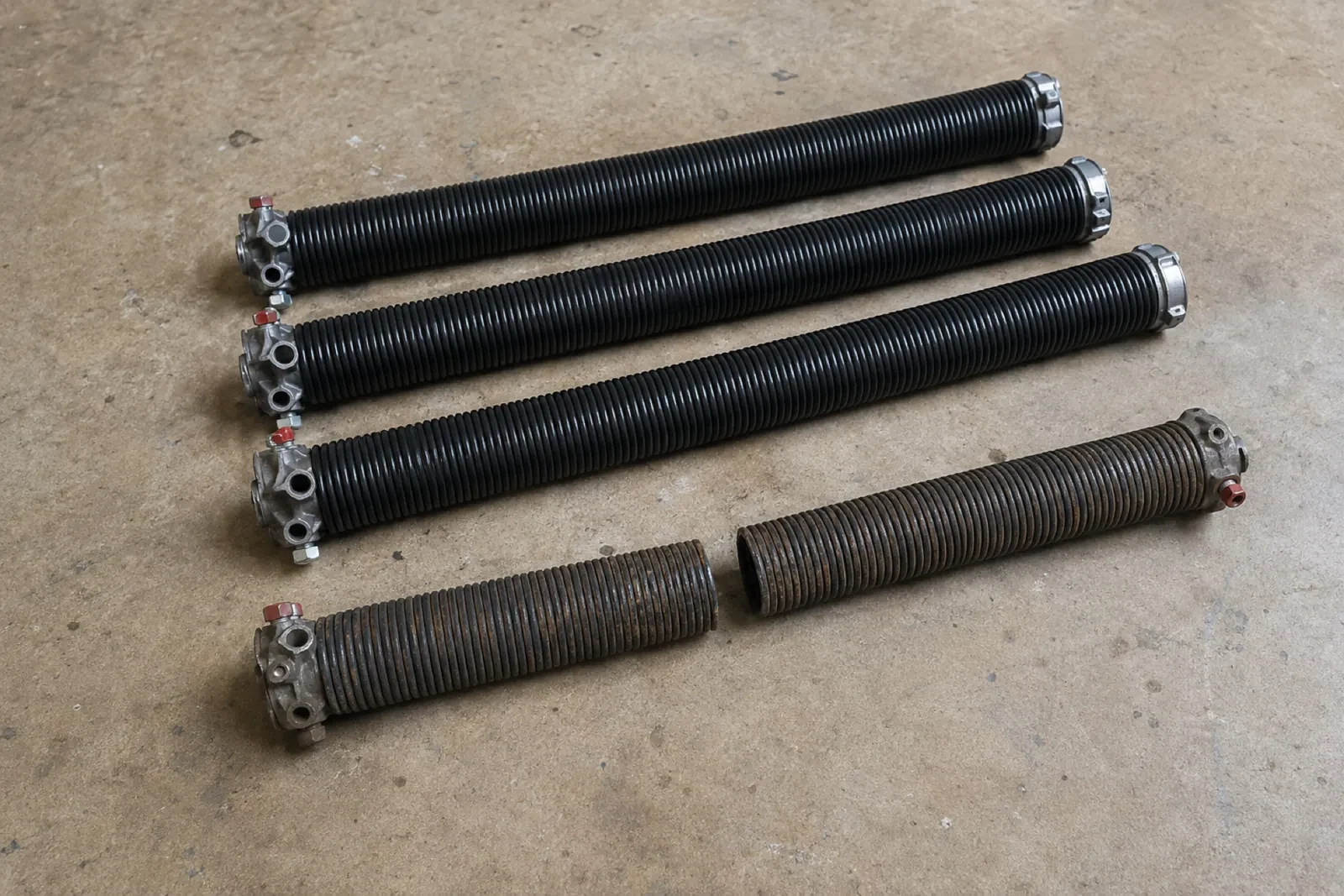
Torsion spring winding bars
Off-Track Garage Door Reset
What affects the quote
Travel to the property
Every visit includes the drive. A door across town and one at the end of a rural road involve different travel time, and the quote states the call-out portion separately from the work.
How far the door has left its track
One roller out at the bottom of a closed door is a different job from a door racked across the opening with rollers out on both sides. The quote follows the amount of resetting involved.
Opener reconnection and adjustment
Reconnecting the trolley, resetting travel limits and force, and testing the reversal are normally part of the reset. An opener arm, bracket or reinforcement damaged during the event is an additional item.
What to have ready
- Did a vehicle or anything else bump the door before this happened?
- Have the rollers been noisy, squealing or wobbling recently?
- Was the door frozen to the floor or was something under it when the opener ran?
Off-Track Garage Door Reset: questions
QuestionsWhy did the door come off its track in the first place?
The usual causes are an impact from a vehicle, a lifting cable that broke or slipped off its drum, ice holding the door to the floor while the opener pulled, an obstruction under the door, worn rollers that no longer hold in the rail, or track brackets that have loosened from the wall. Finding which one applies is the first part of the visit, because the reset is only durable once the cause is corrected.
I only tapped the door with the bumper. Why is it off its track?
A sectional door is strong in the direction it travels and surprisingly easy to push sideways at a single roller. A light nudge on the bottom section can flex the track lip enough for the roller to slip out, after which the section twists and the rollers above follow. The good news is that this kind of event usually leaves the cables and springs alone, so the reset is often rollers, a re-formed track lip and a hinge check.
Can I just push the roller back into the track myself?
The roller is only the visible part of the problem. Behind it are cables and springs holding the door's weight unevenly, and a door can drop or swing when a section is moved without the load taken off first. A trained technician clamps the door, releases the tension in a controlled way and seats the rollers in order. Leaving it to that process protects both you and the sections themselves.
Related services
- Garage Door Tune-UpHalfway up, the door shudders.
- Garage Door Panel ReplacementYou misjudged the last metre of the driveway and felt the bumper meet the door.
- Garage Door Bottom Seal ReplacementWith the door closed and the lights off, a bright line of daylight runs along the floor from one side to the other.