Springs · Toronto
Garage Door Balance Adjustment
Released from the opener, the door will not hold anywhere.
In plain words
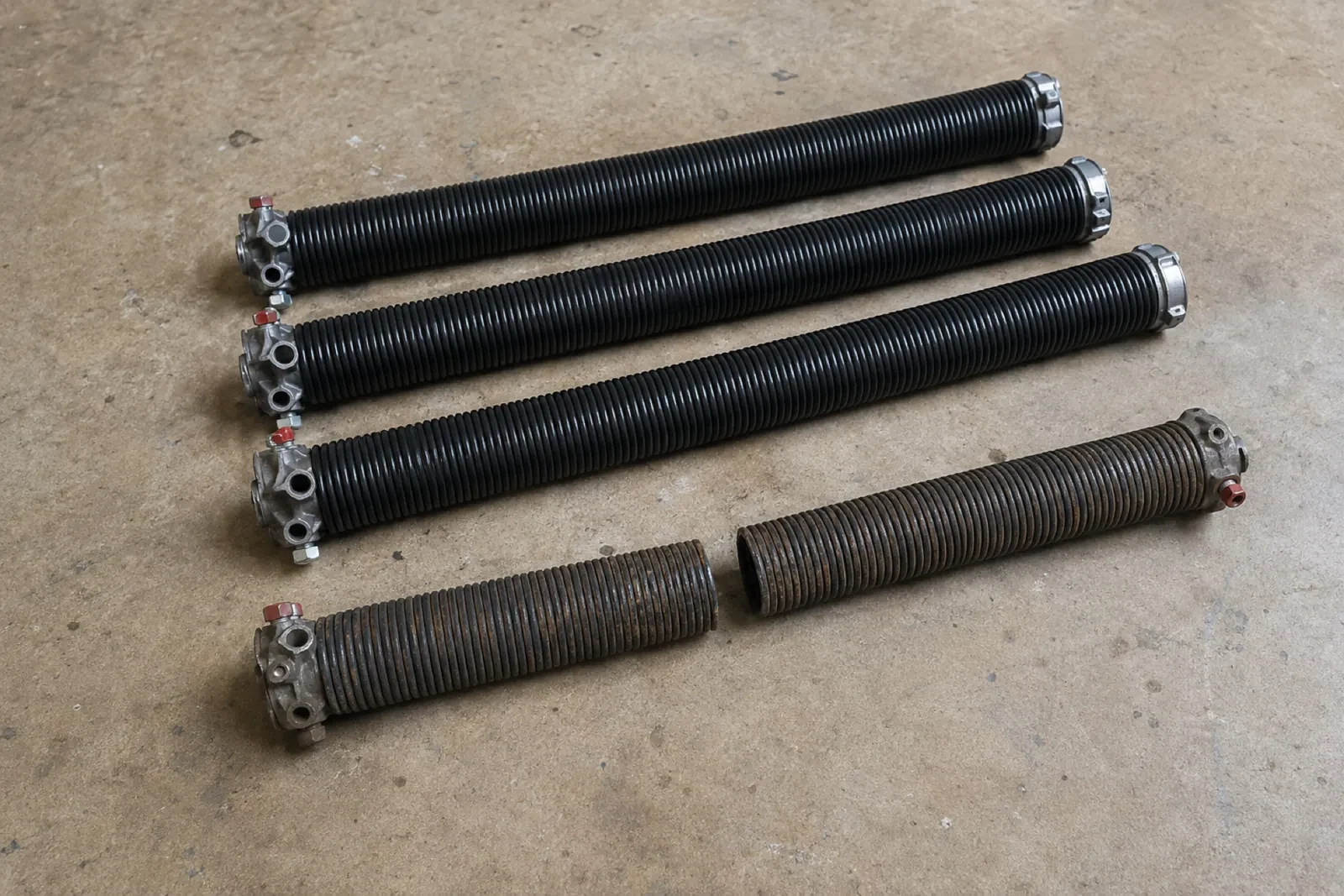
On a torsion door the springs sit on a shaft above the opening, and balance is set by how many turns of wind they carry. A seven-foot door typically needs a little over seven full turns; a quarter turn either way changes how the door feels. The technician clamps the door, fits winding bars into the cone, loosens the set screws, and adds or releases tension one quarter turn at a time, locking the cone again before each test. Both springs on a two-spring door are set alike so the shaft carries the load evenly. That precision is what makes the door hold wherever it is stopped.
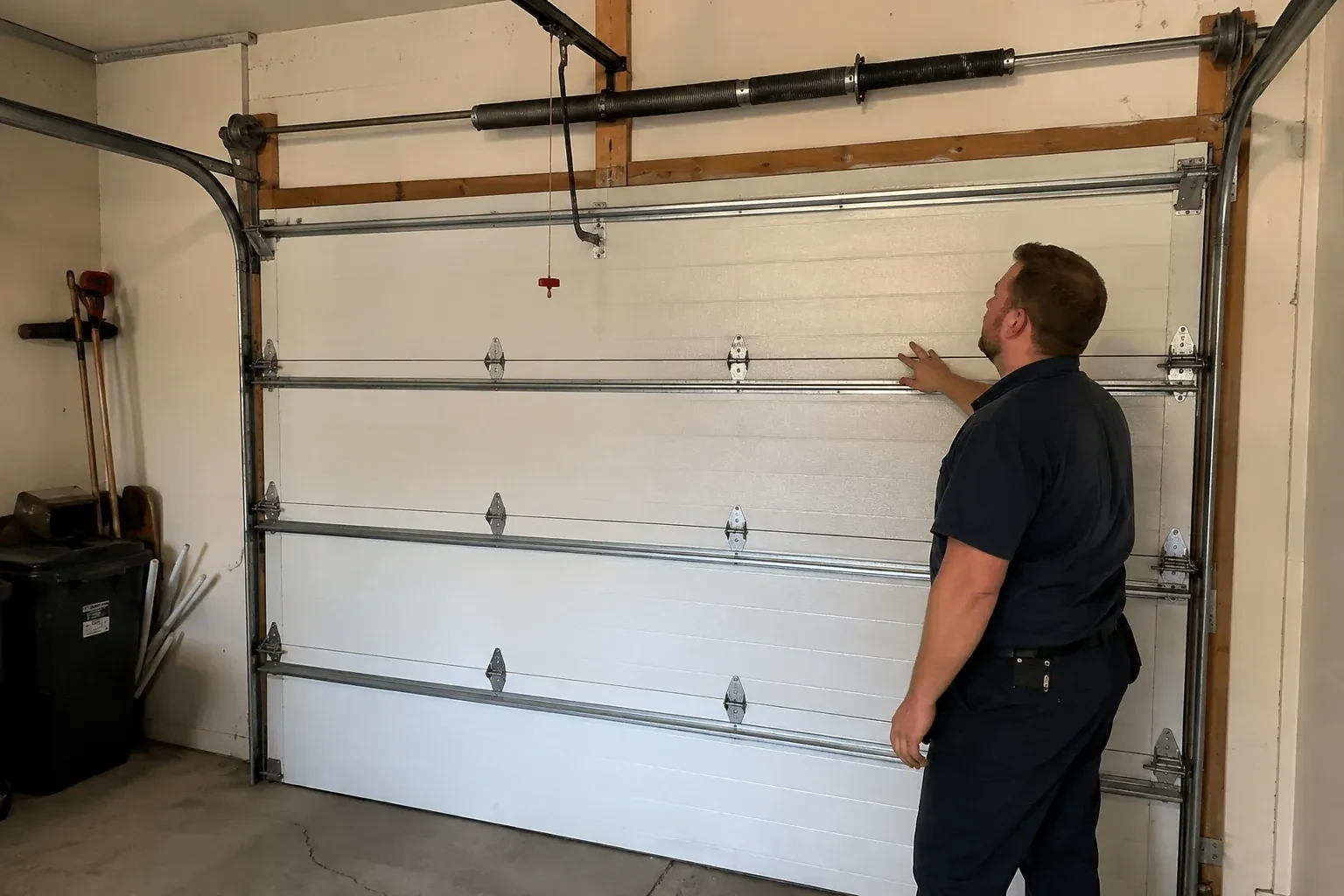
How the visit goesWith the door closed, daylight shows under one bottom corner and the seal is squashed flat at the other. As it rises, the left side leads by an inch or two, and the top section twists slightly as it turns into the horizontal track.
Garage Door Balance Adjustment
How the visit goes
Talking through what you have noticed
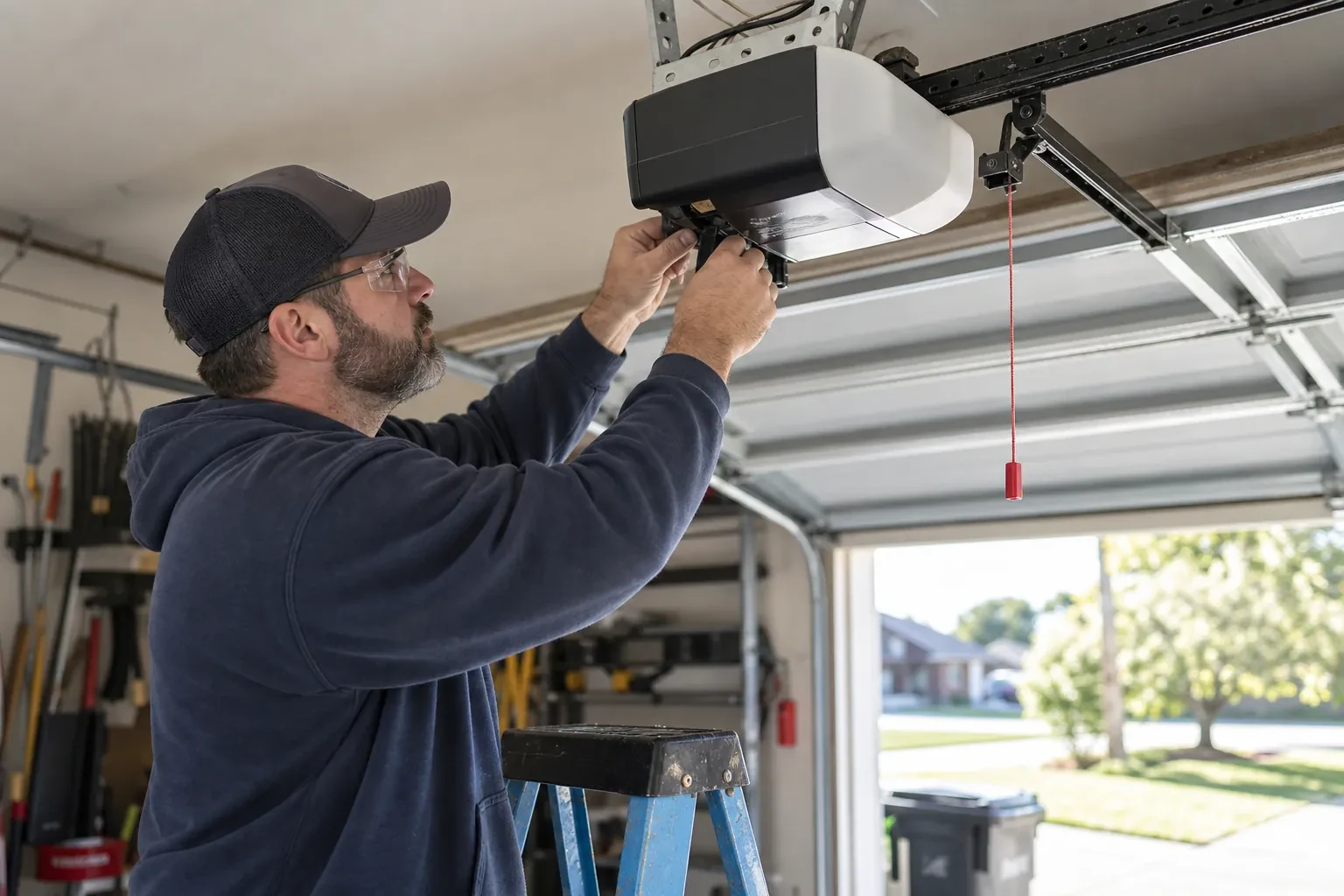
Your own observations complete the picture, because you have watched this door every day and the technician has watched it for ten minutes. When did the heaviness start, gradually or all at once? Is it worse on frosty mornings and easier by afternoon? Has anyone worked on the springs, changed the opener or added panels? Does it reverse at a particular point, and did that begin after the last power cut or a bump from the car? Each answer narrows the cause, and together they decide whether the day's work is a straightforward tension adjustment, a cable reset, some friction to remove, or a conversation about springs that have done their years.
When adjustment gives way to replacement
Sometimes the hand test shows that the springs have given what they have to give. A torsion spring wound beyond its design turns loses its remaining life; an extension spring stretched to its last hook is at its limit. When the inspection or the door's weight shows the springs are undersized or near the end of their cycle life, the technician explains this and offers a matched replacement, with new springs specified from the door's weight, height, drum and track. The balance work then continues on the new springs, and the outcome is the same properly balanced door, with the added benefit of a fresh cycle count.
The seasonal hand test you can do yourself
You can repeat the balance test any time without touching a spring. With the door closed, pull the manual release cord so the trolley disconnects, lift the door by a handle or a safe gripping point to about a metre, and let go gently. A balanced door stays roughly where you leave it; one that creeps up or sinks has drifted and is worth a call before it becomes heavy work for the opener. Reconnect the opener as its manual describes, usually by running it once. Doing this at the start of each season, when the temperature changes, is the simplest way to catch a change early.
Garage Door Balance Adjustment
In the van
Door scale
Cable drums
Extension springs and S-hooks
Torsion springs, matched pair
Winding bars
Garage Door Balance Adjustment
What affects the quote
Adjustment or replacement
If the inspection shows springs that can be wound to the door's weight, the quote covers adjustment. Springs that are undersized or worn out mean replacement, which is priced as separate work and explained first.
Whether a second person is needed to support the door
A heavier double door or one already sitting unevenly is sometimes safer to adjust with a second person steadying it while the springs are reset. That extra pair of hands is called in once the technician sees how the door is behaving on site.
Door height and lift type
Taller doors and high-lift or vertical-lift hardware carry more spring turns and different drums, so setting and testing them takes longer than a standard seven-foot door.
What to have ready
- Do you have the door or opener manual, or a label with the model?
- Is there a spring on a shaft above the door, or springs along the tracks?
- Has anything been added to the door, such as insulation, windows or a new section?
Garage Door Balance Adjustment: questions
QuestionsWhy does my door drift upward when I let go of it?
Too much spring tension. The springs are pulling harder than the door weighs, so at rest they win and the door climbs. This often follows a spring replacement wound a turn too far, or a door that lost weight when heavy panels were swapped for lighter ones. Releasing a quarter turn or two, tested after each, brings it back to holding still.
I added insulation panels to my door. Does that affect balance?
Yes, and it is one of the most common reasons a door starts to sink. Springs are matched to the door's weight, and insulation kits, replacement sections, windows or a heavier seal add weight the original springs were not sized for. A technician can weigh the door and either add tension to suit it or, if the added weight is beyond what the springs can carry, specify new ones.
How should I prepare the garage for the visit?
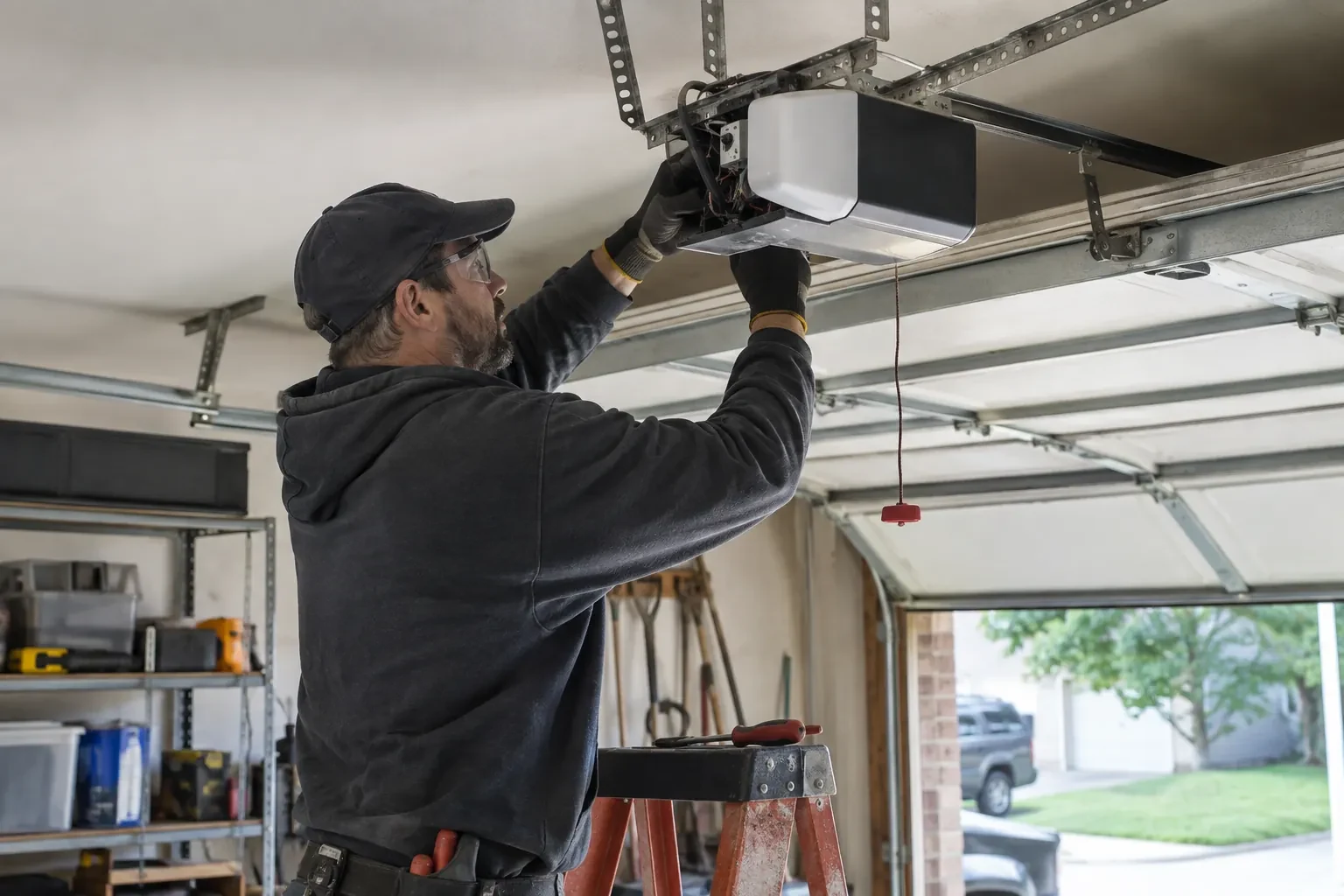
Move the car out if you can and clear the floor near the door and beneath the spring shaft, since the technician will be on a ladder there with winding bars. Take down anything hanging from the tracks or stored on top of the horizontal rails. Leave the door where it is, make sure the wall button and the opener are reachable, and have any spring or opener paperwork handy.