Springs · Toronto
Garage Door Roller Replacement
The door is the one the builder installed and has never had a part changed.
In plain words
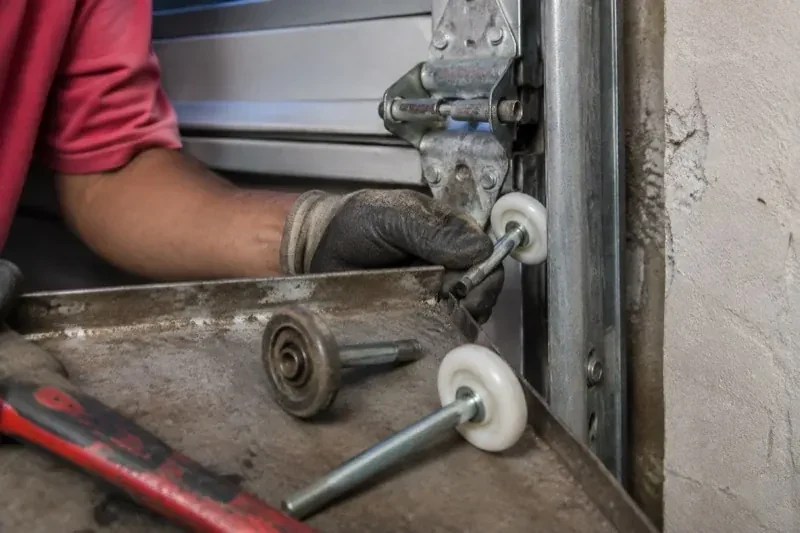
Not every roller suits every door. Wheel diameter has to match the track: two inches on residential track, and either two or three inches on commercial track, so the installed track is measured, not assumed. Stem length has to match the hinges: four inches through a single hinge, seven or ten inches where two hinges stack at the end of a heavier door. Bearing count and load rating have to suit the door's weight, with insulated steel and wood doors needing more than a light single-skin door. Measuring all of that before a set is chosen is part of the service, so the new rollers sit properly and last.
How the visit goesThe door is the one the builder installed and has never had a part changed. It works, but it clatters, the wheels are hard white plastic with no bearings in them, and the opener sounds like it is labouring more each season.
Garage Door Roller Replacement
How the visit goes
Track straightness and roller clearance
The vertical tracks are checked for plumb and the horizontal tracks for level and for sag at the rear hangers. The technician sights along each track for dents, spread or pinched edges, rust scale and the debris that collects in the bottom few inches. Clearance matters too: a wheel should turn freely with a little side play, neither squeezed by a track pulled too close to the door nor so loose that the door can lean. Where the track has drifted, the jamb brackets are adjusted before new rollers go in, because fitting fresh wheels to a crooked track simply wears them the same way the old ones went.
Middle rollers, one hinge at a time
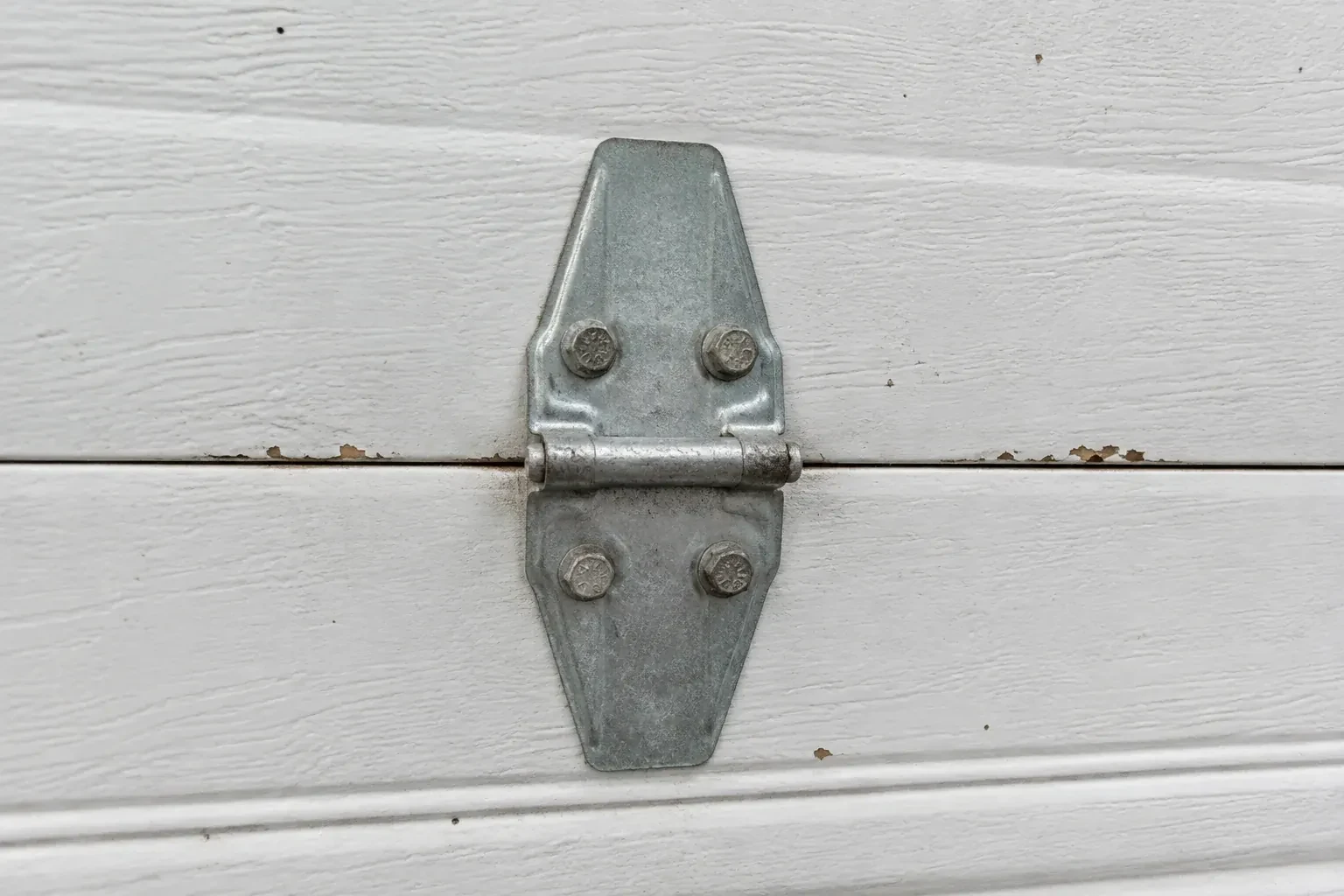
The rollers at the section joints sit in the edge hinges, and each is changed in turn. The technician loosens the hinge fasteners just enough to swing the hinge leaf and ease the old roller out of the track, seats the new roller in the hinge, guides its wheel back into the channel and refastens the hinge with the section held square. Because every other roller stays put while one is out, the door never loses its alignment. Numbered hinges go back to their own rows, since each row holds its wheel at a slightly different offset to follow the graduated spacing of the track.
Hardware tightened along with the wheels
Roller replacement is a natural moment to go over the rest of the door, and you leave with more than new wheels. Every hinge fastener has been checked and snugged, loose jamb brackets have been tightened, worn hinges have been replaced with the correct numbered ones, and the top fixtures and bottom brackets have been inspected and, where corroded or bent, changed. The track has been cleared of salt and grit and squared to the door. This kind of once-over is what industry guidance means by regular service, and it is much of the reason a door feels solid again after the visit.
Garage Door Roller Replacement
In the van
Bottom brackets
1-1/2 inch reversal test block
Steel ball-bearing rollers
Track clamps or locking pliers
Jamb bracket fasteners
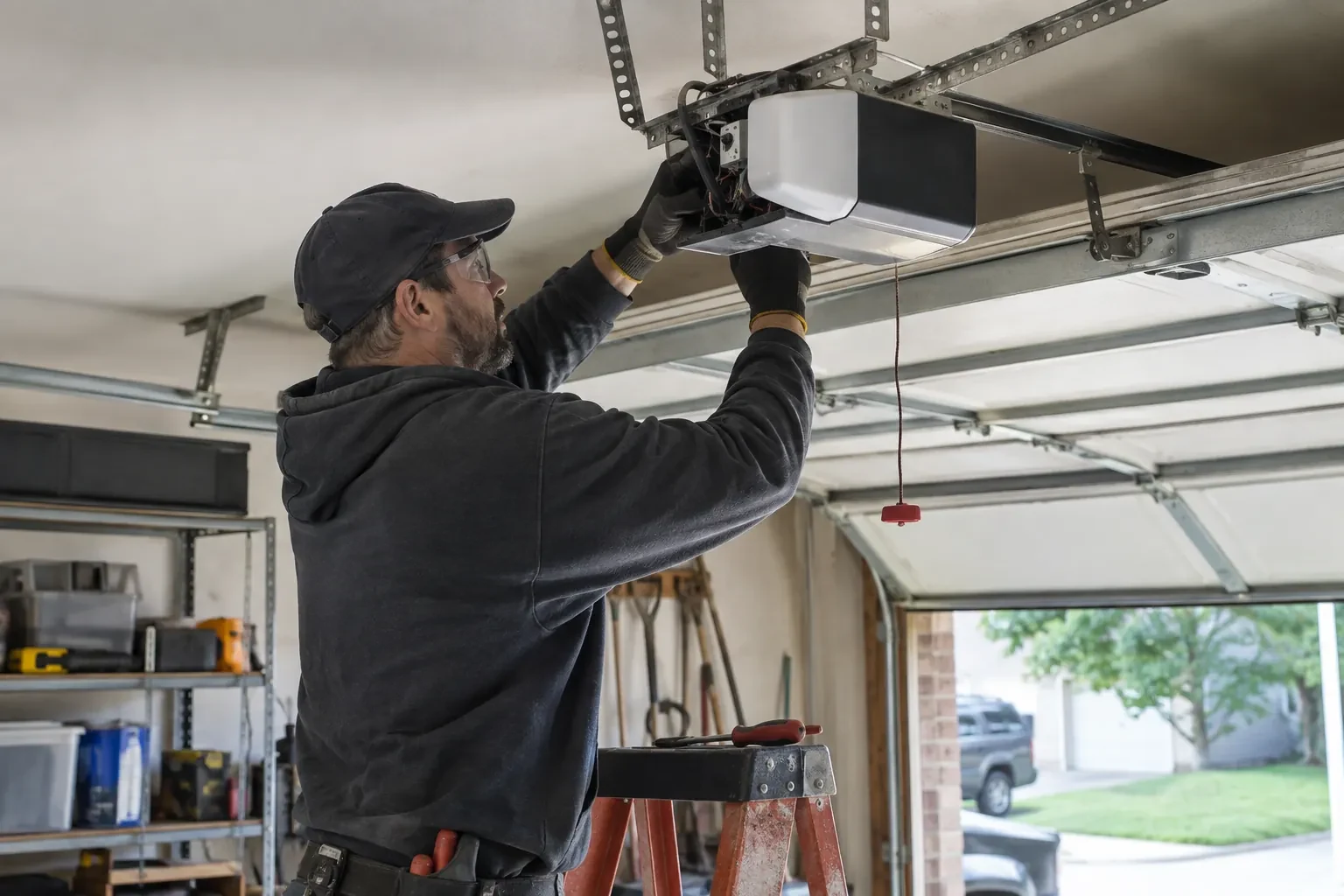
Garage Door Roller Replacement
What affects the quote
Door height and high-lift track
Tall doors, and high-lift or follow-the-roof track, put the horizontal run high overhead, so ladder work and the extra sections lengthen the visit.
Stem length and double hinges
Doors with two hinges stacked at each end need long-stem rollers at those positions. Those cost more than standard four-inch stems and are counted separately in the quote.
Top fixtures and bottom brackets
A top fixture that no longer adjusts, or a bottom bracket that has corroded or bent, is changed while the door is secured, and the quote names each piece.
What to have ready
- Where in the travel does the noise, shake or hesitation happen?
- Is the track the two-inch residential size or a wider commercial track?
- Does the door stay put at halfway when the opener is released?
Garage Door Roller Replacement: questions
QuestionsHow many rollers does a garage door have?
A standard four-section residential door has ten: one at each end of the three hinge lines between sections, one in each of the two top fixtures and one in each bottom bracket. A five-section door carries twelve, and taller doors more still. The technician counts and inspects every one, because replacing the full set together keeps the door's travel and sound even from side to side.
Are the bottom rollers different from the rest?
The wheels themselves are usually the same, but their home is not. The bottom rollers sit in the bottom brackets, which also anchor the lifting cables and therefore carry the counterbalance load whenever the door is closed. That is why manufacturers put warning labels there and why this position is handled by a trained technician who either exchanges the roller without disturbing the bracket or relieves the spring tension first. It is also the position most exposed to salt and slush, so it is inspected with extra care.
Can I replace just the one roller that looks bad?
One roller can be changed on its own, and sometimes that is the sensible stopgap after a wheel breaks. The better result comes from a full set, because the other wheels have done the same number of cycles and are close behind, and mixing new with old, or nylon with steel, leaves the door running unevenly and sounding different on each side. A matched set also lets the technician set every top fixture and check every hinge in one pass.
Related services
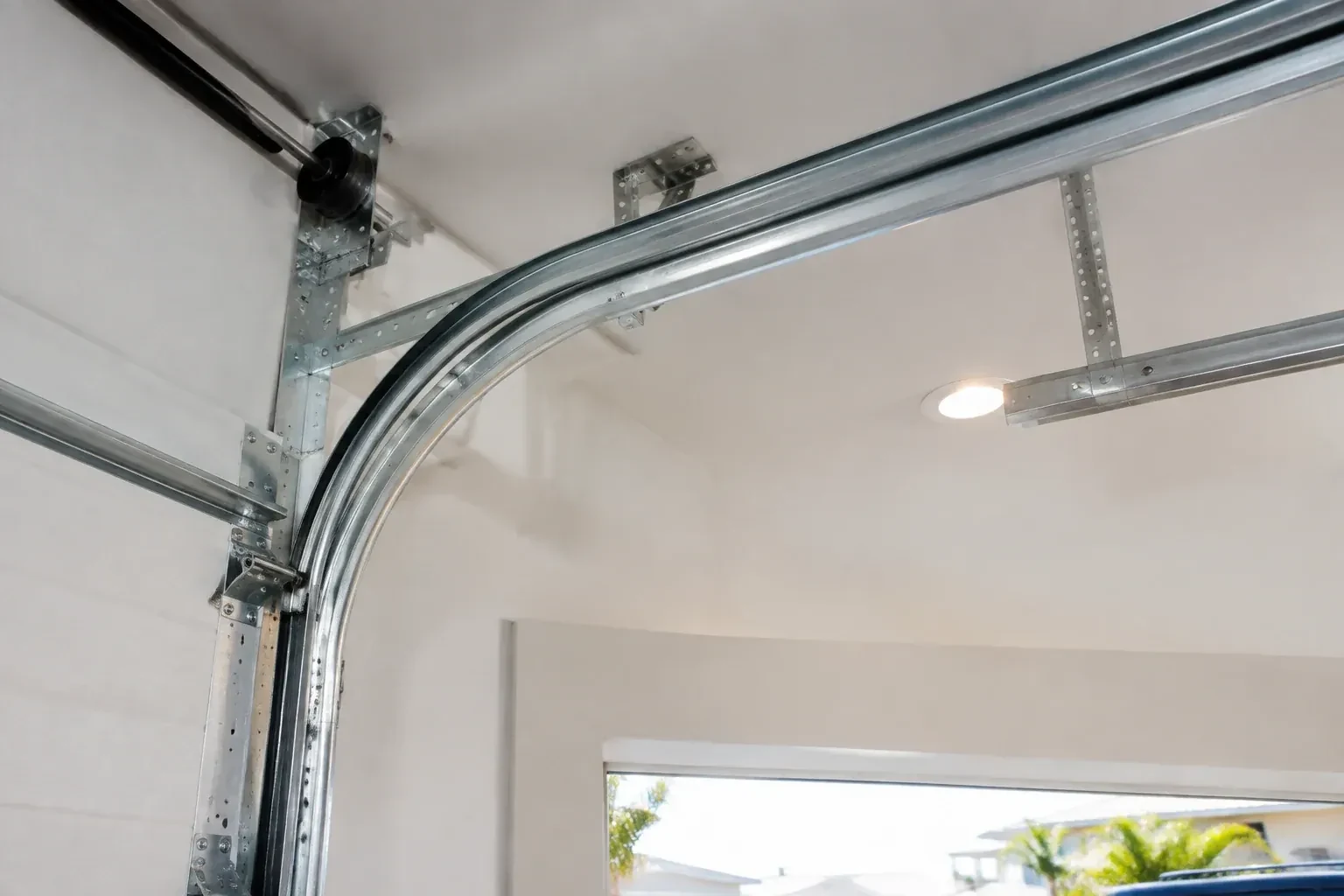
- Garage Door Track Repair or ReplacementYou bought the house with a door that sticks near the top of its travel.
- Garage Door Cable ReplacementThe car bumper kissed the door on the way in.
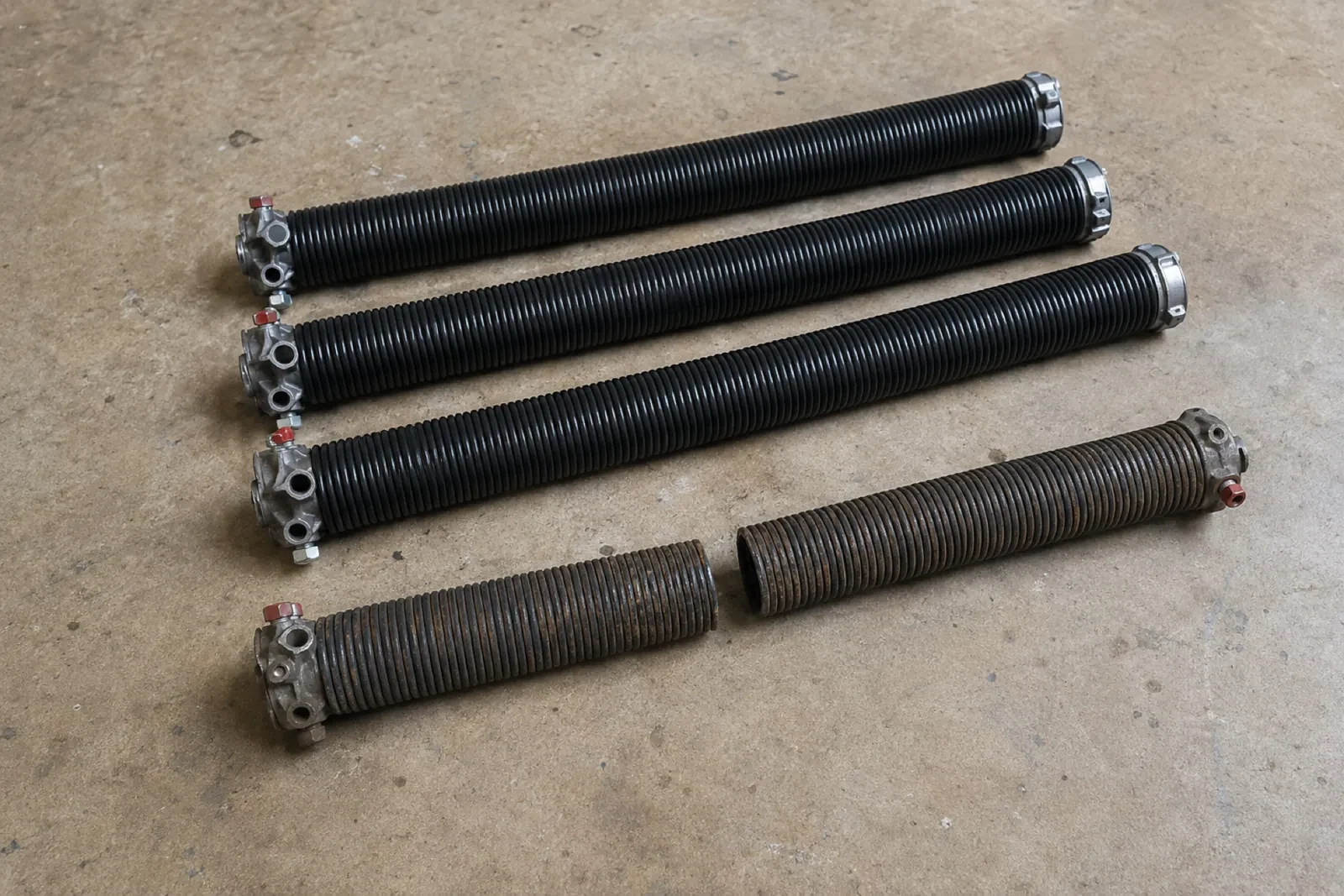
- Torsion Spring ReplacementYou heard a sharp bang from the garage, and now the opener hums for a second and gives up.