Springs · Clairlea
Garage Door Track Repair or Replacement in Clairlea
You bought the house with a door that sticks near the top of its travel.
In plain words
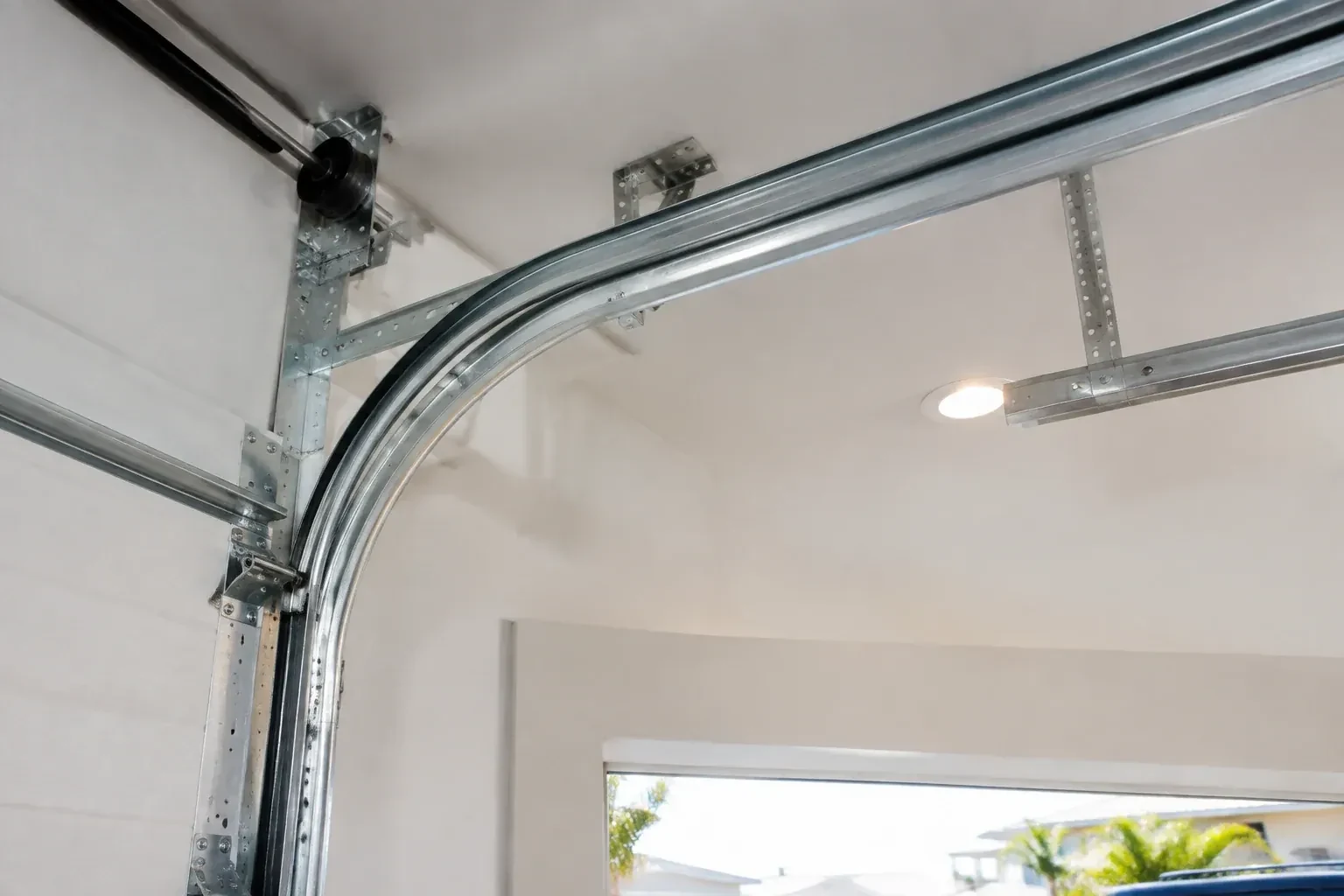
Track has to be in the right place, not merely straight. Each vertical run is set plumb with a slight taper away from the jamb at the top, so the door presses against its stop when closed and swings clear as it opens. The gap between track and door edge is equal on both sides. The horizontal runs are level with each other, square to the vertical runs and matched in radius so the door turns the curve without twisting. Track repair measures all of this and resets whatever has drifted, because a door is only as smooth as the path it is given.
How the visit goesThe horizontal rail toward the back of the garage sags noticeably. The hanger that once held it to the ceiling swings on a single screw, and the open door drifts back down a few inches.
Garage Door Track Repair or Replacement
How the visit goes
What bent it
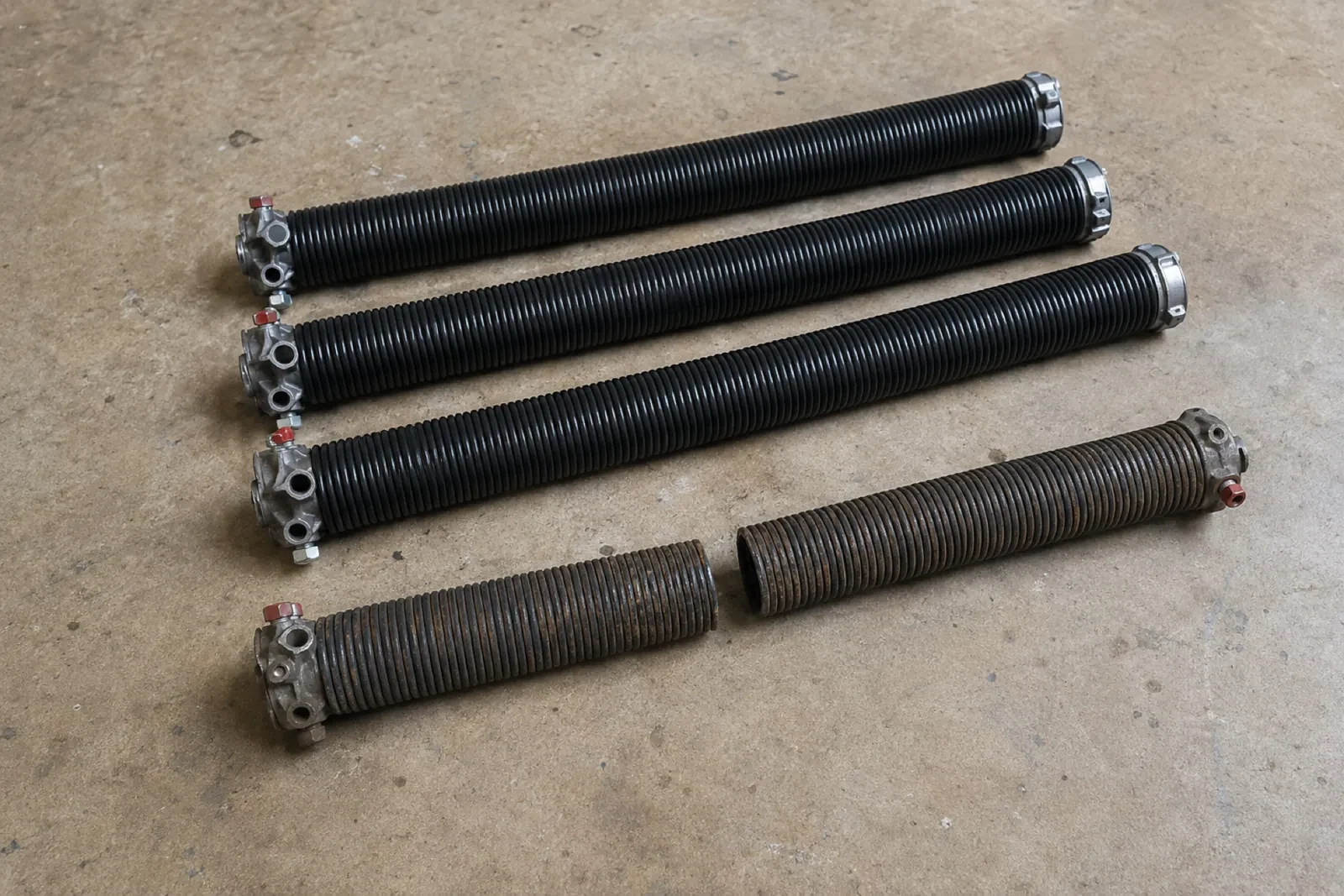
The last question is why the track moved, because the answer shapes the repair. A crease at bumper height with paint transfer is impact. A track that has crept off the jamb with screws backed out is vibration and time. Rust at the floor is winter. A twisted section on one side with a slack cable beside it usually follows a cable or spring failure that tipped the door. Overhead damage tends to trace back to storage, a ladder or a hanger that gave way. You will be asked what happened before the symptom, since a shovel in the opening or a nudge from the car is a fact only you can supply.
Replacing a vertical section
A kinked, cracked or rust-thinned vertical track comes off in one piece. The jamb brackets or continuous angle are unbolted, the old track is lifted clear with the rollers eased out of it, and the new piece, cut or ordered to the same height, profile and mounting style, is bolted to the brackets. The joint with the curve at the flag bracket is aligned so a roller passes with no step, and the track is offered up to the jamb, set plumb with the correct spacing and taper, and lag-screwed into sound wood. The rollers are threaded back in as the door is released from its clamps a little at a time.
A door that runs the full path without a catch
The change is felt more than seen. The door rises without the bang or hesitation that marked the damaged spot, both sides climb together, and it turns the curve overhead without the top section twisting. Closed, it sits flush against the stop moulding on both jambs with no stripe of daylight, and open, it stays where the opener leaves it instead of drifting back. The opener sounds calmer because it is no longer dragging a door through a pinch point. Lifted by hand with the opener released, the door moves lightly and holds at waist height, which tells you the track and springs are working together again.
Garage Door Track Repair or Replacement
In the van
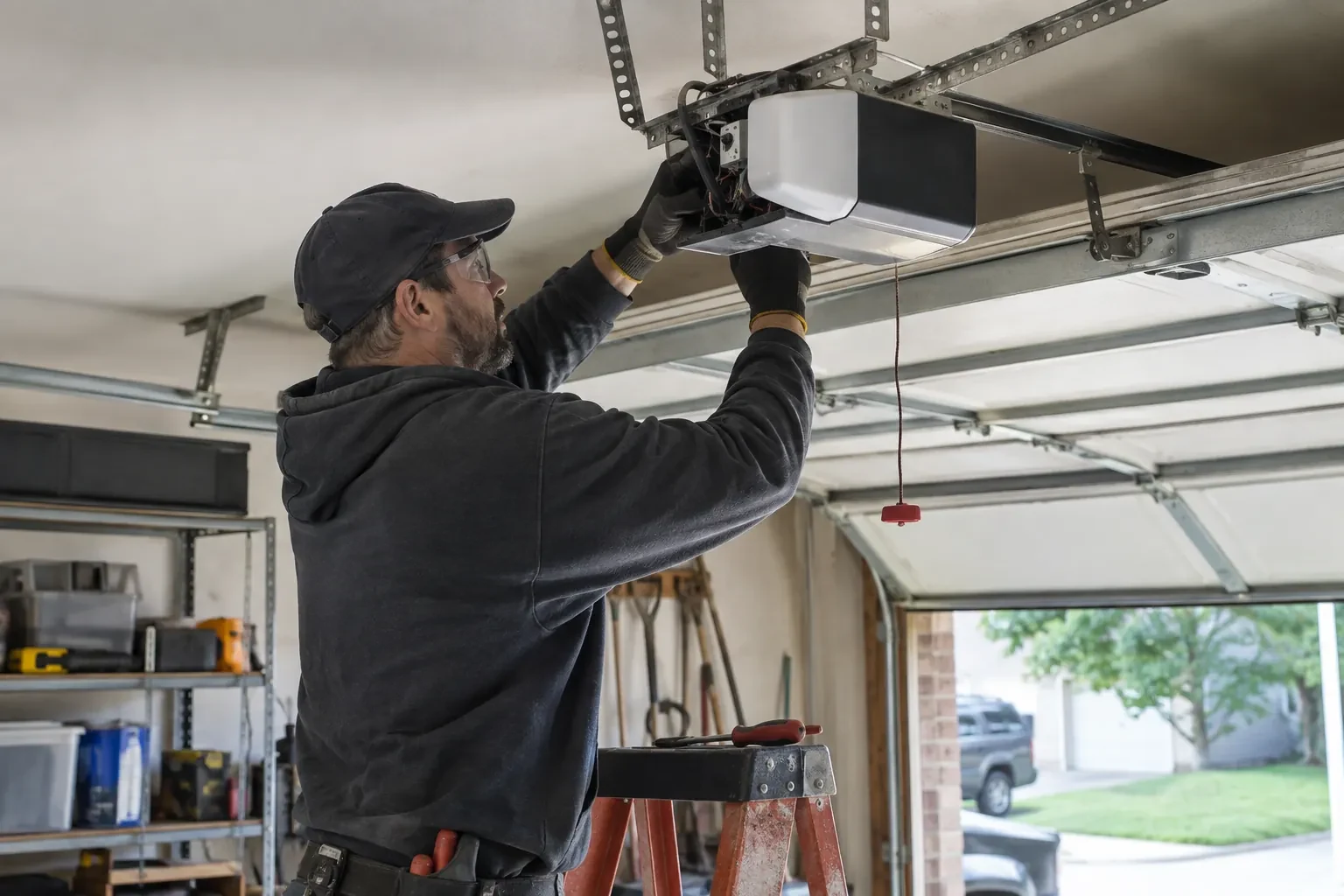
Winding bars and track clamps
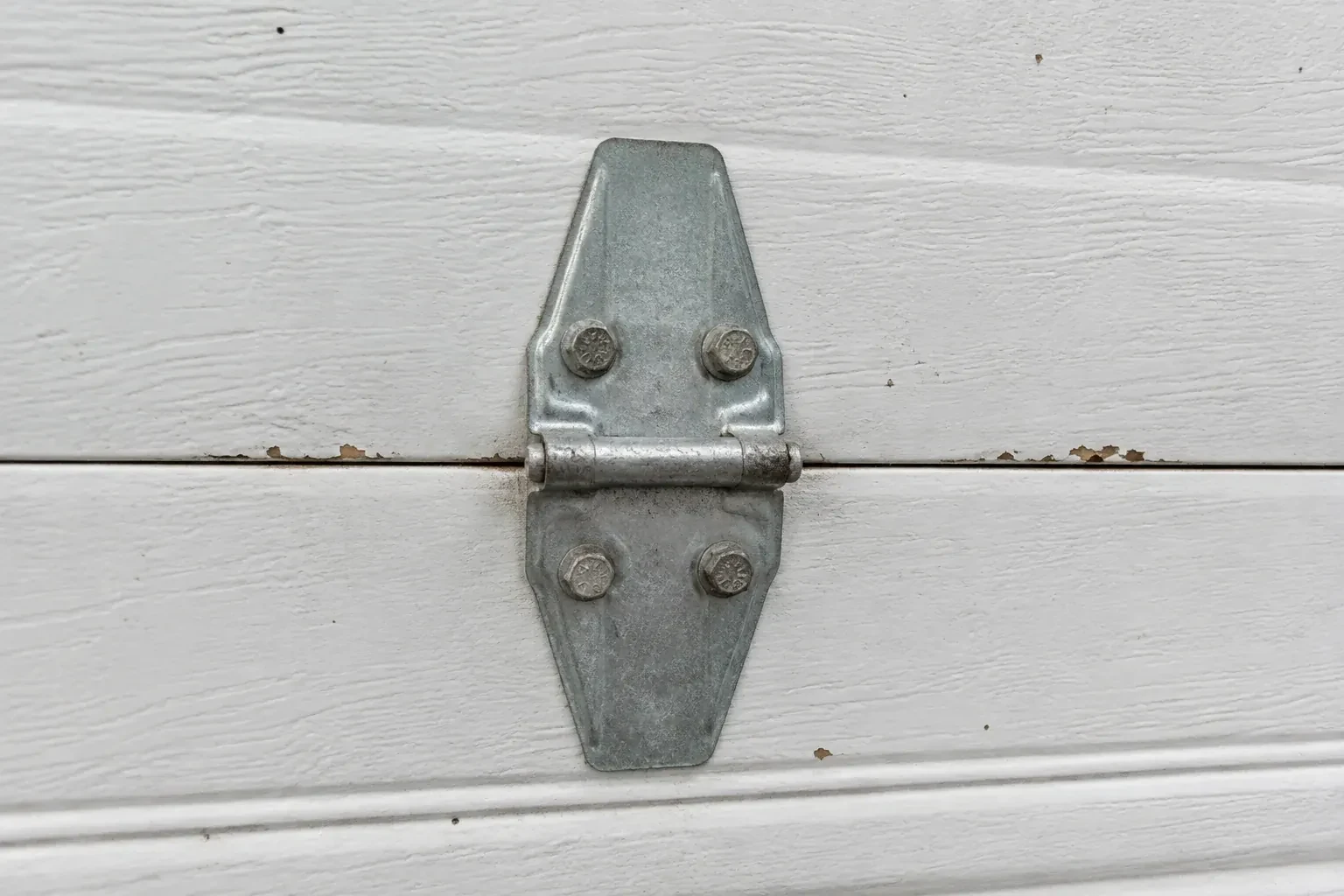
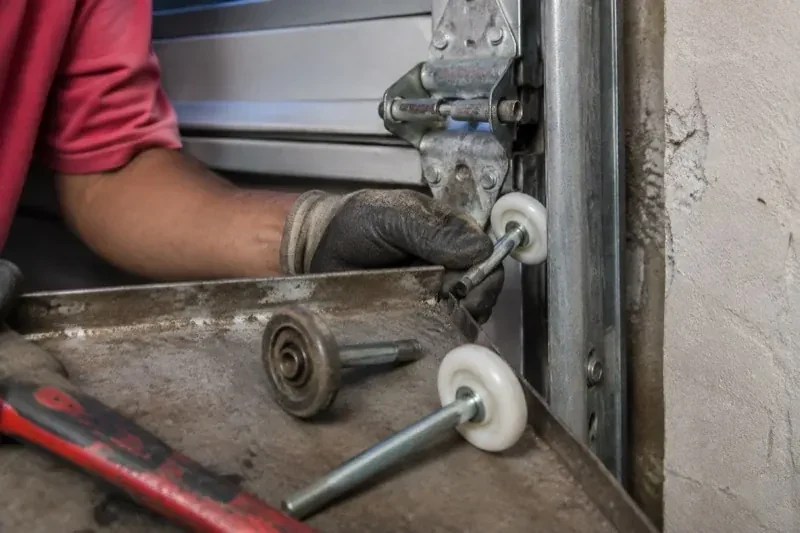
Replacement rollers and hinges
Level, plumb line and square
Top fixtures
Track pliers and dead-blow hammer
Garage Door Track Repair or Replacement
What affects the quote
How the door is sitting
A door resting closed is straightforward. One jammed partway on a bent section, or with rollers out of the channel, has to be supported and freed before the track can be measured.
Low-headroom or high-lift hardware
Changing the layout, rather than repairing the existing one, brings new horizontal track, curve pieces, top fixtures and often drums and spring adjustment, and is quoted as a separate scope.
Ceiling hangers and what they are fixed to
A hanger that has bent or pulled from a joist is replaced, and a run that was only fixed into drywall gets angle reaching to solid framing. Each hanger corrected is named in the quote.
What to have ready
- Do you have the door's manual or a label with its model?
- Has any roller come out of the channel?
- Is there one spring above the opening, or springs along the tracks?
Garage Door Track Repair or Replacement: questions
QuestionsWhat is the flag bracket and why does it matter?
The flag bracket is the L-shaped angle at the top of each vertical track. It ties the vertical run, the curve and the horizontal track together, and on a torsion-spring door it also carries the end bearing plate for the spring shaft. Because so much meets there, a loose or bent flag bracket throws the whole path off. The technician unloads the springs before moving it and squares it carefully when it goes back.
What happens during the visit?
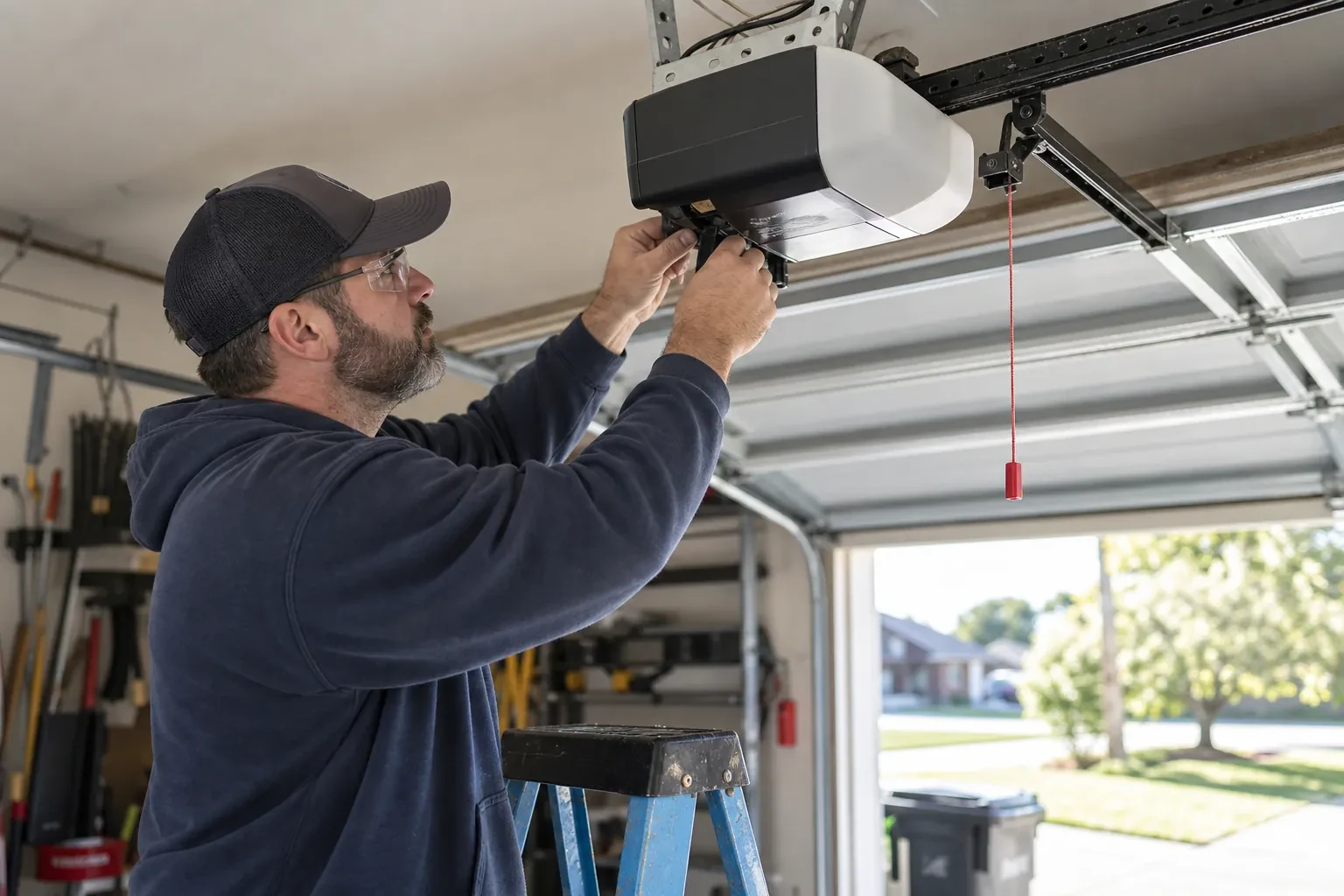
The opener is disconnected and the door clamped. The technician identifies the track type and layout, checks each vertical run for plumb, spacing and fixing, looks at the jamb wood, the curve, the flag brackets, the horizontal runs and their hangers, and how each roller sits. Damaged pieces are dressed or replaced, brackets refixed into sound wood, the geometry reset, rollers reseated, springs re-tensioned if they were unloaded, and the door balanced and the opener tested.
Why does the door catch at the same spot every trip?
A catch that repeats in one place is the signature of a local track fault: a dent, a spread section, a step at a joint, or a bracket that has let the track drift. Each roller reaches the flaw at the same point in the travel and bumps over it. The technician finds the spot by running a roller through the channel by hand, then dresses or replaces that length and checks the rest of the run for the same problem.