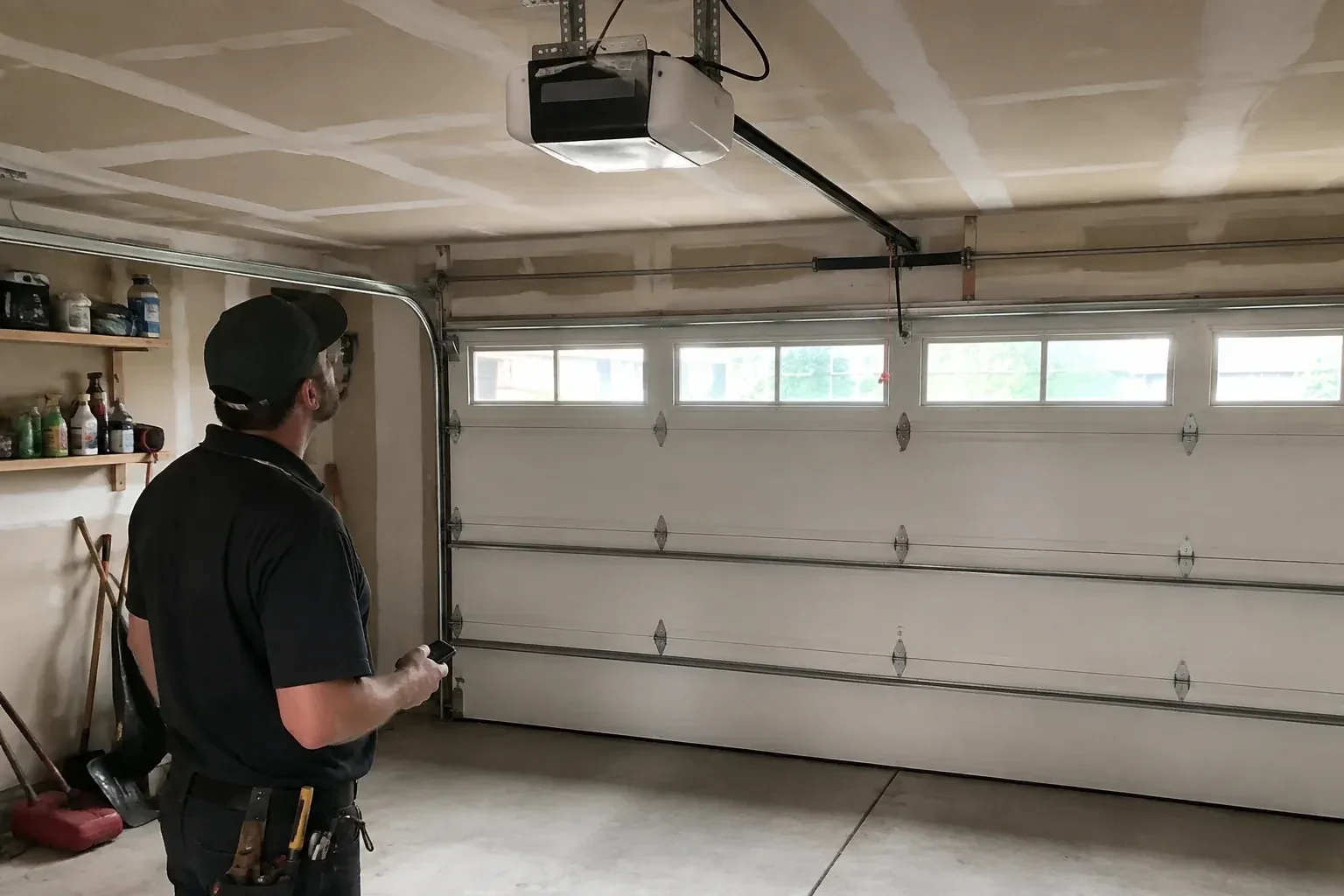
Openers · Toronto
Garage Door Opener Replacement in Toronto
The remotes only work from the end of the driveway now, and one of them disappeared with a set of keys last month.
In plain words
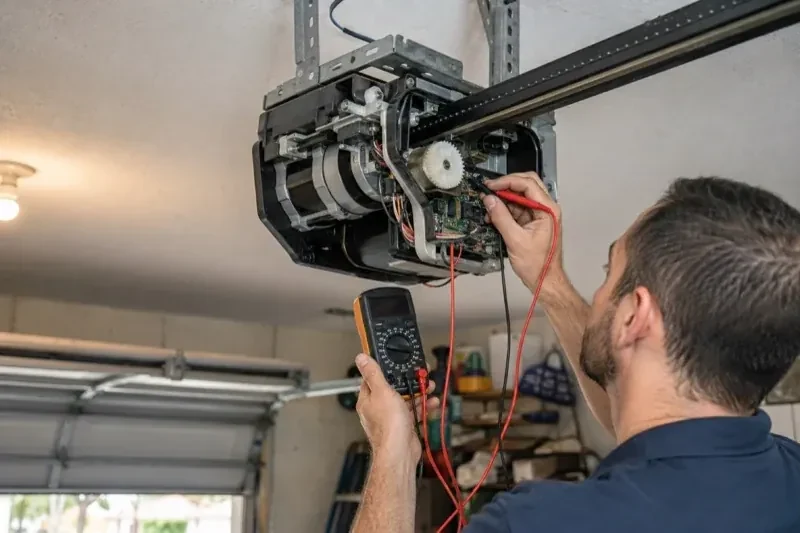
Choosing the drive is the decision that shapes daily life with the new opener. A chain drive is the familiar workhorse, sturdy and simple, with a little more sound. A belt drive runs on a reinforced rubber belt and is the answer for a garage under a bedroom. Direct-drive units move the motor itself along a stationary chain inside the rail and have very few moving parts. A wall-mount operator sits at the end of the torsion shaft and leaves the ceiling completely clear. The technician matches the drive to your door's weight, your ceiling, how close the garage sits to living space and how you use the door.
How the visit goesYou swapped the old wooden door for a heavier insulated steel one, and the twenty-year-old opener that was kept has never settled. It strains on the way up, stops partway on cold mornings, and the rail shudders with every cycle.
Garage Door Opener Replacement
How the visit goes
Cold, ice and the garage itself
An attached, heated garage and a detached one that sees minus twenty are different homes for an operator. The technician asks which yours is, checks the operator's rated operating temperature against it, and looks at the threshold for signs the bottom seal has been freezing to the slab, since that is a common reason a door is called heavy in January. Salt tracked in on tires corrodes bottom brackets and cables over time, so those are inspected too. Any manual slide lock on the door is noted so it can be disabled once the operator is fitted, and the side door is checked so there is always a way in during a power cut.
Sensors, console and wiring
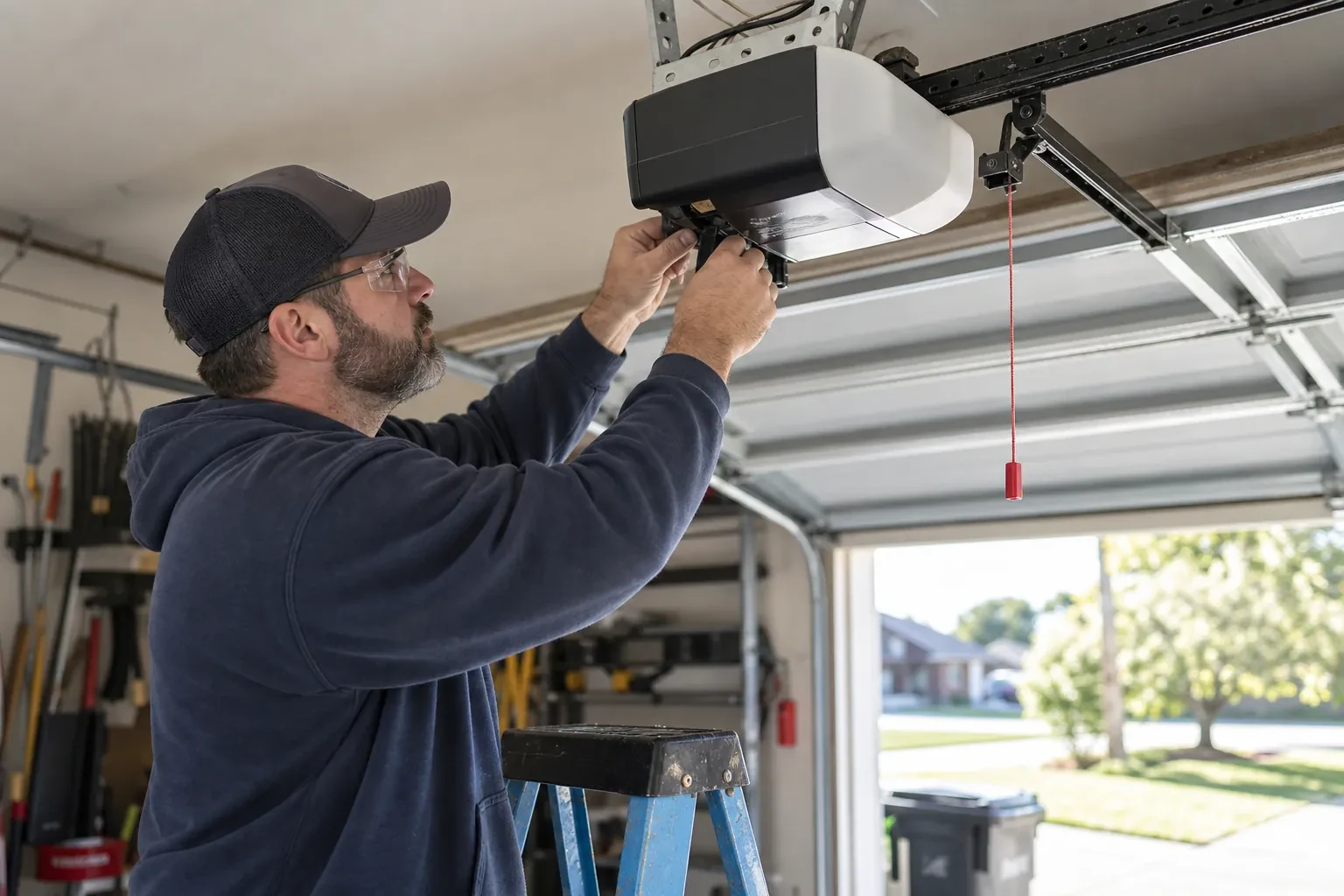
The photo eyes are mounted on both sides of the opening no higher than about 15 cm off the floor, aimed at each other until their indicator lights hold steady, and their wire is stapled neatly along the wall and ceiling to the head. The wall console goes at least 1.5 m above the floor, in clear sight of the door and away from moving parts, so it is out of reach of small children and the door can be watched while it runs. Low-voltage wire is kept clear of the rail and the chain. Finally the head is plugged into its grounded receptacle and powered up for the first time.
Keeping the door balanced under the new operator
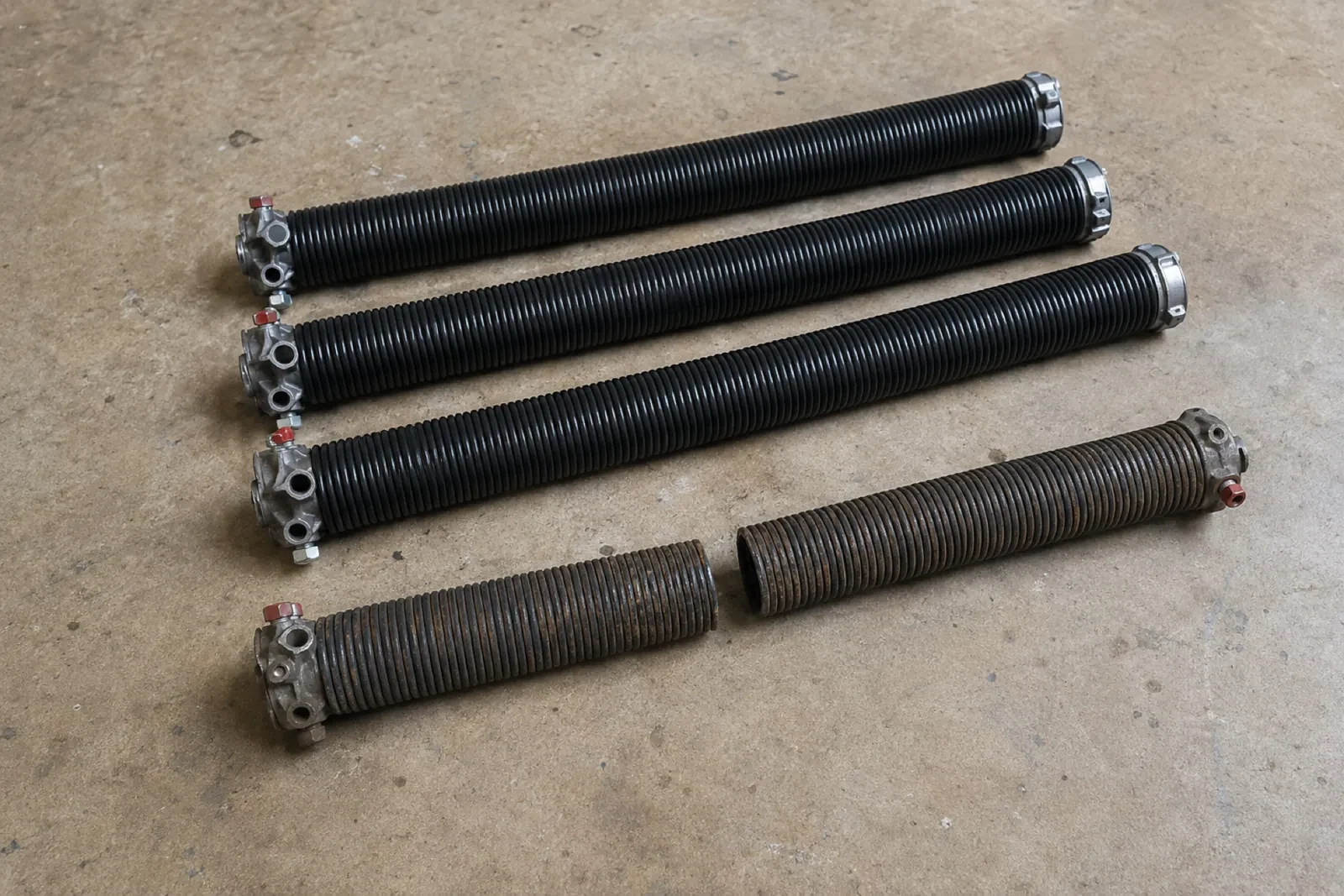
The new operator will run for many years if the door it moves stays balanced. Once a season, pull the release with the door closed, lift it by hand to about a metre and let go: it should stay there. If it drops or creeps upward, the springs have drifted and want a tune before the operator starts working harder to compensate. Watch too for a door that pauses or jerks at one point in its travel, which is usually a roller or a track bracket rather than the motor. A yearly service visit that checks balance, cables, rollers and the safety tests keeps both the door and the operator in step with each other.
Garage Door Opener Replacement
In the van
Chain or reinforced belt
Rail sections and trolley
Photo-eye sensors
Wall control console
Remotes and wireless keypad
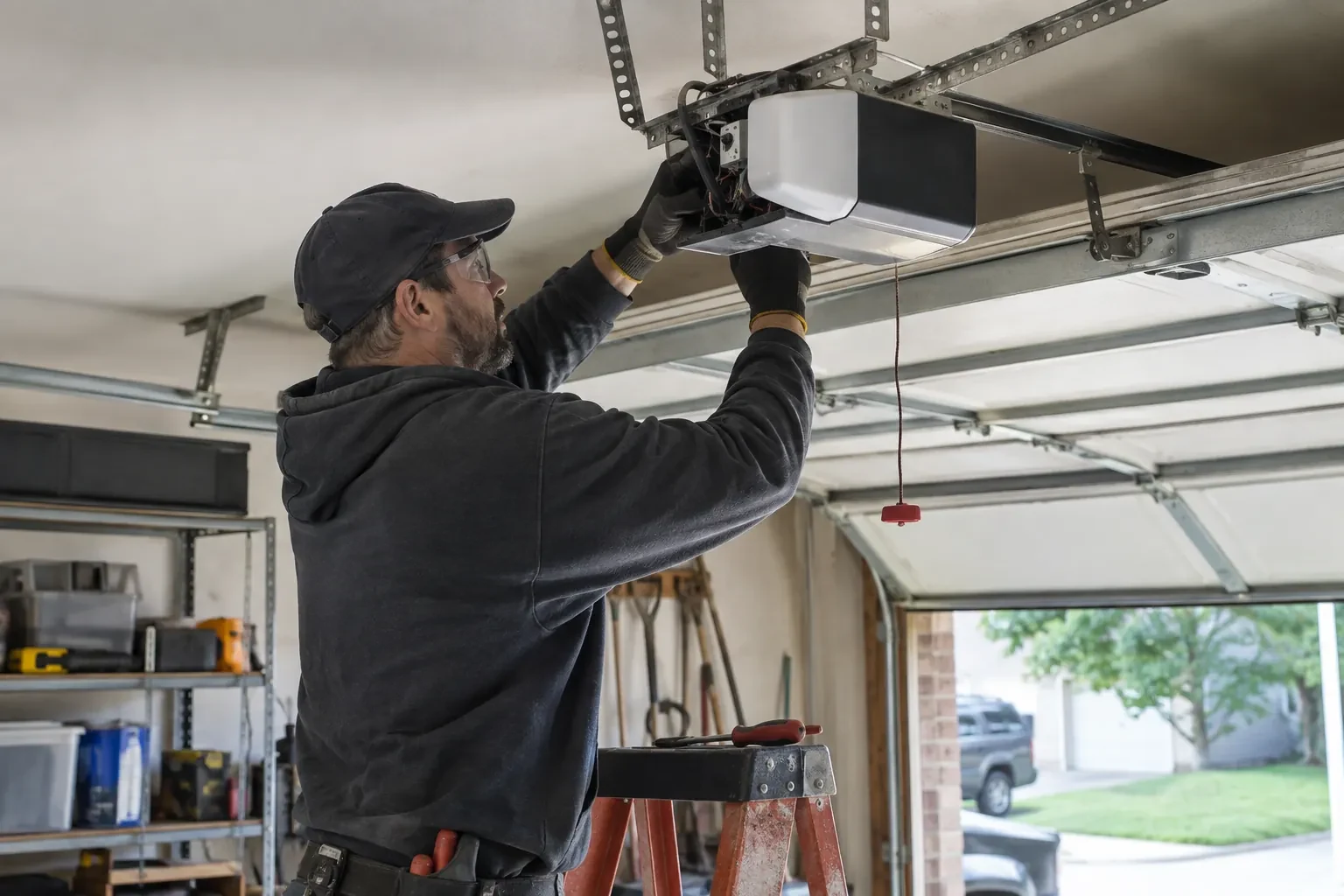
Garage Door Opener Replacement
What affects the quote
Removing and recycling the old unit
Taking down the old head, rail, hangers, sensors and wiring, and carrying them away for metal and electronics recycling, is labour that appears on the quote alongside the installation.
Remotes, keypad and vehicle programming
How many handheld remotes you want, whether a keypad goes outside the door, and whether an older vehicle's built-in buttons need a repeater are counted separately, so a household with four drivers sees a different total from one with one.
Working around what is in the garage
A vehicle lift, a storage loft, ductwork or shelving where the rail will run, or a garage that cannot be emptied before the visit, adds handling time that the technician accounts for after seeing the space.
What to have ready
- Is the garage attached and heated, or detached and unheated?
- Has a power outage ever left you unable to open the door?
- How much room is there between the top of the open door and the ceiling?
Garage Door Opener Replacement: questions
QuestionsWhy does the technician test the door by hand before anything else?
Because the opener depends on the springs. With the old unit disconnected, a balanced door lifts with moderate effort and stays put at roughly waist height. A door that drops or drifts is telling the technician the springs need adjusting, and doing that first means the new operator is never asked to haul a heavy door, which would shorten its life and mask a problem that belongs to the door.
My old photo eyes still work. Can they stay?
Sensors and head unit are made for each other; a board reads its own maker's sensors, often a particular generation of them, so the pair in the box is what goes on the wall and the old ones come down with the old opener. The new pair sits low at each side of the doorway, roughly a hand's width above the concrete, and the technician confirms their indicator lights are steady before the door is tested against the beam.
What is a wall-mount opener and who is it for?
It is the operator that lives on the wall rather than the ceiling. Fixed where the torsion shaft ends, it rotates the shaft to raise and lower the door, and nothing hangs overhead. It suits cathedral and low ceilings, garages with lofts or lifts, and anyone who wants a very quiet door. Because there is no trolley holding the door shut, it comes with a powered deadbolt on the track and a monitor that stops the door if a lift cable slackens.
Related services
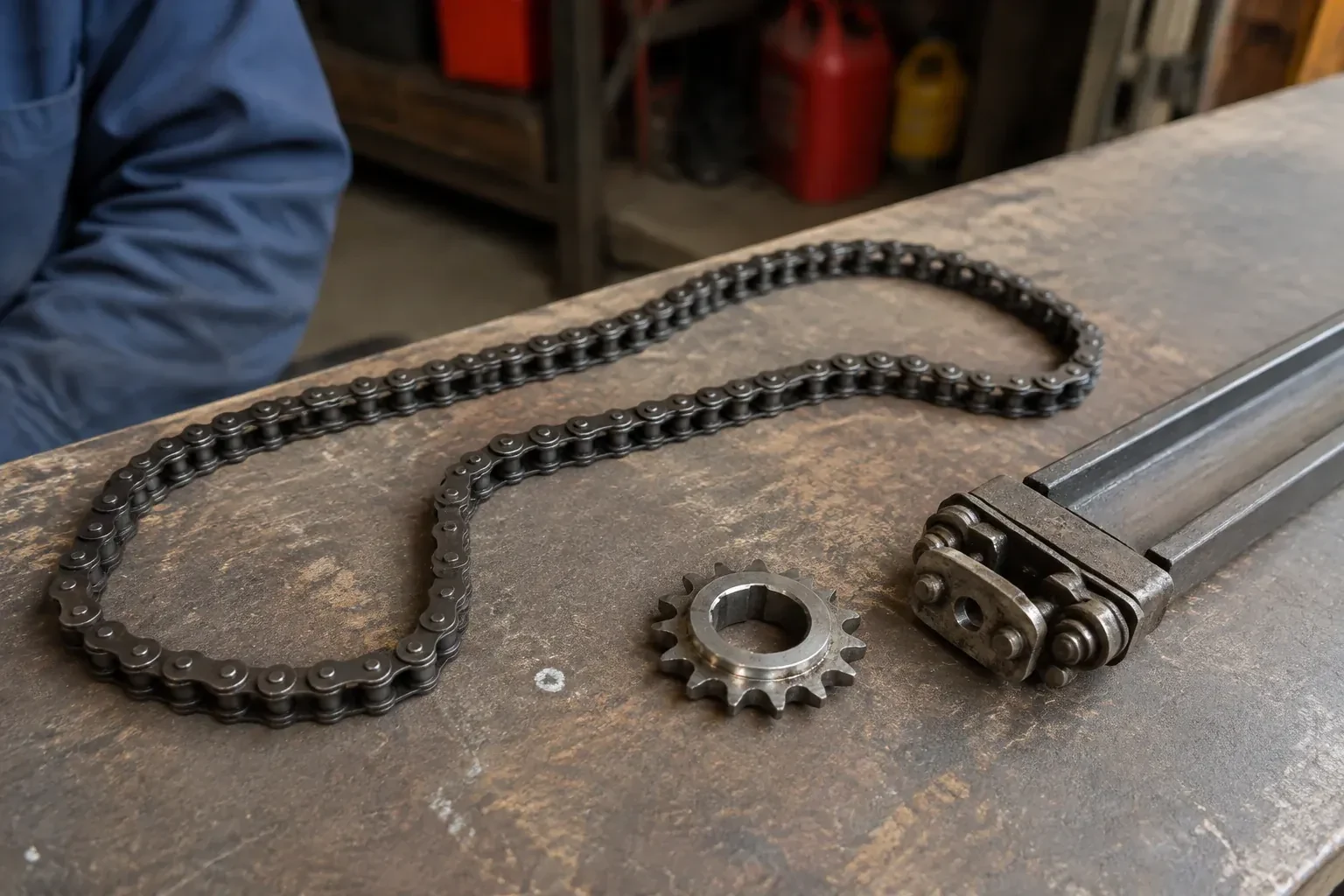
- Chain-Drive Opener RepairPress the button and the opener hums for a second, then quits.
- Belt-Drive Opener RepairPress the remote and the motor runs its full cycle, lights on, the usual whir, but the door does not move a centimetre.
- Photo-Eye Sensor Alignment or ReplacementYou press the remote, the door drops a few centimetres, then climbs straight back to the top while the opener light blinks.