Repairs · Cliffside
Off-Track Garage Door Reset in Cliffside
The rollers on the door have been squealing for months.
In plain words
A reset is different from a track repair, although one visit can include both. Resetting means returning the rollers, cables and sections to the path the track already defines and correcting the small misalignments that let them leave it. Track repair means the rail itself is bent, crushed or torn from the jamb and must be re-formed or replaced before anything can ride on it. The technician looks at the door and tells you which situation you have. Many doors need only a reset with a few new rollers; a door hit by a vehicle often needs a length of new track as well.
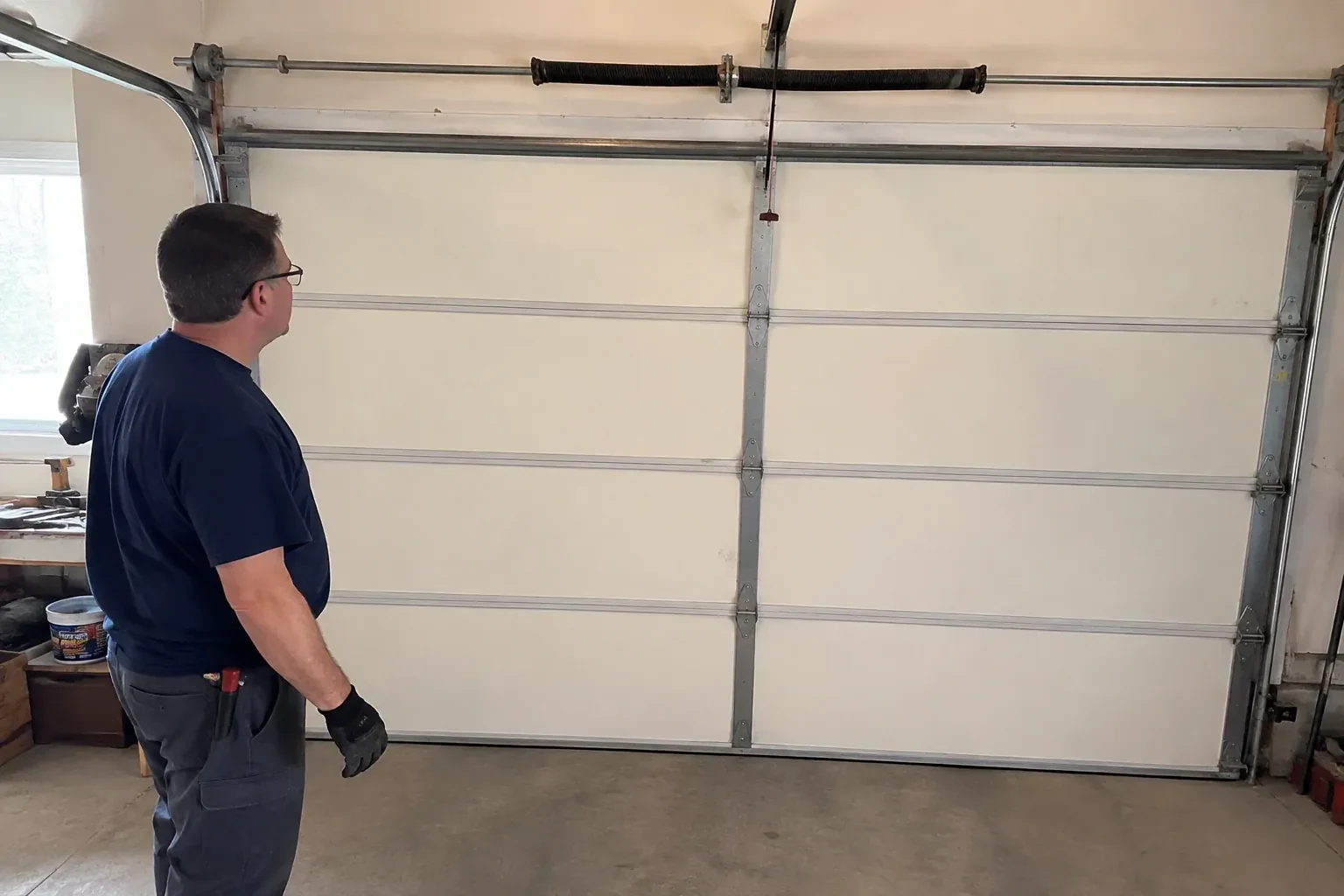
How the visit goesThe rollers on the door have been squealing for months. Today one of them simply fell out of the track at the curve, its wheel worn down to the stem, and the top section sagged sideways as the door opened.
Off-Track Garage Door Reset
How the visit goes
Track, brackets and the wall behind them
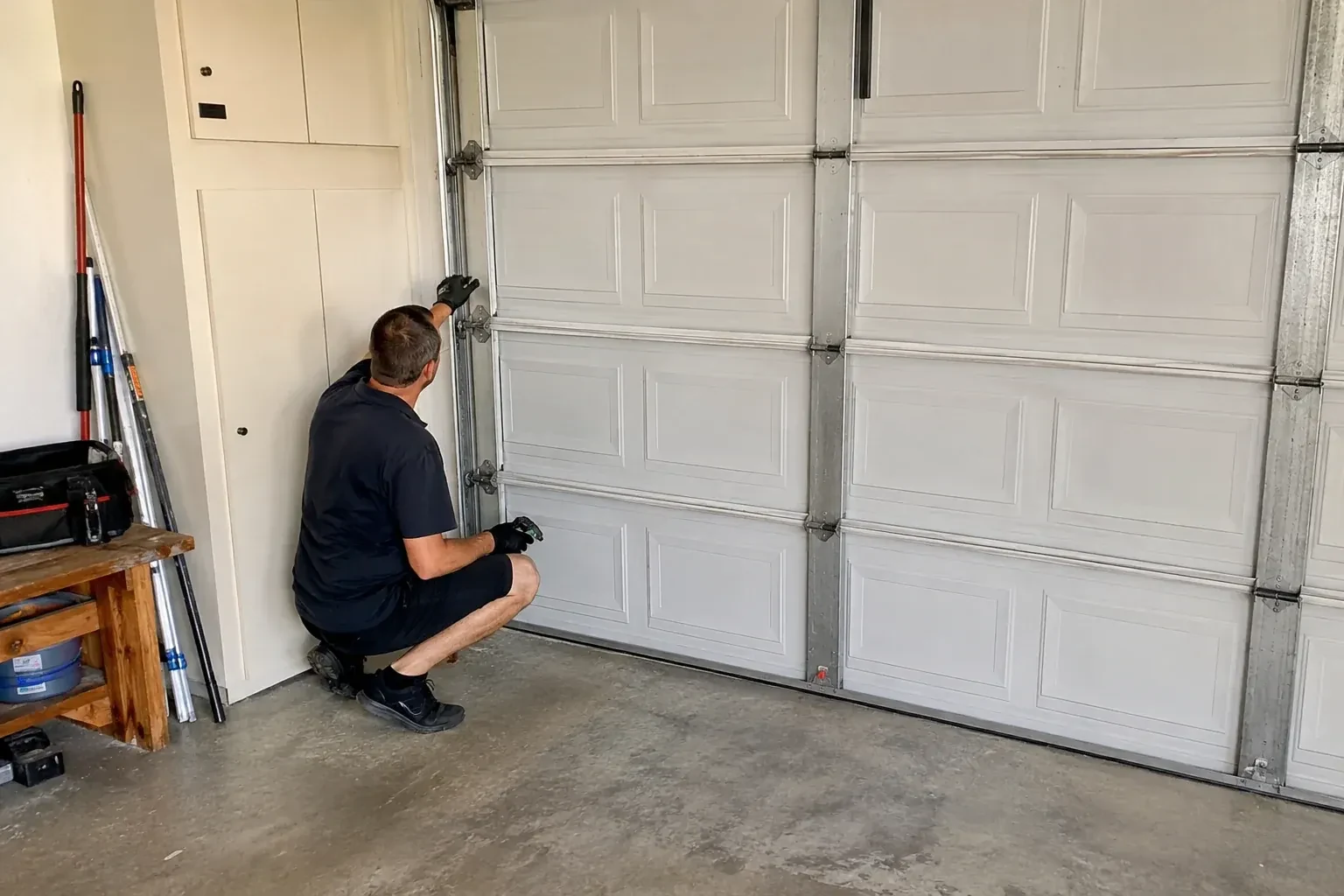
The rails are examined as a system. Is the vertical track plumb and spaced correctly to the door edge, or has it bowed away from the jamb? Are the jamb brackets and flag brackets tight, and are the lag screws biting into sound wood or spinning in split, dry framing? Is the horizontal track level or slightly rising toward the rear, and are the back hangs still firmly fixed to the ceiling joists? A rail that has been crushed or kinked by an impact is measured against the door's roller size, because a tight spot in the track will pop a roller again as soon as the door is run.
Putting the cables back on their drums
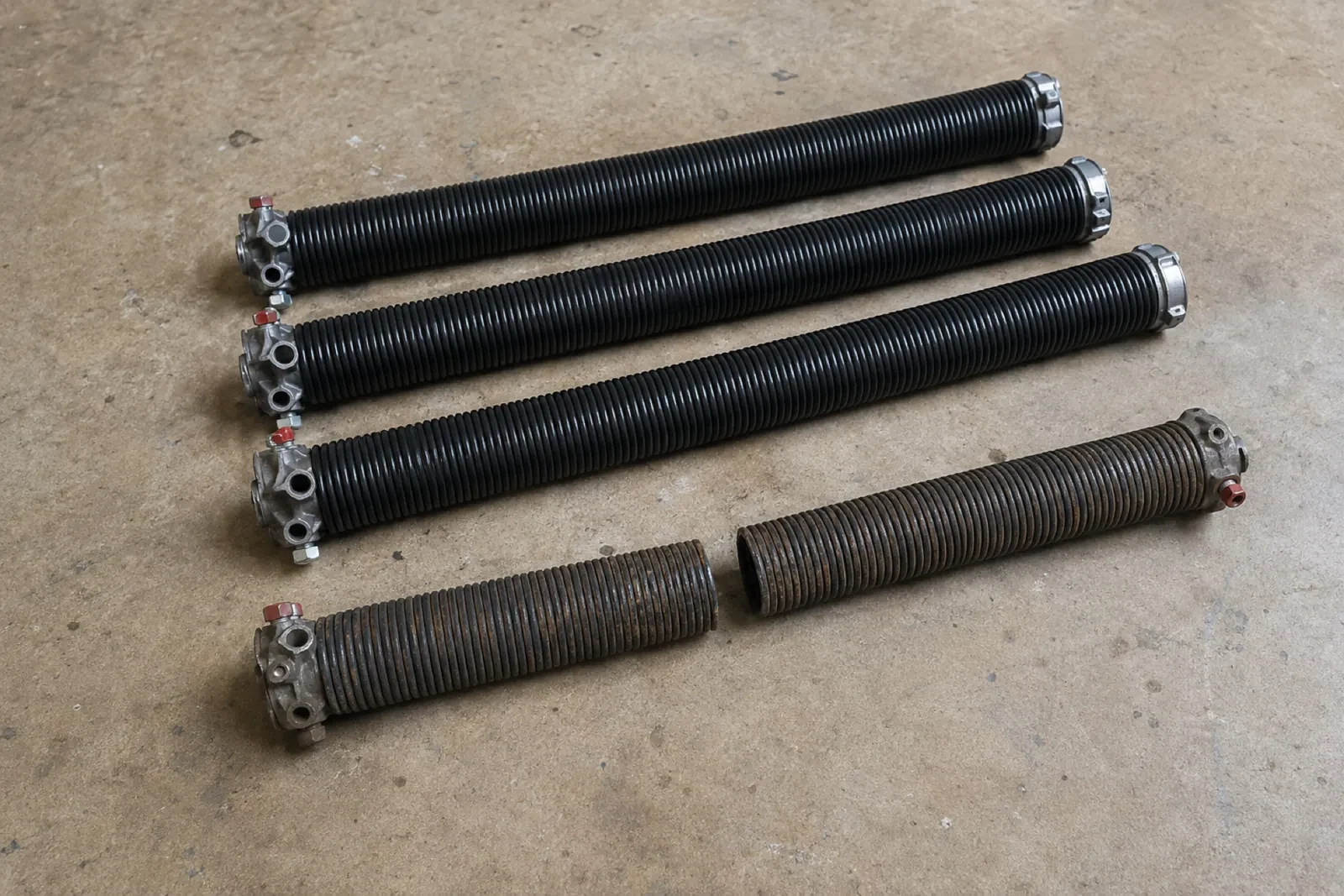
A cable that unwound or crossed on its drum is stripped back and rewound in its groove, beginning at the cable stop and laying each turn beside the last. Both cables are set to equal length so the bottom section hangs level, then the drums are locked to the shaft and the springs are rewound to the door's weight. A cable with kinks, rust or broken strands is replaced along with its partner so the two sides age together. This part of the work is done with the door clamped fully closed and the sections held, because a cable coming under tension is exactly when a door wants to move.
Lubricating the right parts, and not the track
Twice a year, hinge pins, roller bearings and the coils of torsion springs get a light application of a garage-door silicone spray or white lithium grease, wiped so nothing drips. Nylon rollers without bearings are left dry. The tracks themselves are only ever wiped clean with a damp cloth: lubricant on the rail collects grit and lets the rollers skid rather than turn, which is a slow route back to a worn wheel and an escaped roller. Household penetrating oils are avoided because they attract dust. This small routine keeps the freshly reset door running as quietly as it does on the day of the visit.
Off-Track Garage Door Reset
In the van
Long lag screws or through-bolts
Jamb and flag brackets
Track pliers
Level and plumb line
Torsion spring winding bars
Off-Track Garage Door Reset
What affects the quote
Section damage from an impact
A creased or pushed-in panel may still run after the reset or may need replacing. The quote separates the reset from any section work so you can decide on the panel independently.
Opener reconnection and adjustment
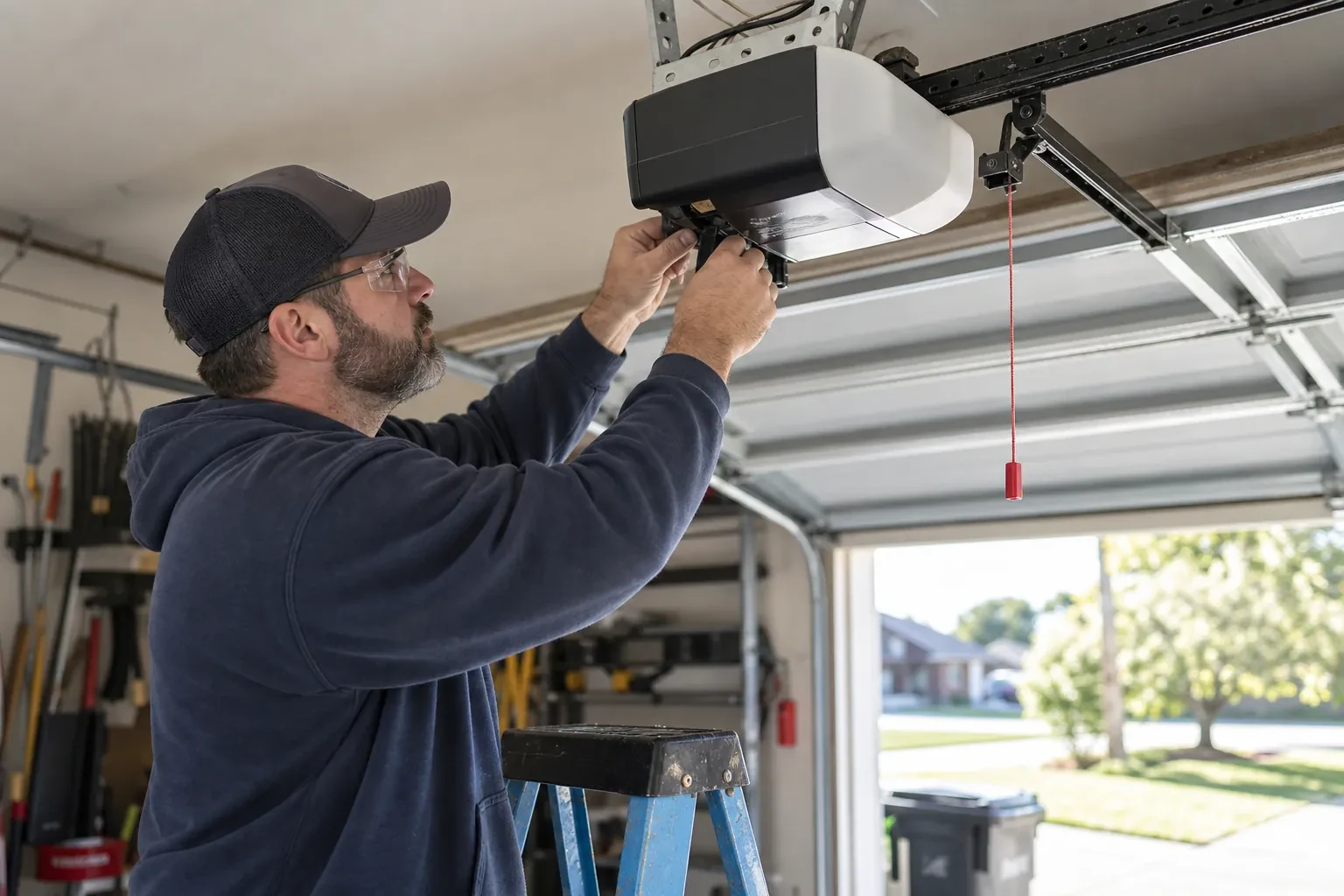
Reconnecting the trolley, resetting travel limits and force, and testing the reversal are normally part of the reset. An opener arm, bracket or reinforcement damaged during the event is an additional item.
Older or unusual hardware
Low-headroom track, high-lift track, an old wood door with obsolete hinges or a commercial door with heavy-gauge rail may need parts that are ordered or adapted, which is explained in the estimate.
What to have ready
- Does the track look bent, or have screws pulled out of the wall?
- Roughly how old is the door, and when was it last serviced?
- Have you unplugged the opener or pulled the red release cord?
Off-Track Garage Door Reset: questions
QuestionsWhy did the door come off its track in the first place?
The usual causes are an impact from a vehicle, a lifting cable that broke or slipped off its drum, ice holding the door to the floor while the opener pulled, an obstruction under the door, worn rollers that no longer hold in the rail, or track brackets that have loosened from the wall. Finding which one applies is the first part of the visit, because the reset is only durable once the cause is corrected.
I only tapped the door with the bumper. Why is it off its track?
A sectional door is strong in the direction it travels and surprisingly easy to push sideways at a single roller. A light nudge on the bottom section can flex the track lip enough for the roller to slip out, after which the section twists and the rollers above follow. The good news is that this kind of event usually leaves the cables and springs alone, so the reset is often rollers, a re-formed track lip and a hinge check.
Can I just push the roller back into the track myself?
The roller is only the visible part of the problem. Behind it are cables and springs holding the door's weight unevenly, and a door can drop or swing when a section is moved without the load taken off first. A trained technician clamps the door, releases the tension in a controlled way and seats the rollers in order. Leaving it to that process protects both you and the sections themselves.
Related services
- Garage Door Tune-UpHalfway up, the door shudders.
- Garage Door Panel ReplacementYou misjudged the last metre of the driveway and felt the bumper meet the door.
- Garage Door Bottom Seal ReplacementWith the door closed and the lights off, a bright line of daylight runs along the floor from one side to the other.