Repairs · Cliffside
Garage Door Panel Replacement in Cliffside
You misjudged the last metre of the driveway and felt the bumper meet the door.
In plain words
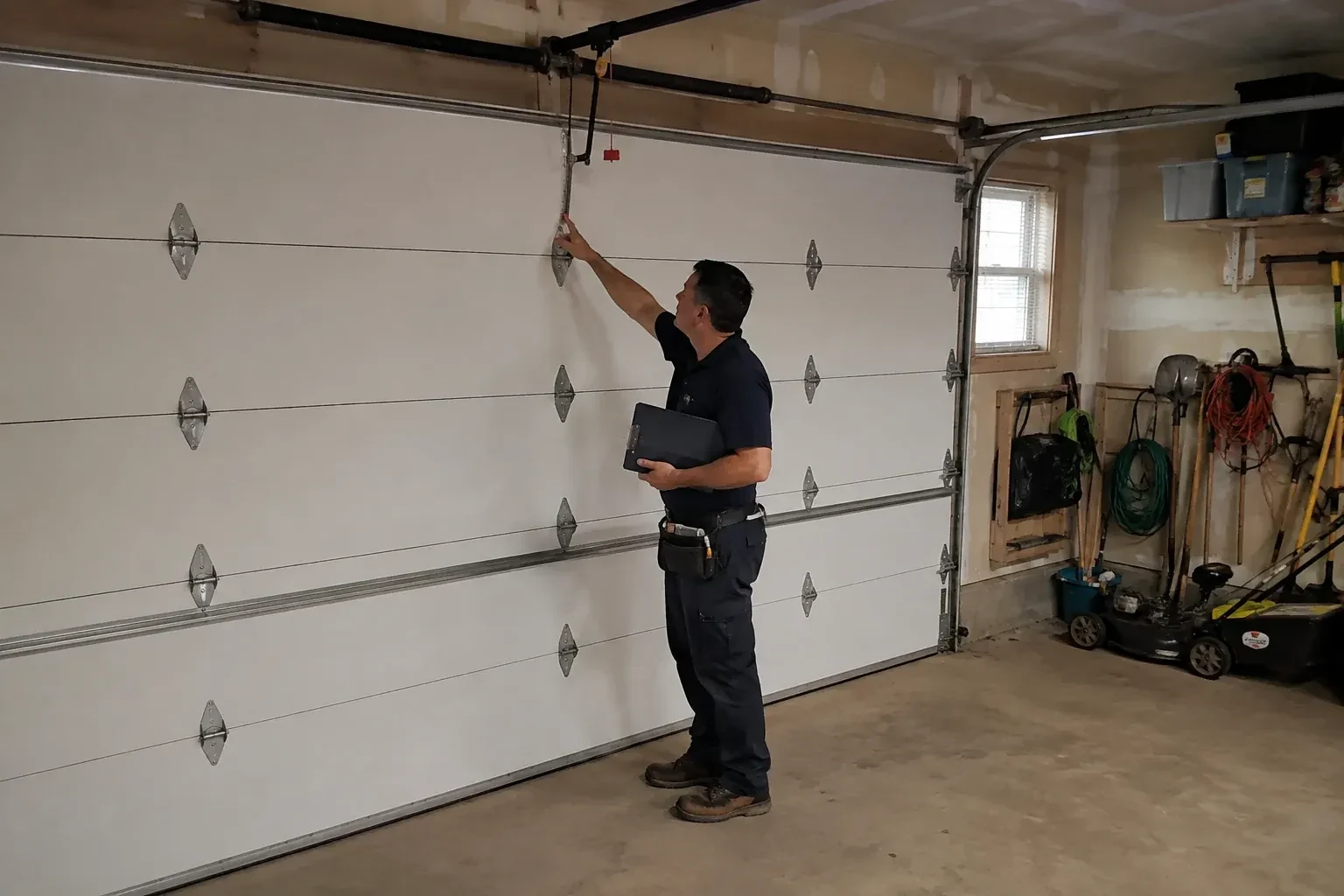
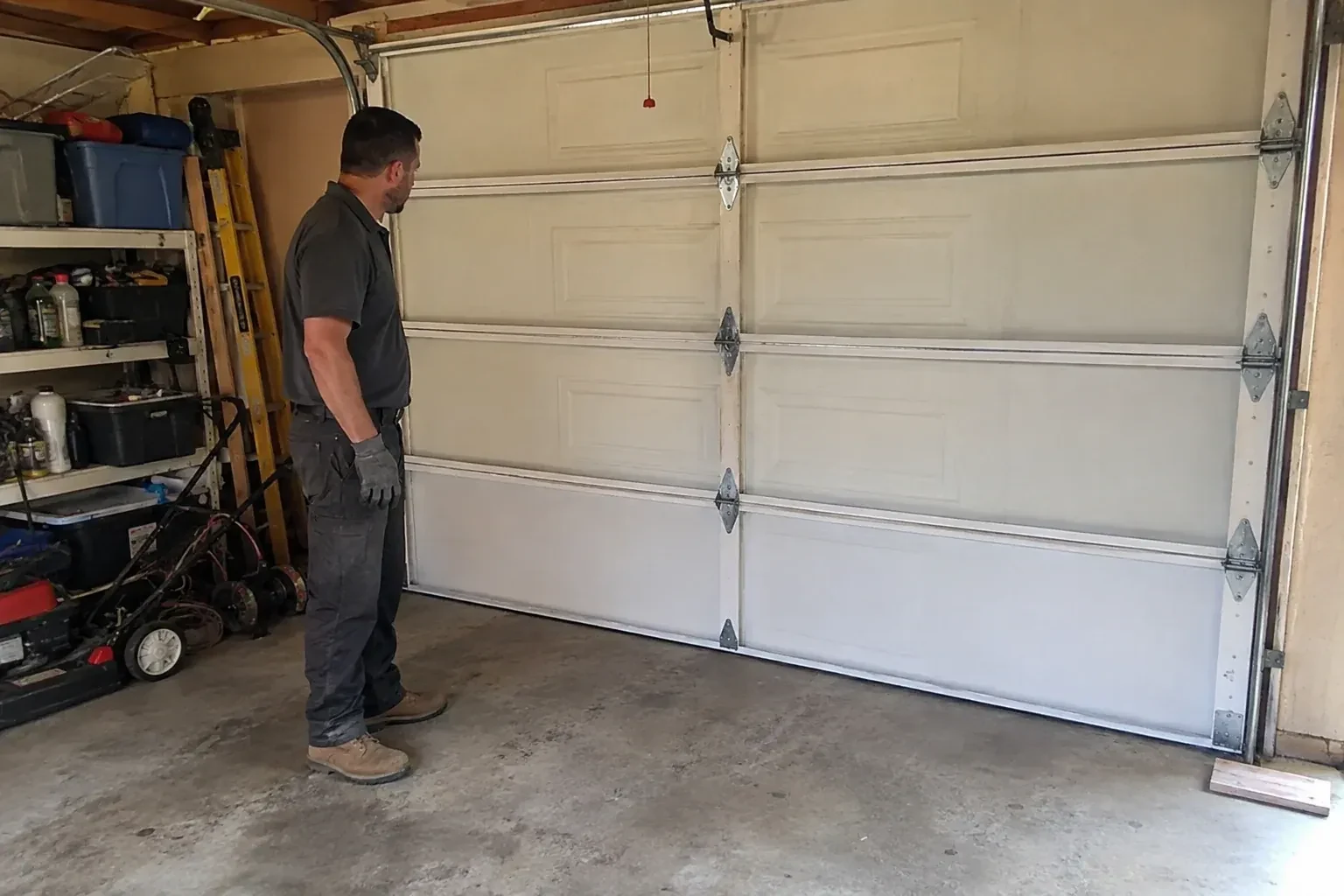
Expect two visits. On the first, the technician makes the door safe to use or safe to leave closed, identifies the manufacturer and model, measures the section, photographs the damage and its neighbours, and checks the hinges, rollers, tracks, cables and springs for anything the impact disturbed. The replacement section is then ordered to that specification, since sections are made to order for each model rather than kept on a shelf. On the second visit the section is installed, the hardware is refitted, the springs are re-tensioned if needed, and the door and opener are tested through full cycles before the technician leaves.
How the visit goesAfter an overnight freeze the door stuck to the slab, the opener strained, and something gave. The bottom section is bowed inward, one hinge has torn free of its screws, and the rubber seal along the bottom no longer sits flat.
Garage Door Panel Replacement
How the visit goes
What the impact did to everything else
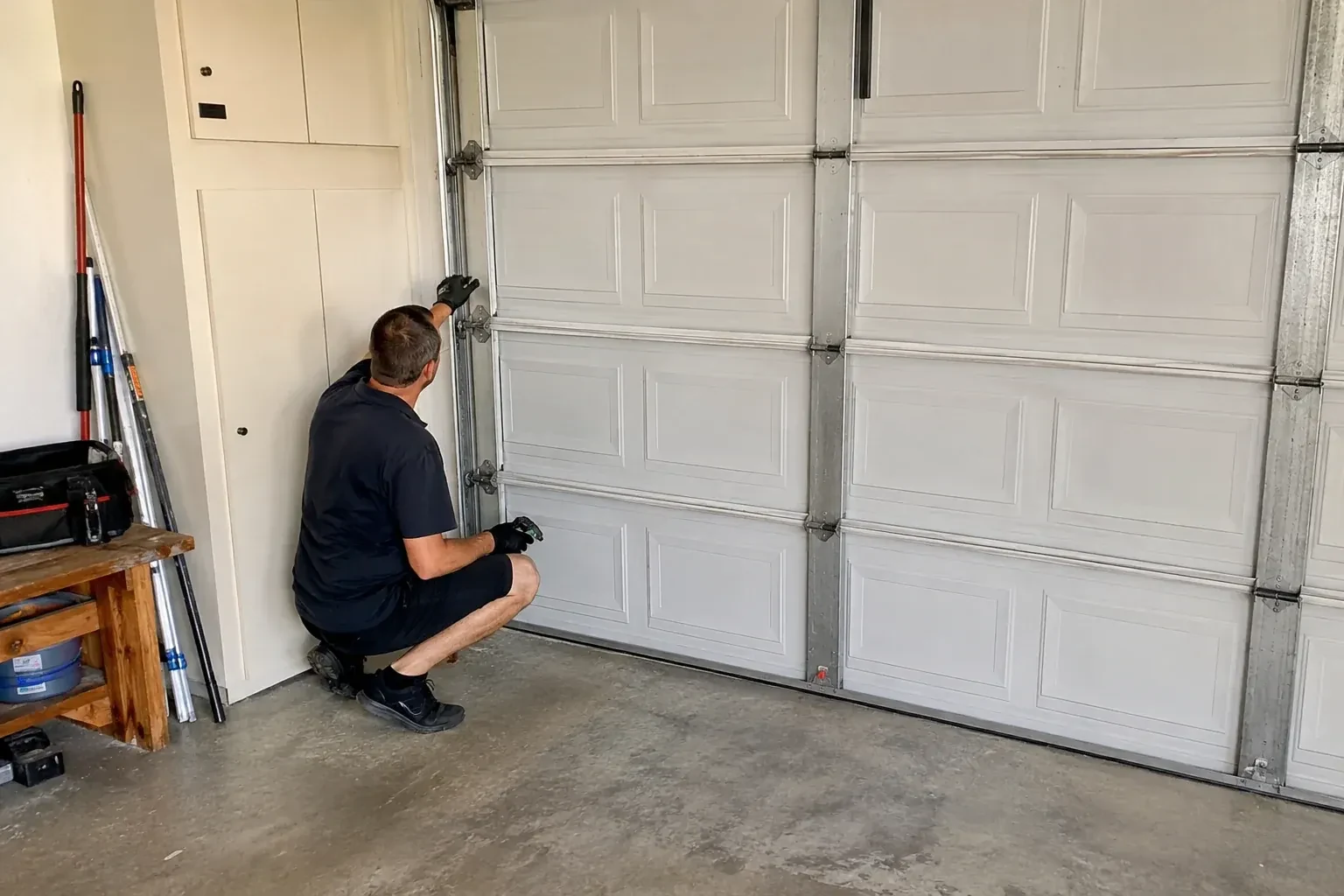
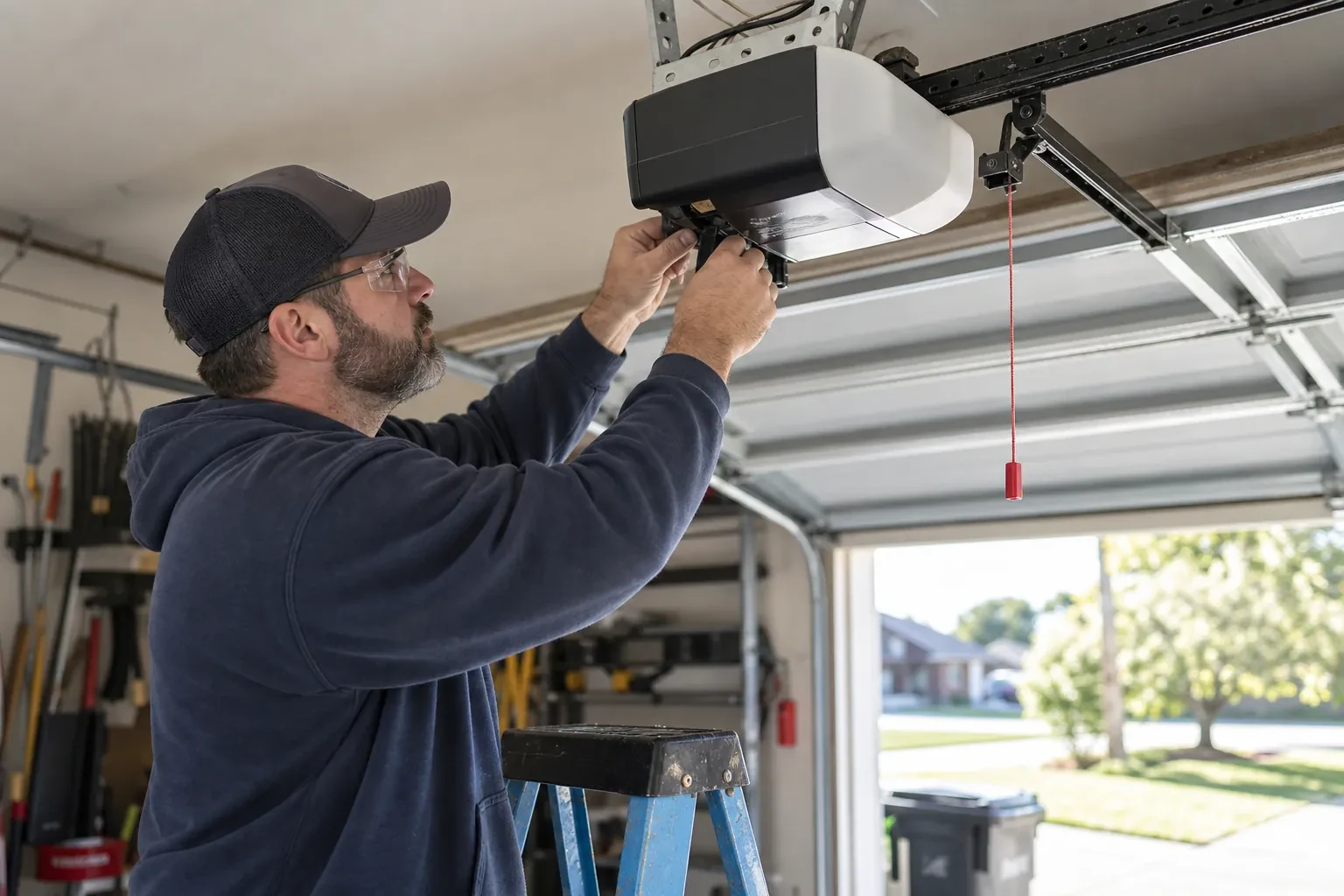
Trade-association guidance is clear that after a vehicle strike, a storm or a freeze-up the whole door is looked at, not just the dented part. The technician runs a hand along the hinges for cracks and pulled screws, spins each roller for flat spots and bent stems, sights down both tracks for kinks and checks the brackets that hold them to the jambs. Cables are inspected for fraying where they wrap the drums, spring anchors and the centre bearing plate are checked, and the opener arm and its bracket are examined for bending. Anything the impact disturbed goes on the list alongside the section.
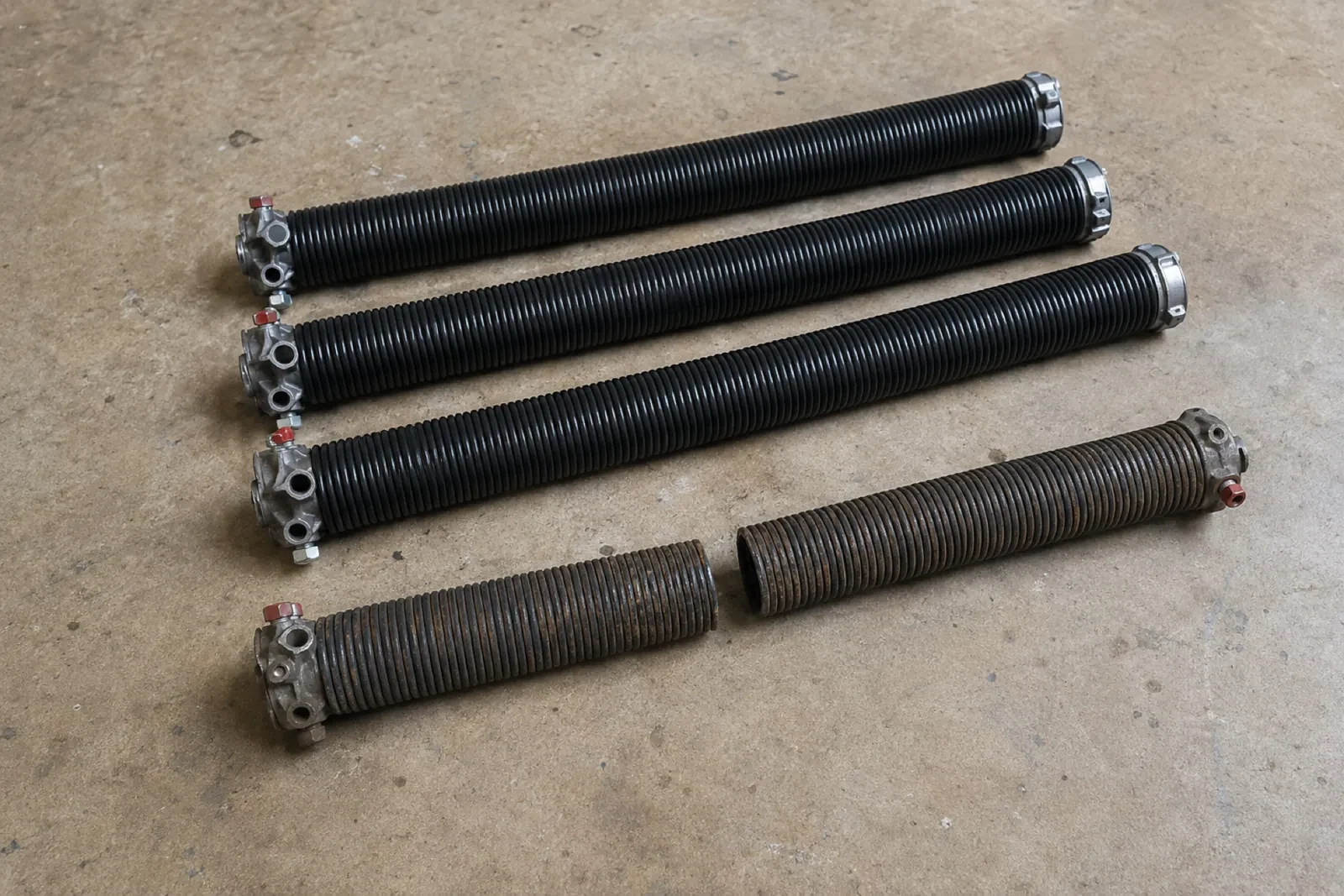
Releasing tension for a bottom section
The bottom section is the one place where the lift cables attach, and those cables are held taut by the springs. Before its brackets are unbolted, the technician takes the energy out of the system. On a torsion door that means fitting winding bars into the cone and unwinding the spring turn by turn while the set screws are loosened; on an extension-spring door it means propping the door open and unhooking the springs. With the cables slack, the bottom brackets, the seal retainer and the section itself can be removed safely. The same steps are reversed at the end, and the door's balance is set fresh.
Holding off rust on the lower edge
Salt and slush are what turn a healthy bottom section into a flaking one, so give the lower sections a rinse when the salt season ends and again after any heavy slush. Look along the bottom edge and around the seal retainer for chipped paint and touch it up with the colour from your record before bare steel has a chance to bloom. Keep the bottom seal in good condition so water sheds off the face rather than sitting on the lip. Inside, a glance at the back of the section during the monthly check catches moisture marks early.
Garage Door Panel Replacement
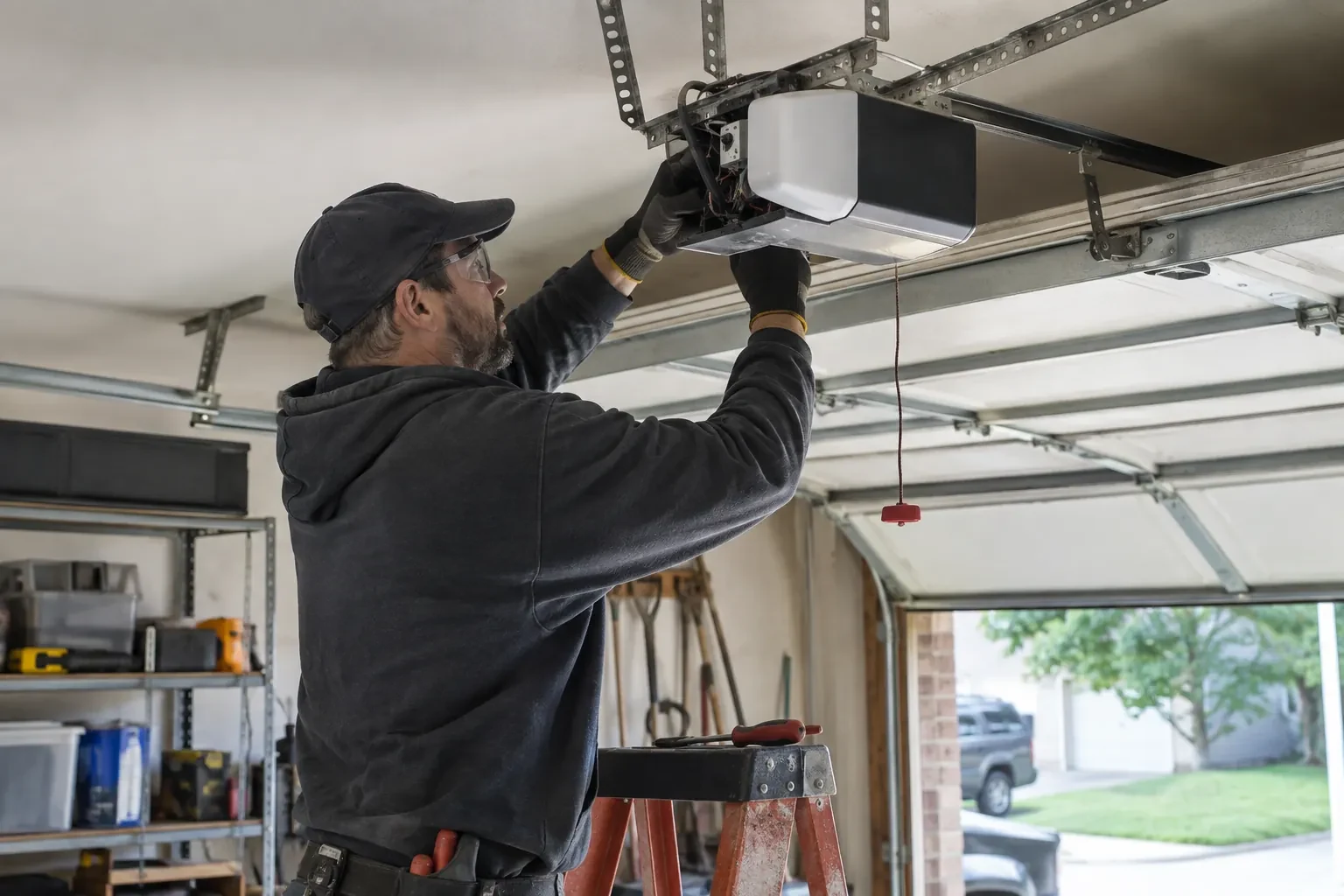
In the van
Horizontal reinforcement strut
Self-tapping stile screws
Matching replacement section
Nylon or steel rollers
Garage-door lubricant
Garage Door Panel Replacement
What affects the quote
Whether the exact section is still made
A current model is a straightforward order. A discontinued design may mean a section from a related series, a custom-made section, or a discussion about the whole door, each of which lands differently on the quote.
A make-safe visit while the section is on order
When the door has to be braced, disconnected or secured closed until the section arrives, that first visit is quoted as its own item, with the installation visit following once the part is in.
Colour and finish decisions
The section comes in the manufacturer's current version of your colour. If you choose to repaint the whole door afterwards, or order a colour change across all sections, that becomes a separate item.
What to have ready
- What colour and panel design is the door?
- Would you consider a whole new door if a matching section is unavailable?
- Are any other sections dented, rusted or out of line?
Garage Door Panel Replacement: questions
QuestionsCan a dent be repaired instead of replacing the section?
Sometimes. A shallow dent in the middle of a steel skin, away from joints and hinge points, can often be eased out or filled, sanded and painted. Damage that creases the metal, reaches a joint or an end stile, bends a hinge point, or kinks a strut affects how the section carries load as the door moves, and a new section is the sound repair there. The technician tells you which category your dent falls into.
Why is the bottom section handled differently from the others?
The bottom section is where the lift cables attach, through the bottom brackets at each end, and those cables are under the full pull of the springs. Before the brackets come off, the springs have to be unwound or unhooked so the cables go slack. The bottom section also carries the seal retainer and astragal that meet the floor. After the new section is in, the springs are re-tensioned and the balance reset.
Can one damaged section be replaced without replacing the whole door?
Usually, yes. A sectional door is built from separate sections joined by hinges, so a single creased, rusted or cracked section can be unhinged and exchanged while the others stay in place. The conditions are that a section for your make, model and size is still available and that the rest of the door and its hardware are in good order. When damage spans several sections or the design is discontinued, a full door is compared alongside.