New Doors · Cliffside
Commercial Sectional Door Repair in Cliffside
The loading-bay door rises with one side several centimetres lower than the other.
In plain words
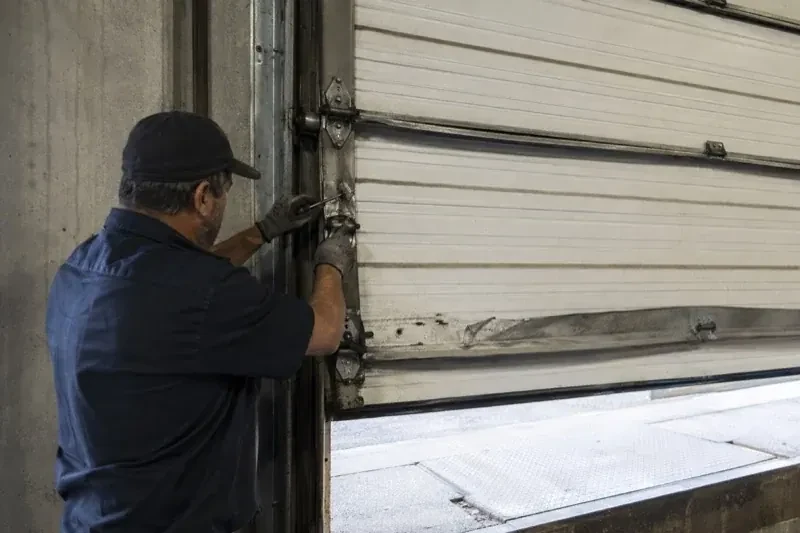
Impact repair is more than flattening a dented panel. The damaged section may have transferred force into an end stile, hinge, roller carrier, vertical track or jamb attachment. The repair therefore follows the load path from the contact point into the supporting hardware. A replacement section or reinforcement is matched to the door construction, track spacing is restored, and every affected connection is tightened or renewed. Final cycling confirms that the repaired door follows the curve cleanly and seats evenly at the opening.
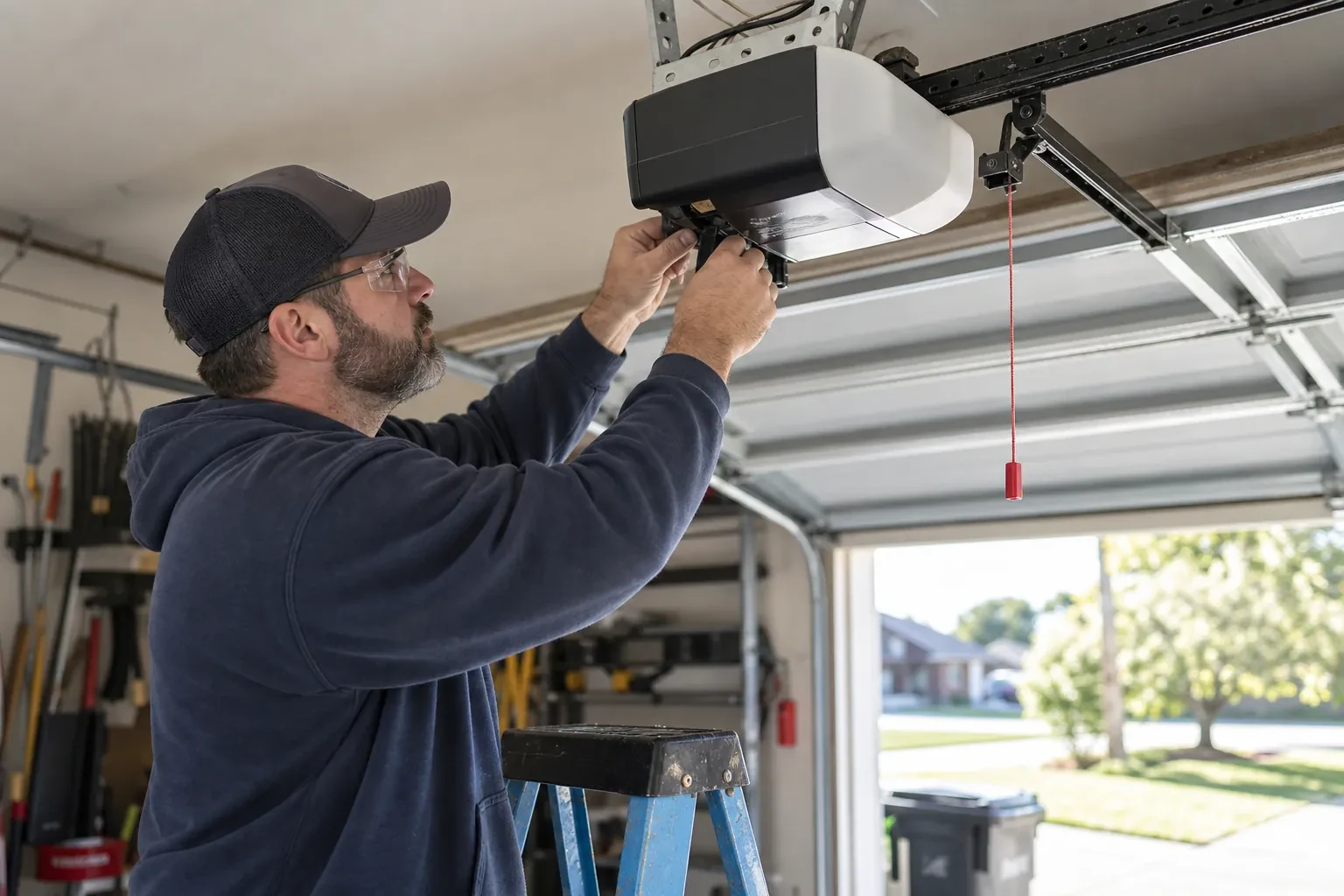
How the visit goesThe operator runs and the drive chain moves, yet the sectional door hesitates near the floor. It feels unusually heavy during manual operation, pointing to a counterbalance problem rather than a simple control-station fault.
Commercial Sectional Door Repair
How the visit goes
Reading an uneven door
A crooked bottom edge leads to a side-by-side comparison. Cable condition and length, drum grooves, shaft position, bearing movement and bottom fixtures are viewed together. The technician notes whether one cable is slack, crossed or frayed and whether a roller has left its normal track position. Measurements at the tracks show if the guides remain parallel and plumb. The door is then secured so its weight cannot deepen the imbalance during inspection. These findings reveal whether the repair belongs in the lifting system, track alignment or impact-damaged hardware.
Restoring cables and counterbalance
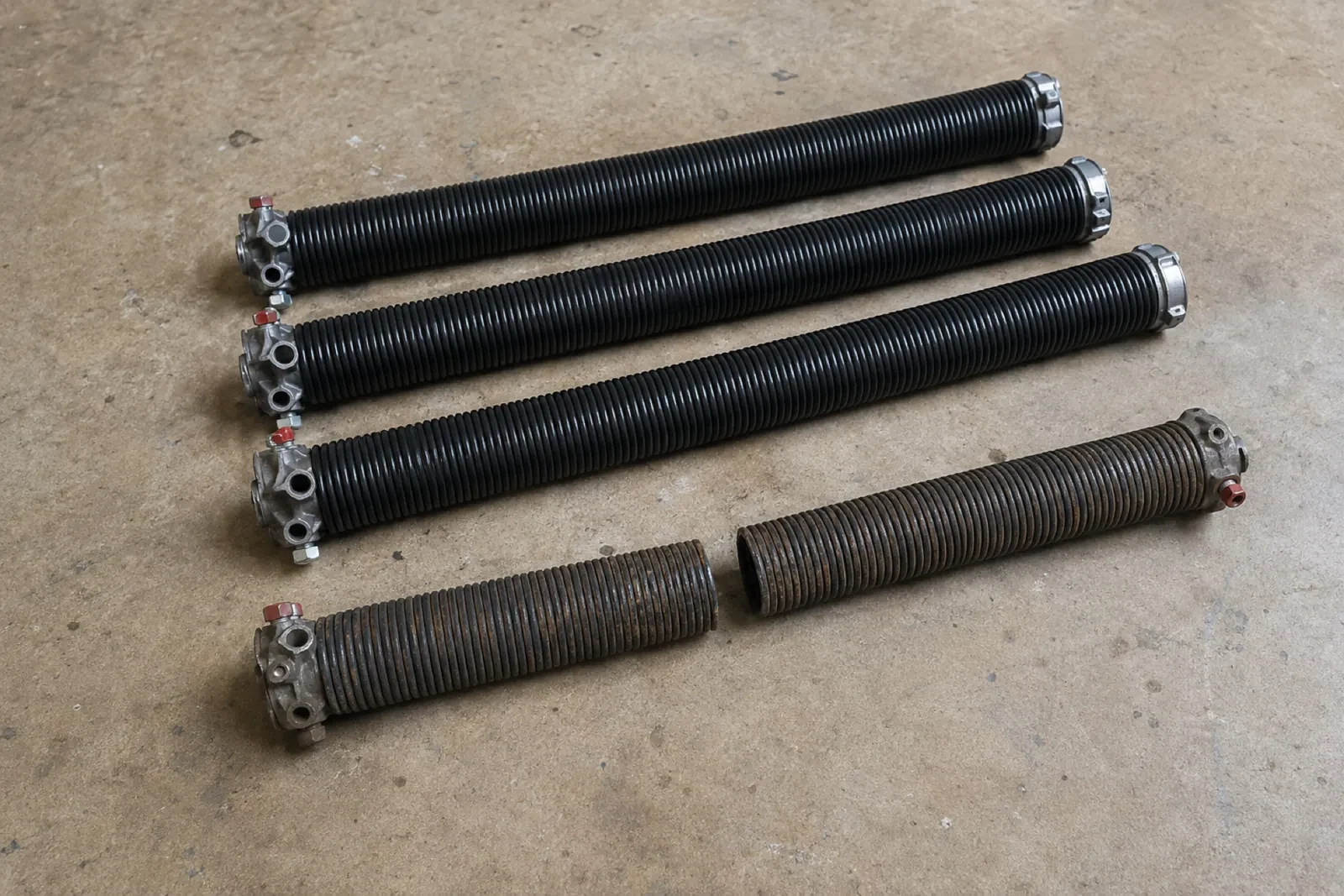
Cable and spring work is performed with the door secured and spring energy under deliberate control. Matched lift cables are routed from sound bottom fixtures to compatible drums, seated in their grooves and brought to equal tension. Bearings, shaft alignment and anchor points are checked before springs are set for the actual door weight and lift configuration. The technician then evaluates balance at several positions. A level bottom edge and stable movement show that both sides are sharing the load as intended rather than relying on the operator to pull the door straight.
A repaired section that works with its neighbours
A replacement panel leaves the door with continuous joints, secure hinges and reinforcement suited to the opening. Colour and surface texture may show normal differences between new and weathered material, while the functional check focuses on articulation, roller clearance and even contact at the seals. Washing the exterior with products allowed by the door manufacturer helps protect the finish. Future impact marks near an end stile or bottom fixture deserve early attention because these areas connect the panel to the guidance and lifting systems.
Commercial Sectional Door Repair
In the van
Vertical and horizontal track
Bottom fixtures
Commercial door sections
Track brackets and back hangs
Numbered end hinges
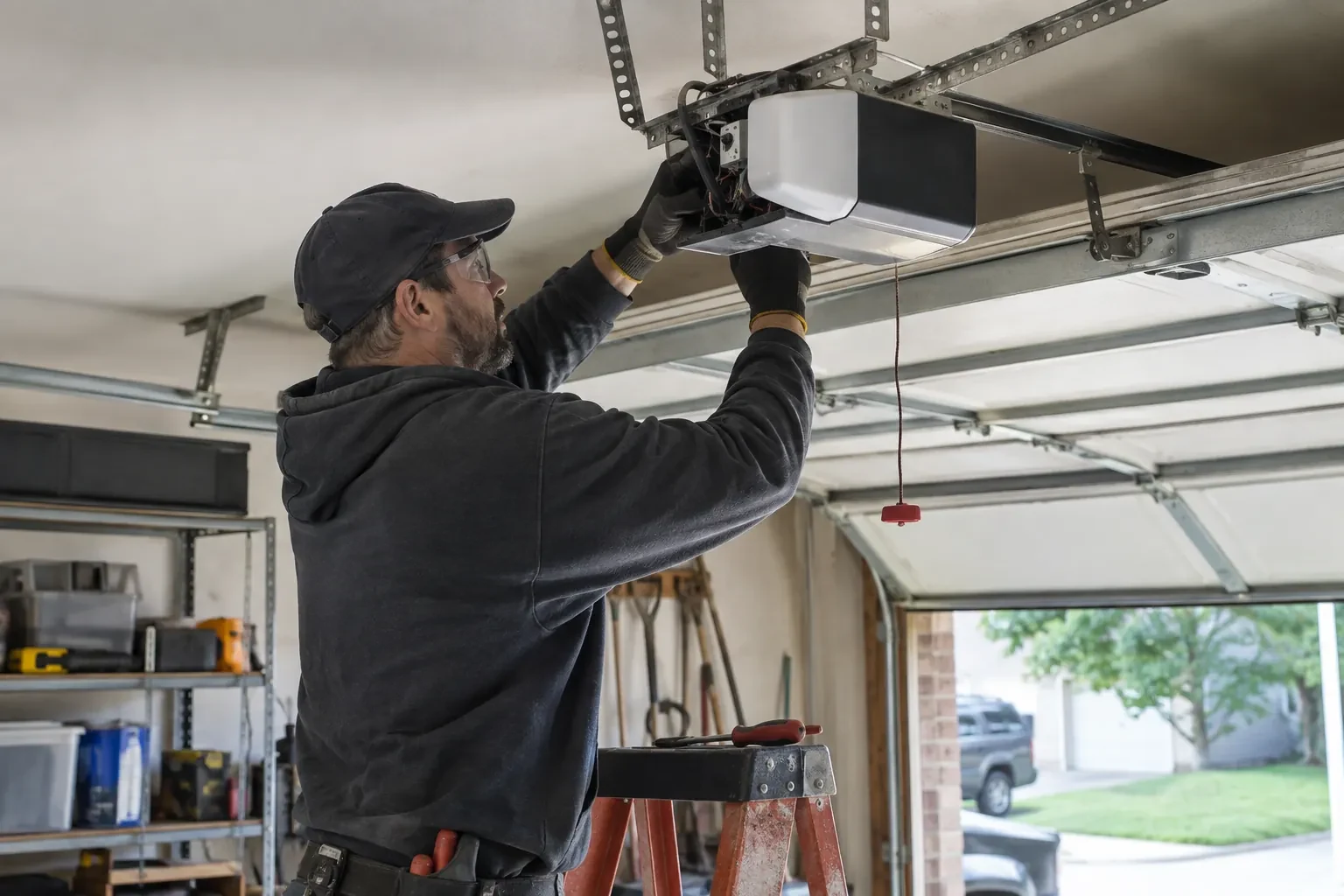
Commercial Sectional Door Repair
What affects the quote
Lift and track configuration
Standard, low-headroom, high-lift and vertical-lift arrangements use different track geometry, drums, cables and access methods, so the installed configuration shapes labour and parts.
Position of the stopped door
A door resting closed, hanging partly open or displaced from its tracks requires a different stabilization plan before repair work and component removal can begin.
Extent of impact transfer
A dent confined to one section differs from force that also bent an end stile, roller, guide rail, jamb bracket or supporting anchor.
What to have ready
- Which numbered bay or opening needs repair?
- Are any cables visibly loose, crossed or frayed?
- Can traffic use another opening during the work?
Commercial Sectional Door Repair: questions
QuestionsCan corrosion on lower hardware be repaired?
Surface condition and remaining material determine the scope. Light contamination may be cleaned during maintenance, while pitted cables, weakened brackets, seized rollers or compromised fasteners are replaced with compatible components. The source of moisture is considered too. Clearing drainage, renewing seals and removing accumulated salt help protect the repaired lower section and its hardware.
Can several doors be assessed during one facility visit?
Yes. Numbering each opening and providing a short symptom list keeps the assessment organized. The technician can define the requested repair for the affected door and record visible conditions on comparable doors separately. Shared model data and installation history may help with parts planning, while each opening still receives its own mechanical and control checks before any work is scoped.
How often should commercial door hardware be inspected?
The appropriate interval follows the door and operator manuals, operating cycles, environment and facility maintenance plan. A heavily used exterior bay may need attention more often than a lightly used interior opening. Staff can still observe cables, seals, sensors, sound and travel during normal operation, while tensioned components and adjustments remain part of a technician's planned inspection.
Related services
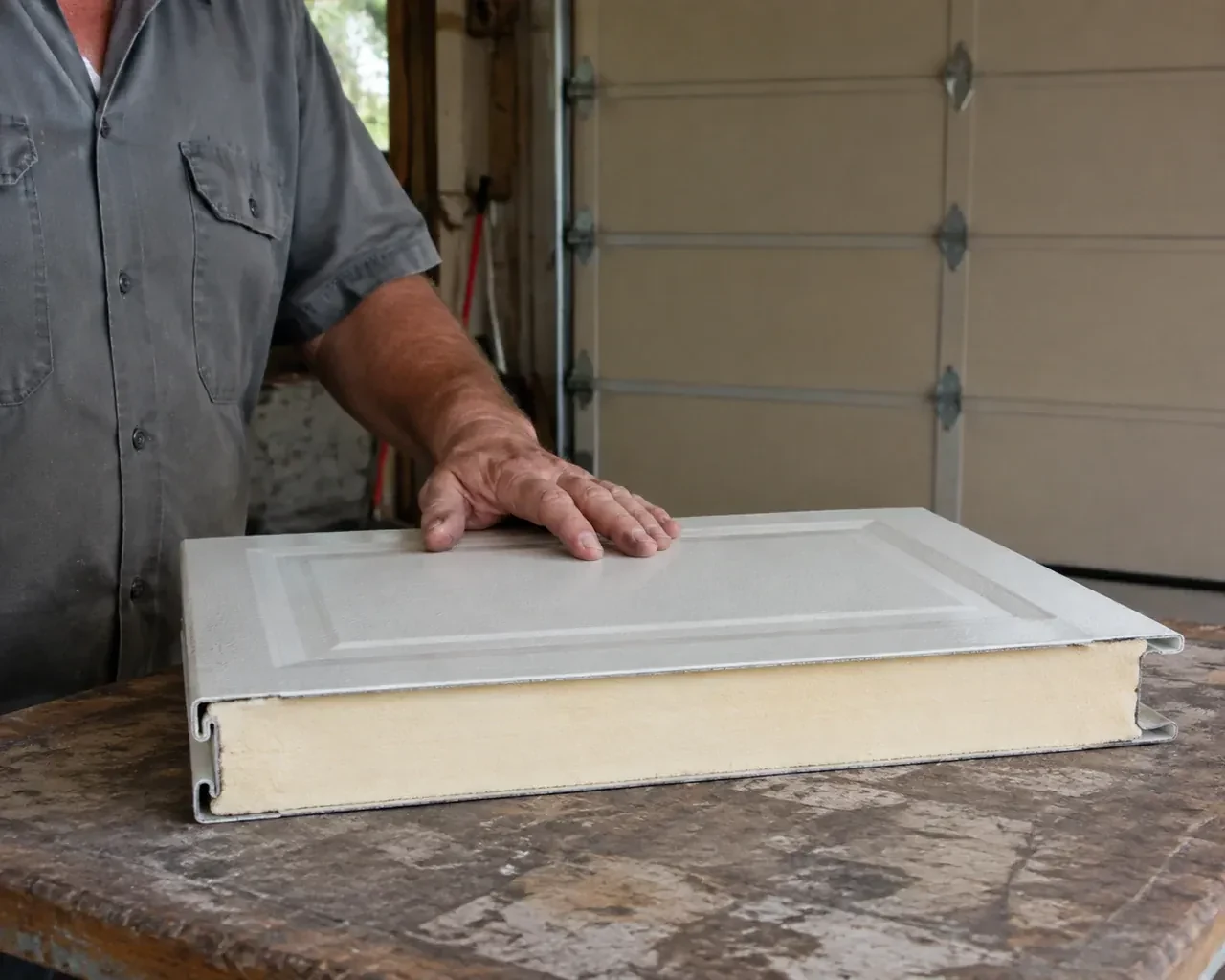
- Insulated Steel Garage Door InstallationA refreshed exterior has made the faded garage door stand out.
- Wind-Rated Garage Door ReplacementA recent wind event left one section slightly creased, a strut twisted, and several track fasteners loose.
- Carriage-House Garage Door InstallationYou appreciate the grain and depth of traditional wood doors, though regular refinishing is not part of your plan.