Openers · Kennedy Park
Emergency Release Repair in Kennedy Park
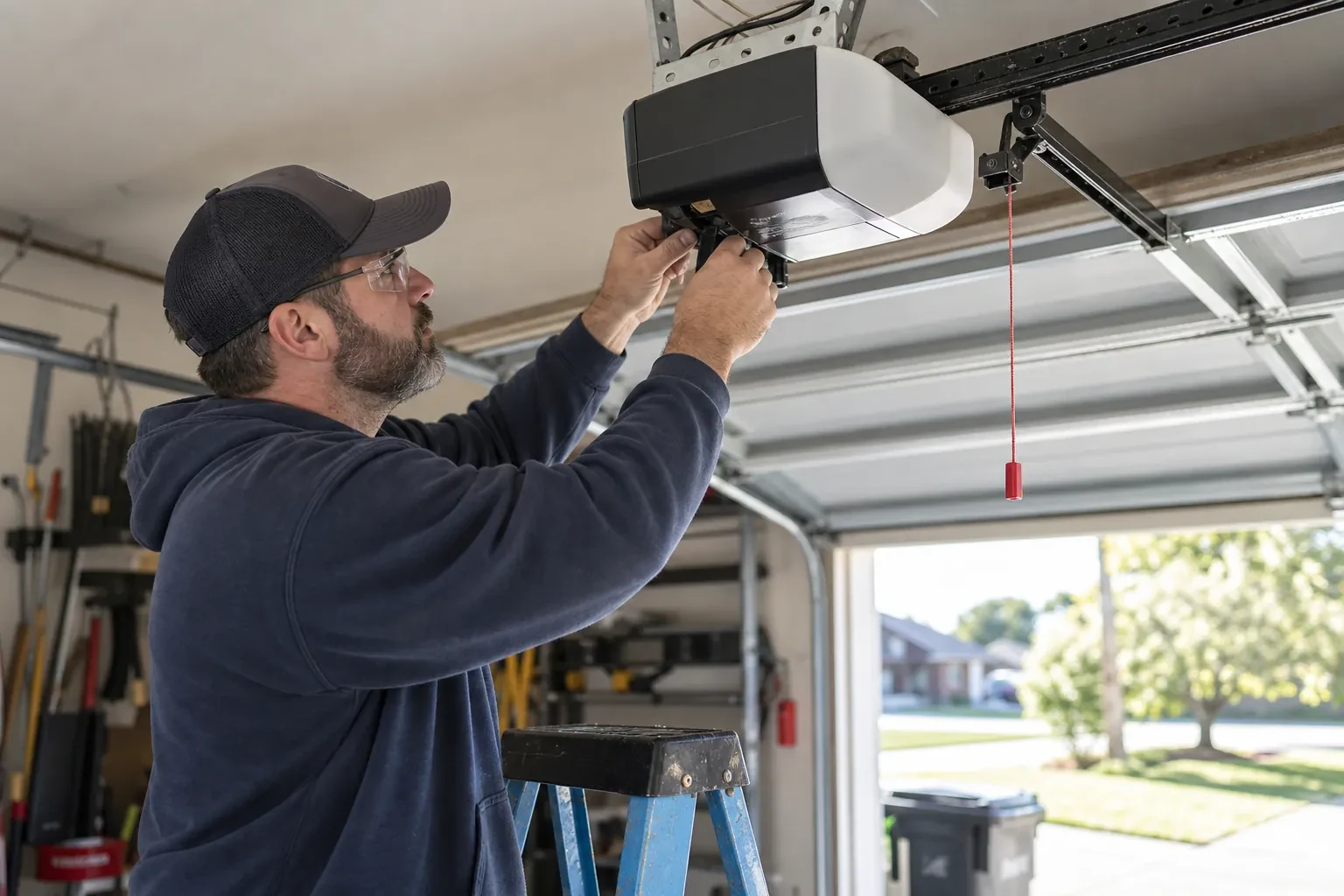
A previous owner knotted the release cord around the rail and stacked storage shelves right beneath it.
In plain words
The operator standard for residential openers in this country asks for a manual release that is coloured red, easy to tell apart from the rest of the mechanism, and reachable from the floor, with the handle no more than about 1.8 metres up. The reason is plain: in an outage or emergency, someone who has never touched the opener must be able to find and use it. Emergency release repair brings an opener back to that standard when the handle has gone missing, been tied out of reach, or was left too high after a door change, and leaves the household knowing what the red handle is for.
How the visit goesHalfway up, the door lets go of the opener with a clunk and sinks back to the floor while the trolley carries on to the top alone. It has happened three times this month, and each time the release lever is found half-cocked.
Emergency Release Repair
How the visit goes
The outside key release, if there is one
Many detached garages and some attached ones have a small keyed cylinder, set in the top section on a sectional door or at mid-height on others. The technician checks whether one is fitted, whether the key is available, and whether the cylinder turns and pulls out as designed. Behind it, a cable runs to the trolley lever; it is traced for kinks, stretch, a detached end or a route that snags on a section joint as the door bends. In winter the cylinder is checked for salt crust and ice. Where the garage has no other door, this release is the way in when the opener is silent, so its condition is treated as part of the same job.
Replacing the trolley or carriage
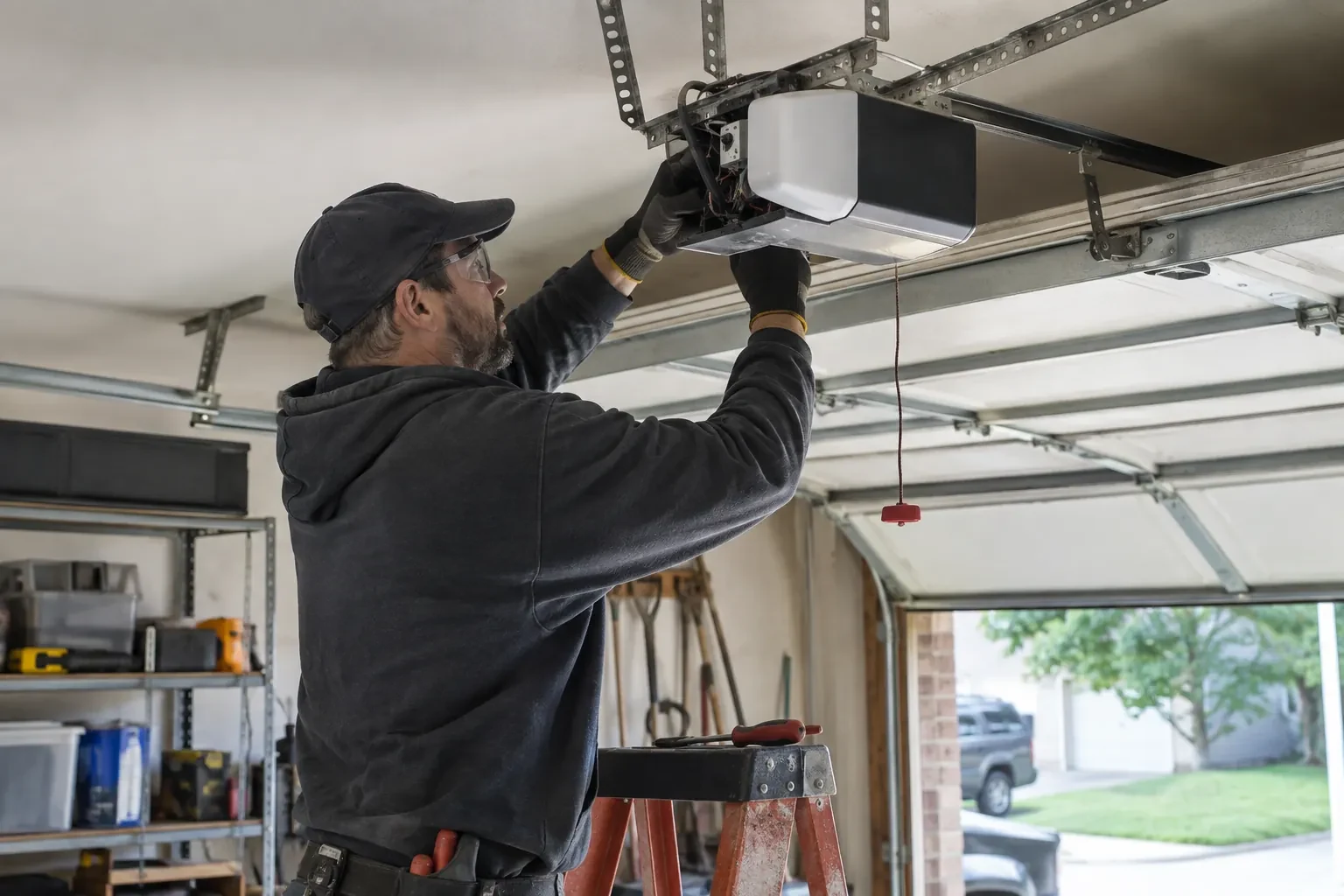
Latch teeth that have worn round, a cracked trolley body or a carriage bent when a door dropped onto it call for a new assembly. The technician slackens the drive, disconnects the arm from the door, slides the old trolley off the rail and fits the replacement that matches the opener's model and rail type, then reattaches the arm with new clevis pins and clips. The chain or belt is set to the correct tension, the trolley is run to the door and latched, and the opener is cycled until the technician is satisfied the connection is solid at both ends of travel. Old parts are shown to you before they leave.
Manual use for more than a day
If an outage runs long, you know how to keep the door in manual mode without the trolley catching the door on its own. On rails where the cord is pulled down and then back toward the opener, the lever stays held out until you return it; on others the trolley simply stays free until the opener is run. Either way, the door is lifted and lowered by hand and a manual lock or slide bolt on the door keeps it shut overnight. When power returns, reconnect before pressing any button, so the opener never runs with the door lock engaged.
Emergency Release Repair
In the van
Release lever and spring
Track clamps to hold the door
Hole saw for the top section
Trolley and carriage assembly
Chain or belt tension hardware
Emergency Release Repair
What affects the quote
Age and parts availability
Trolleys, levers and rope kits for openers from the last two decades are stocked. An older model may need a part sourced, and the quote says whether that is a wait or a reason to consider replacement.
Door material for the outside release
Cutting a cylinder hole through a thin steel section is routine; an insulated door, a wood door or a glass-panel top section takes more care and sometimes a reinforcing plate.
Outside key release: repair or new
Renewing a cylinder, cable or keys on an existing outside release is one line; cutting the door and fitting a complete kit where none exists is another, and both are named separately.
What to have ready
- Is your opener a chain, belt or screw unit on a rail, or mounted on the wall beside the door?
- Do you lose power often, and would battery backup interest you?
- How does the door feel when you lift it by hand: light, heavy, or does it drift?
Emergency Release Repair: questions
QuestionsWhy does the trolley run but never reconnect to the door?
Three usual causes. On many rails, pulling the cord back toward the opener deliberately holds the lever out for a spell of manual use, and someone forgot to return it. Or the trolley latch teeth or the release arm are worn or bent, so the two parts pass without catching. Or the carriage sits at the wrong point for the powered trolley to meet, since reconnecting is meant to happen during an opener cycle, not by pushing the door shut by hand. Each is a short fix once identified.
The door is stuck shut, the opener is dead and there is no other door. Can you still get in?
Usually. If the door has an outside key release, a small round lock near the top panel, that is what it is for: the key pulls a cable that frees the trolley from outside so the door can be lifted by hand. If there is no such release, the technician has other methods to reach the lever from outside, and once inside the fault is dealt with. Fitting an outside release afterwards is a sensible follow-up for a garage with a single door.
Where should I grip the door when lifting it by hand?
Use the door's own handles or the gripping points built into the panel face, on the inside and outside of the door. Sectional doors are meant to have them near the bottom section and again on the second or third section. Never take hold at the joint between two sections, which closes as the door bends around the track. If your door has no handles or they have been removed, the technician can fit a pair during the visit.
Related services
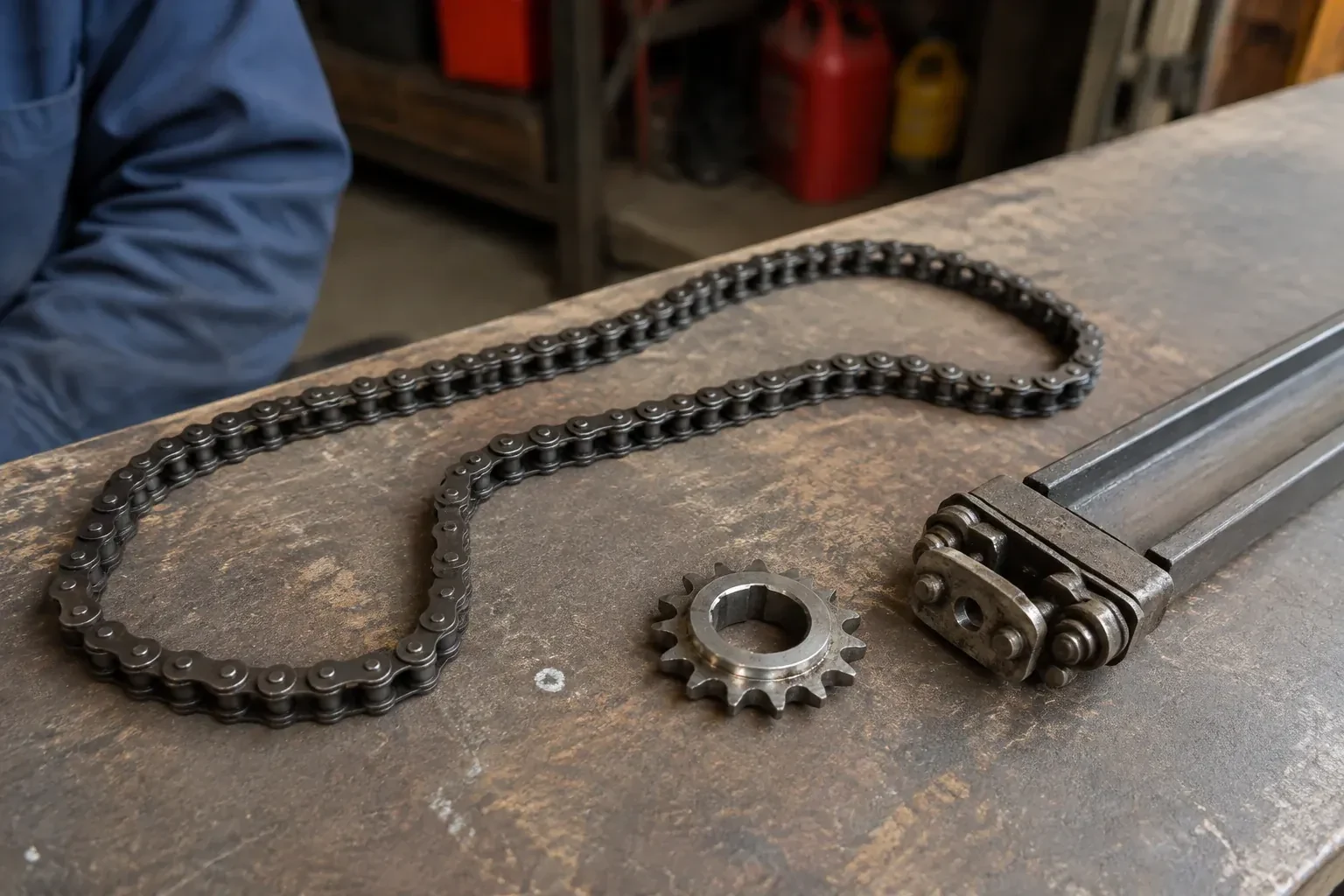
- Chain-Drive Opener RepairPress the button and the opener hums for a second, then quits.
- Belt-Drive Opener RepairPress the remote and the motor runs its full cycle, lights on, the usual whir, but the door does not move a centimetre.
- Garage Door Opener ReplacementThe remotes only work from the end of the driveway now, and one of them disappeared with a set of keys last month.