Openers · Clairlea
Emergency Release Repair in Clairlea
A previous owner knotted the release cord around the rail and stacked storage shelves right beneath it.
In plain words
What gets repaired depends on which link failed. A cord that rotted or snapped is simplest: a new rope and red handle, cut so the handle hangs no higher than about 1.8 metres and clears the car roof. A lever that will not stay latched needs its spring or the lever itself replaced. A trolley with worn latch teeth, or one driven hard into the stop bolt, is freed, adjusted or swapped for the assembly made for that opener. On the outside key release, a seized cylinder, a stretched cable or a lost key each has its own fix. The technician names the part before work begins.
How the visit goesYour garage is detached and has no side door. The remote is dead, the keypad is dead, and the small round lock in the top panel is meant to be your way in. The key goes in and turns, but nothing on the other side lets go.
Emergency Release Repair
How the visit goes
Why the trolley will not latch
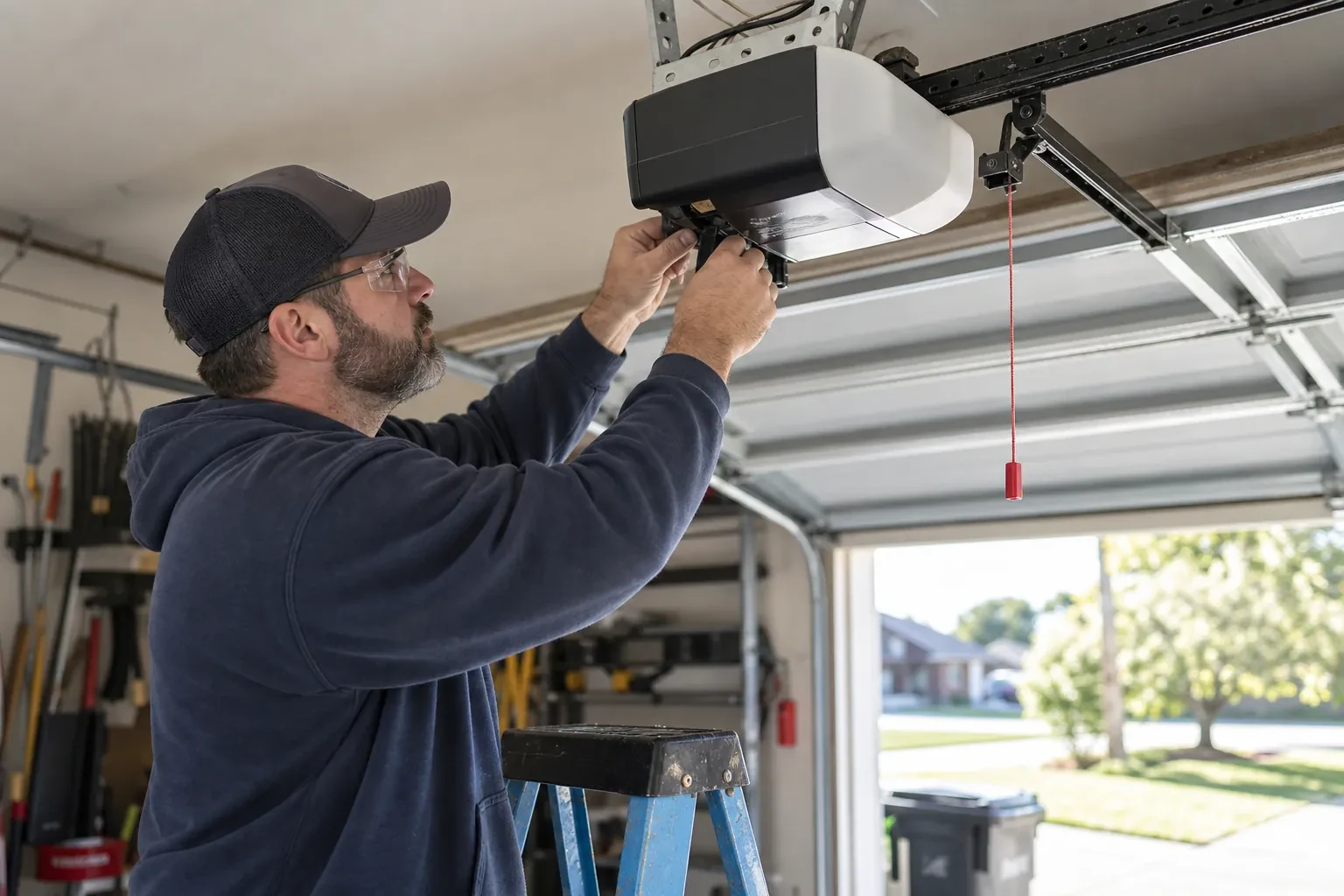
When the complaint is a trolley that runs but never reconnects, the technician looks for the usual reasons. The cord may have been pulled back toward the opener, which on many rails deliberately holds the lever out for repeated manual use, and simply never returned. The trolley may have been driven into the stop bolt or stop tab at the end of the rail after the travel limits drifted, so it sits jammed with the motor humming. The latch teeth may be worn, or the release arm bent so it can no longer drop into place. Each of these has a different fix, and telling them apart takes a minute with the cover off.
Fitting or repairing the outside key release
For a garage with no other way in, an outside release is fitted or repaired. A hole is cut for the cylinder where the kit and door call for it, the top section on a sectional door or mid-height on others, the lock is mounted with its plate, and a cable is run from the back of the cylinder to the release lever on the trolley, clear of the section joints and the top bracket as the door bends into the track. The cable is set with slack enough that turning the key and pulling the cylinder throws the lever fully. A seized cylinder is replaced, a stretched cable re-set or renewed, and two keys are handed over.
A monthly minute of checking
The industry advice is to look over the door and opener about once a month, and the release fits into that habit. With the door closed, pull the handle and raise the door by hand to about halfway to feel that it moves freely and holds where you leave it; then lower it and reconnect. Follow with the reversal checks: the door should back off a length of 2x4 laid flat on the floor and reverse when something passes through the sensor beam. If the door ever feels heavier than it did today, or the trolley stops clicking home, that is the moment to call rather than to keep using it.
Emergency Release Repair
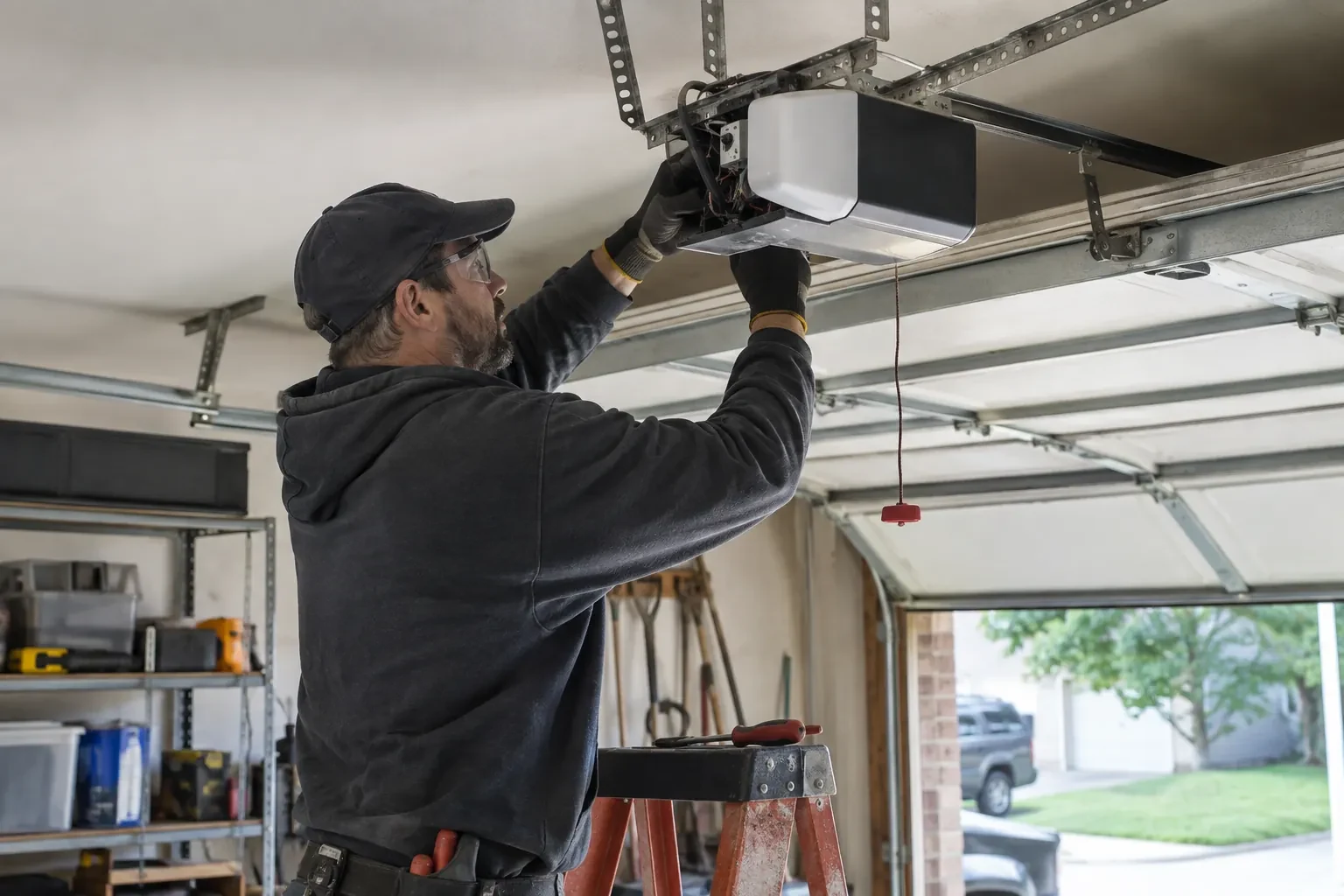
In the van
Release lever and spring
Track clamps to hold the door
Hole saw for the top section
Trolley and carriage assembly
Chain or belt tension hardware
Emergency Release Repair
What affects the quote
Freeing versus replacing the trolley
A trolley jammed on the stop bolt is freed, adjusted and reused when its latch is sound. One with worn teeth or a cracked body is replaced, which changes both parts and labour.
Number of doors and openers
A double garage with two openers, or a house with a detached garage as well, means two releases to check and possibly two sets of parts, and the quote counts each.
Door work found by the balance test
If the disconnected door proves heavy or drifting, spring, cable or roller work comes before the release is put back into use, and that door-side work is quoted as its own item.
What to have ready
- Is there a small keyed lock near the top of the door outside, and do you have its key?
- Do you lose power often, and would battery backup interest you?
- Has the door or the opener been replaced since the release was last used?
Emergency Release Repair: questions
QuestionsWhy does the trolley run but never reconnect to the door?
Three usual causes. On many rails, pulling the cord back toward the opener deliberately holds the lever out for a spell of manual use, and someone forgot to return it. Or the trolley latch teeth or the release arm are worn or bent, so the two parts pass without catching. Or the carriage sits at the wrong point for the powered trolley to meet, since reconnecting is meant to happen during an opener cycle, not by pushing the door shut by hand. Each is a short fix once identified.
The door is stuck shut, the opener is dead and there is no other door. Can you still get in?
Usually. If the door has an outside key release, a small round lock near the top panel, that is what it is for: the key pulls a cable that frees the trolley from outside so the door can be lifted by hand. If there is no such release, the technician has other methods to reach the lever from outside, and once inside the fault is dealt with. Fitting an outside release afterwards is a sensible follow-up for a garage with a single door.
Where should I grip the door when lifting it by hand?
Use the door's own handles or the gripping points built into the panel face, on the inside and outside of the door. Sectional doors are meant to have them near the bottom section and again on the second or third section. Never take hold at the joint between two sections, which closes as the door bends around the track. If your door has no handles or they have been removed, the technician can fit a pair during the visit.
Related services
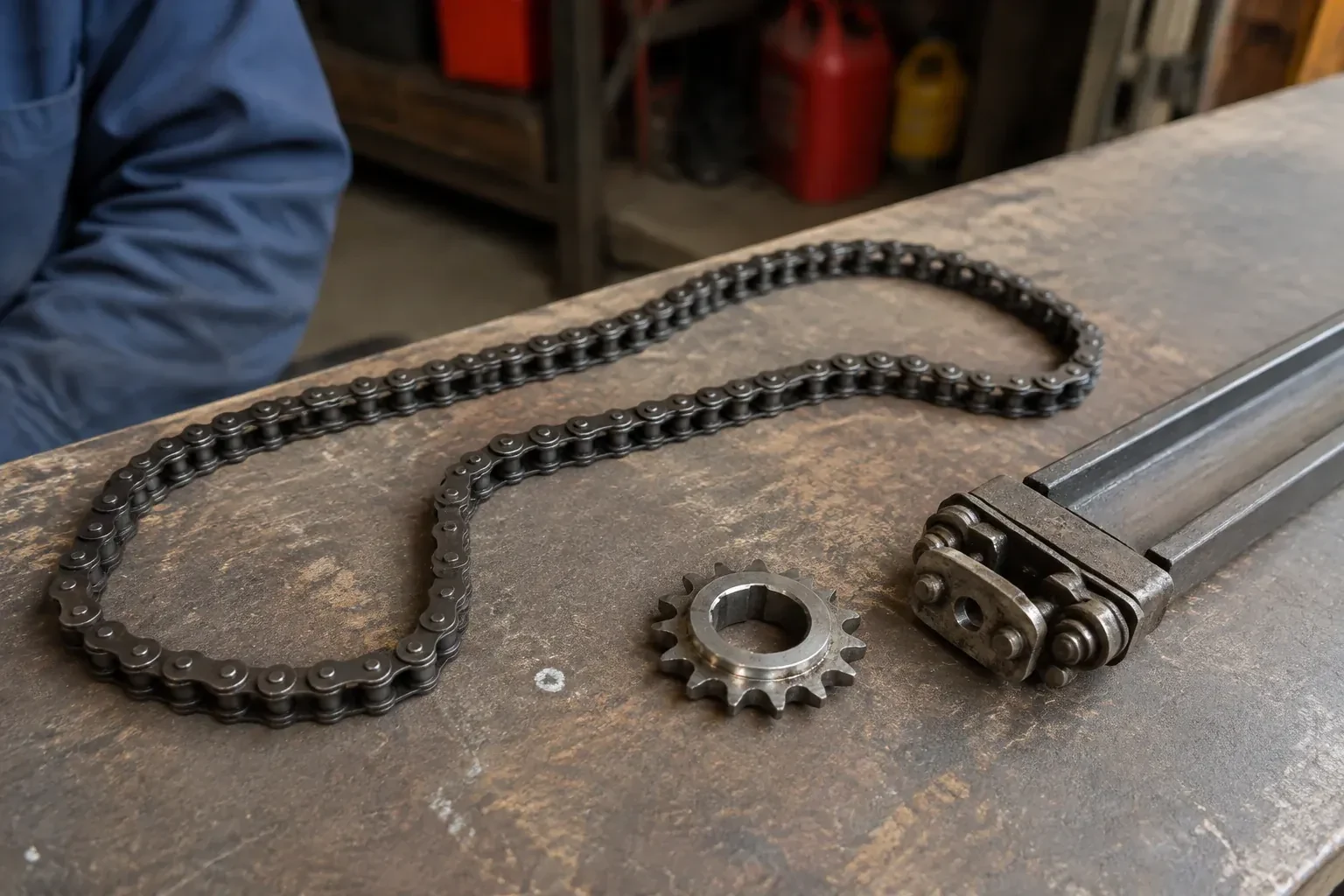
- Chain-Drive Opener RepairPress the button and the opener hums for a second, then quits.
- Belt-Drive Opener RepairPress the remote and the motor runs its full cycle, lights on, the usual whir, but the door does not move a centimetre.
- Garage Door Opener ReplacementThe remotes only work from the end of the driveway now, and one of them disappeared with a set of keys last month.